
UNIQUE STUDY DESIGN1-4*
Three Phase 3 studies compared RINVOQ vs placebo1
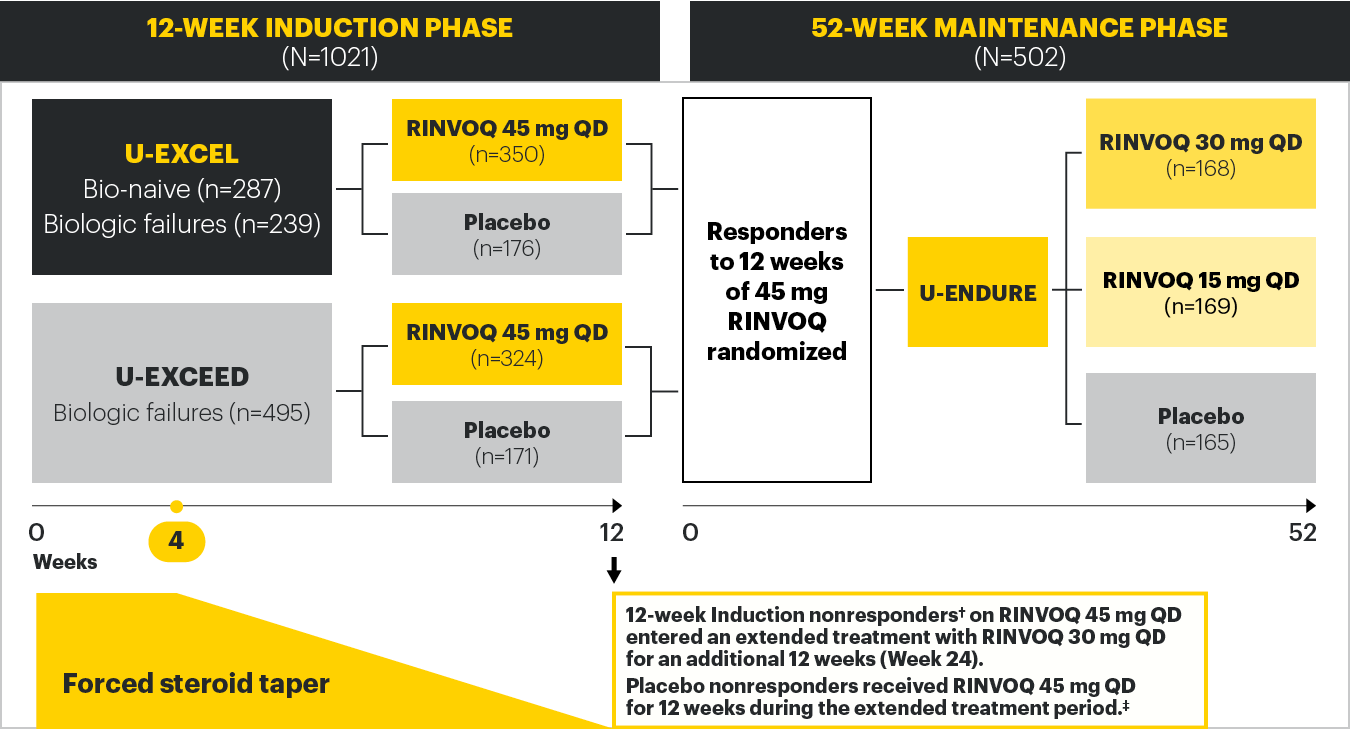
At baseline in U-EXCEL and U-EXCEED, 36% and 34% of patients received steroids, respectively.1
Among the subset of patients who were on steroids at induction baseline, 38% (n=63) in RINVOQ 15 mg QD group, 38% (n=63) in RINVOQ 30 mg QD group, and 5% (n=61) in placebo were steroid-free for 90 days prior to Week 52 and in clinical remission.1
Bio-naive: Inadequate response or intolerance to treatment with conventional therapies but not to biologic therapy.
Biologic failures: Inadequate response or intolerance to one or more biologic therapies.
†Patients who did not achieve clinical response (SF/APS) at Week 12.
‡Patients who responded to 24 weeks of RINVOQ treatment entered a separate cohort of U-ENDURE.
§Refractory population based on percentage of patients treated with more than one prior biologic.
—
*RINVOQ has the first studies to date with a forced steroid taper during induction. The studies included stringent co-primary endpoints of endoscopic response and clinical remission and a mix of a bio-naive and refractory patient population.1-4§
—
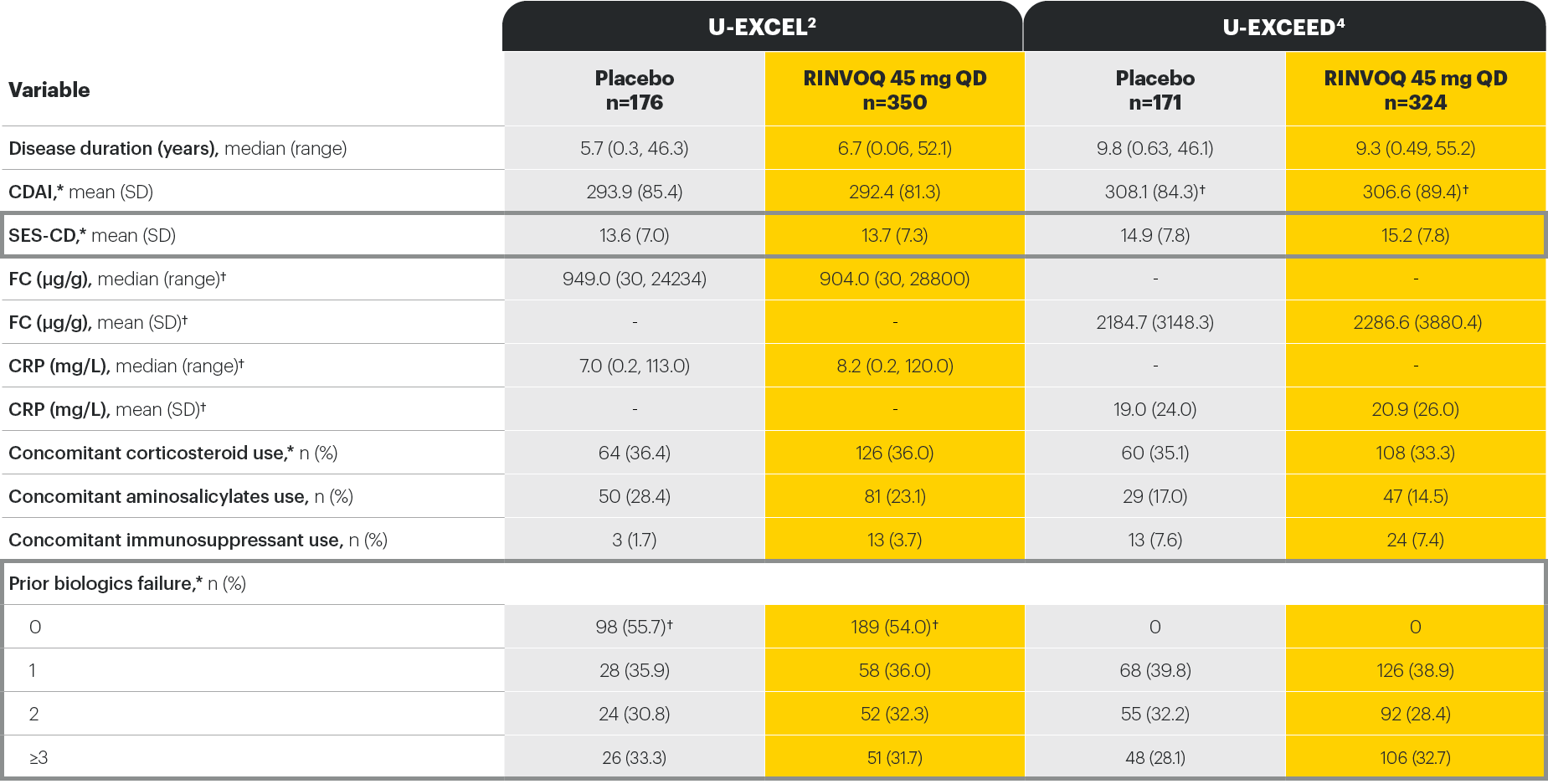
The Week 12 analysis evaluated randomized patients who received at least one dose of study drug in the randomized induction.2
*Stratification factors for randomization.
†For CDAI, Placebo n=171 and RINVOQ 45 mg QD n=322; For FC (median), Placebo n=161 and RINVOQ 45 mg n=319; For FC (mean), Placebo n=159 and RINVOQ 45 mg QD n=298; CRP (median), Placebo n=176 and RINVOQ 45 mg n=341; For CRP (mean), Placebo n=163 and RINVOQ 45 mg QD n=319; History of conventional therapy failure only.
Randomized population in induction studies
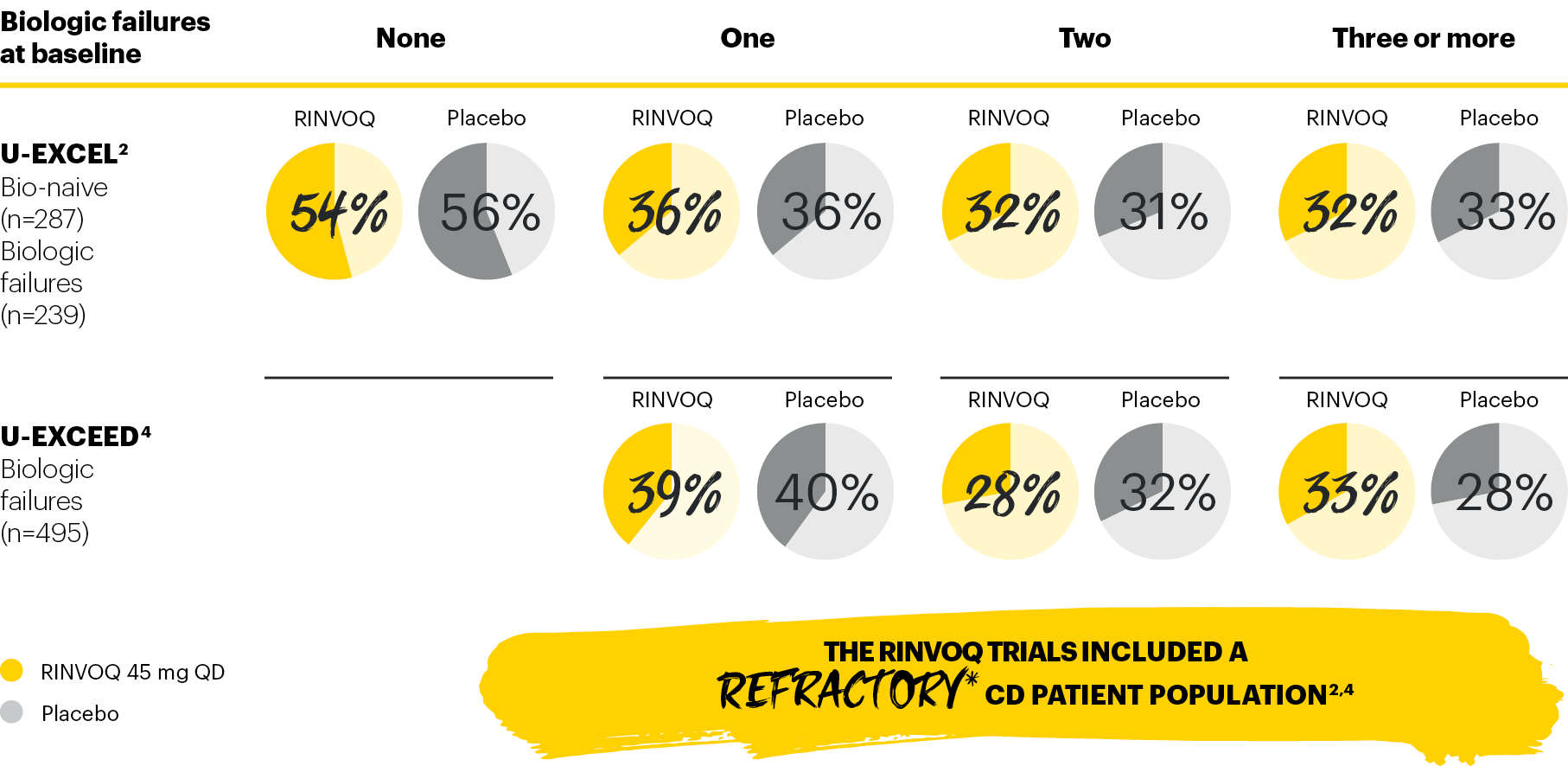
The Week 12 analysis evaluated randomized patients who received at least one dose of study drug in the randomized induction.2
Bio-naive: Inadequate response or intolerance to treatment with conventional therapies but not to biologic therapy.
Biologic failures: Inadequate response or intolerance to one or more biologic therapies.
*Refractory population based on percentage of patients treated with more than one prior biologic.
Key inclusion criteria in RINVOQ CD Phase 3 clinical trials1
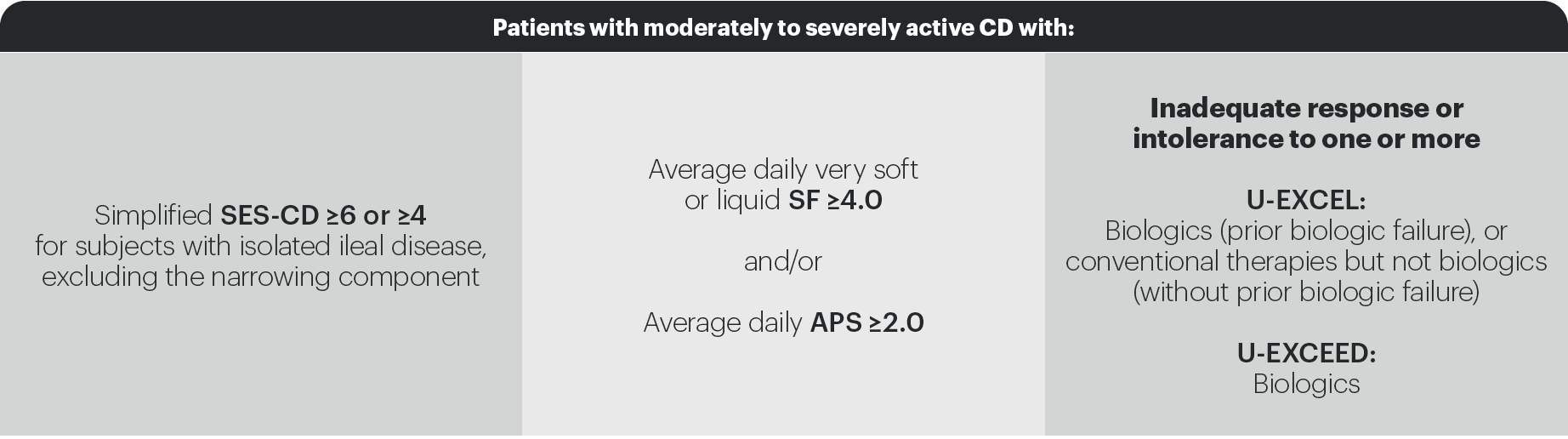
U-EXCEL and U-EXCEED induction studies
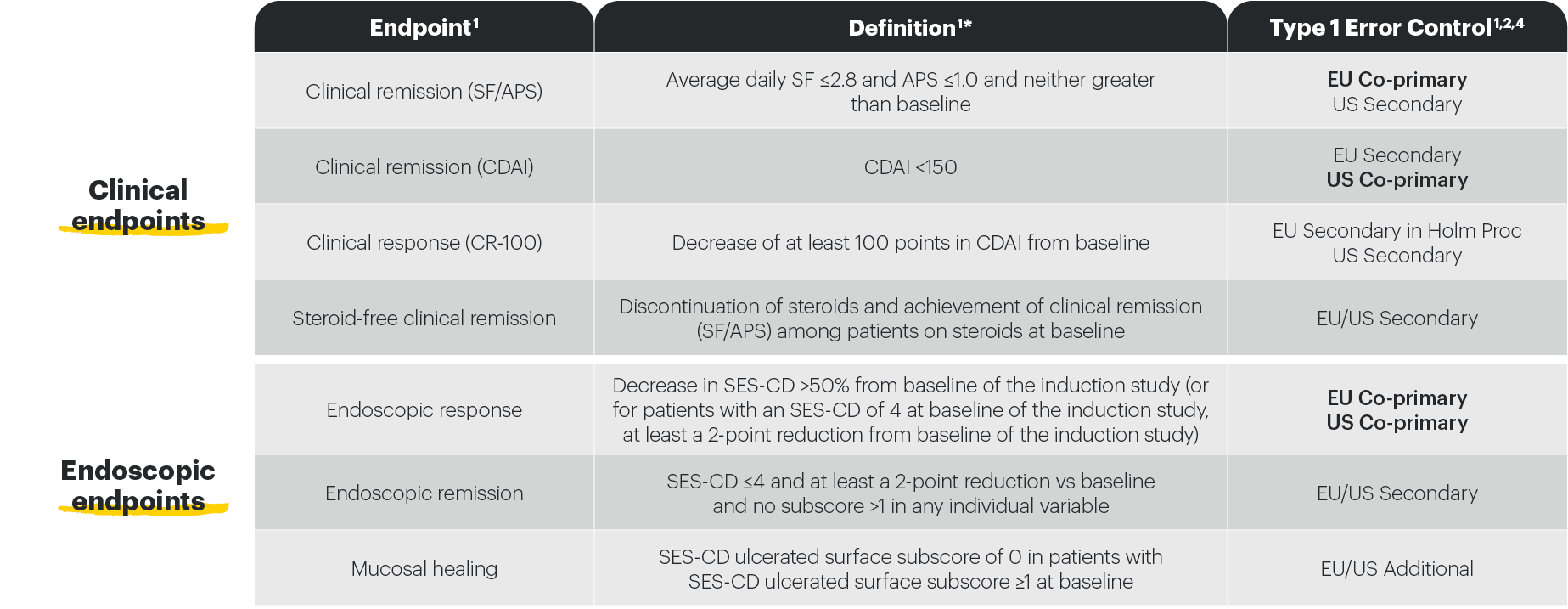
*As defined in the AbbVie RINVOQ induction studies, U-EXCEL and U-EXCEED.
Co-primary endpoints: endoscopic response and clinical remission at Week 12 and Week 52. Secondary, multiplicity-controlled endpoints: clinical remission at Week 4, clinical response (CR-100) at Week 2 and Week 12, steroid-free clinical remission at Week 12, and endoscopic remission at Week 12. Additional endpoints not controlled for multiplicity: mucosal healing at Week 12. Data limitations: Mucosal healing analyses are not powered or tested to demonstrate a statistically significant difference in treatment effect; no statistical inferences can be made due to the exploratory nature of the analyses.
U-ENDURE maintenance study
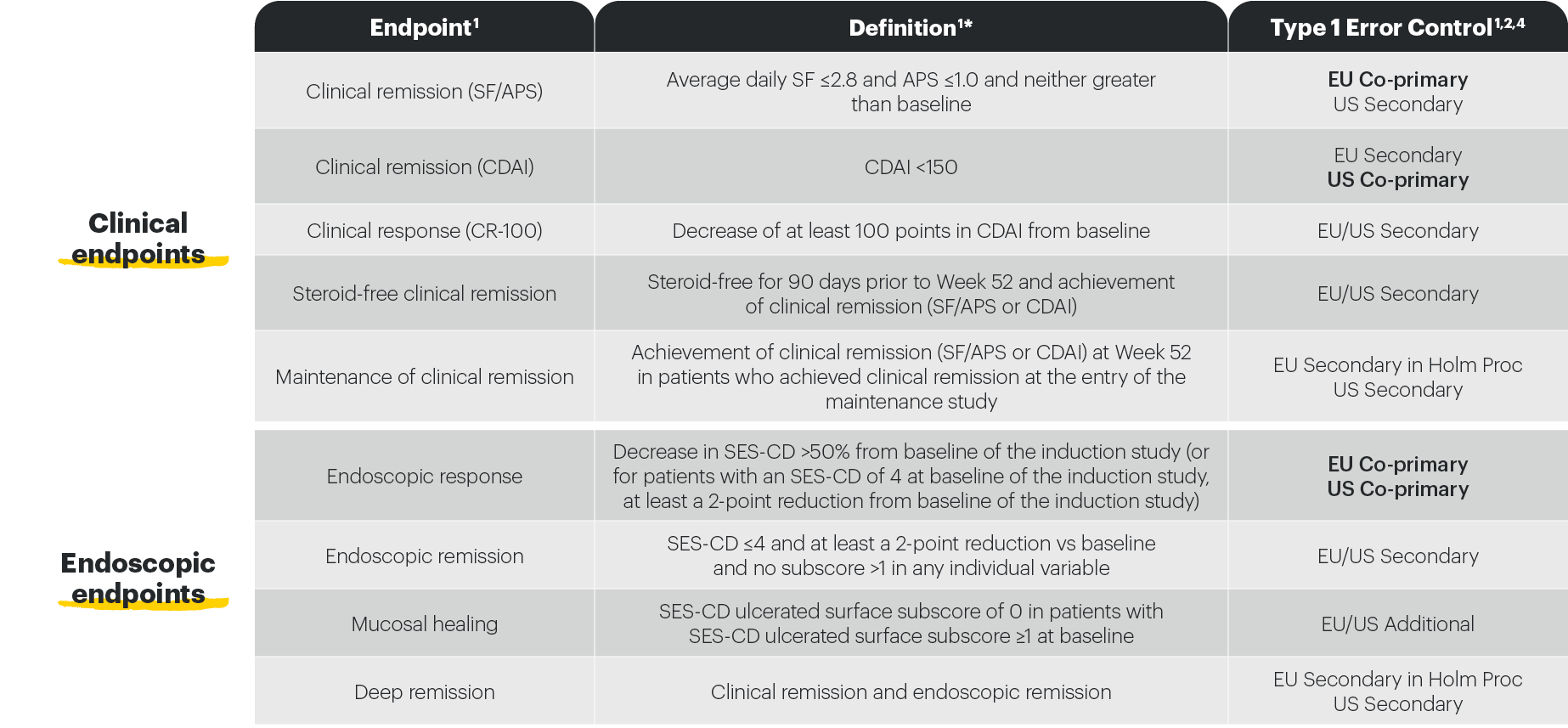
*As defined in the AbbVie RINVOQ maintenance study U-ENDURE.
Co-primary endpoints: endoscopic response and clinical remission at Week 12 and Week 52. Secondary, multiplicity-controlled endpoints: clinical response (CR-100) at Week 52, steroid-free remission at Week 52, maintenance of clinical remission at Week 52, endoscopic remission at Week 52, and deep remission at Week 52. Additional endpoints not controlled for multiplicity: mucosal healing at Week 52. Data limitations: Mucosal healing analyses are not powered or tested to demonstrate a statistically significant difference in treatment effect; no statistical inferences can be made due to the exploratory nature of the analyses.
SES-CD is a recommended measure of disease activity by STRIDE-II5
Adapted from STRIDE-II recommendations:5
• A long-term treatment target in CD is endoscopic healing
• Endoscopic improvement should be measured by SES-CD
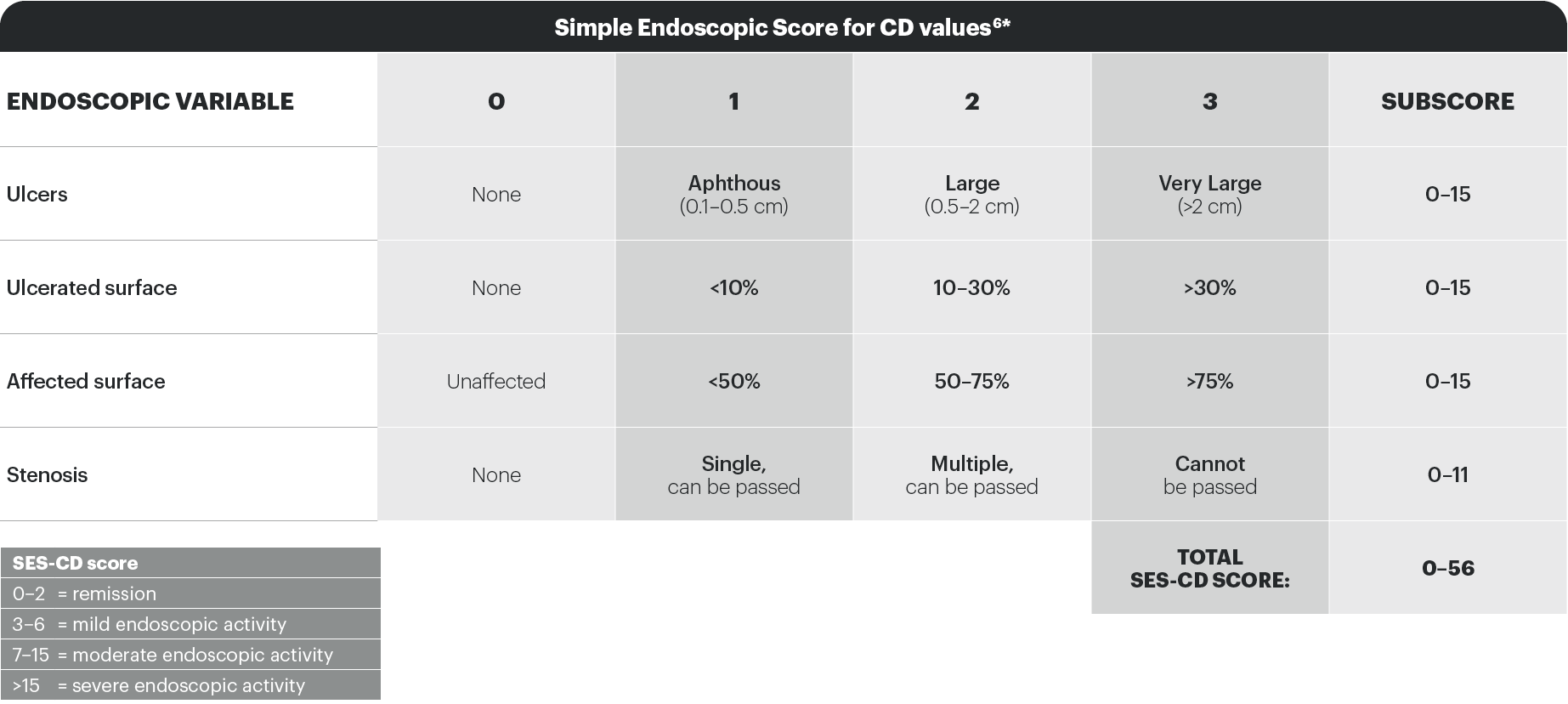
*The 4 endoscopic variables are scored from 0 to 3 in each bowel segment ileum, right/transverse/left colon, and rectum.
APS: abdominal pain score; CDAI: Crohn’s Disease Activity Index; CR-100: clinical response 100; CRP: C-reactive protein; FC: fecal calprotectin; JAK: Janus kinase; QD: once daily; QD: once daily; SES-CD: simple endoscopic activity score for Crohn’s disease; SF: stool frequency; STRIDE: Selecting Therapeutic Targets in Inflammatory Bowel Disease.
Study designs: the U-EXCEL and U-EXCEED induction studies were both multicenter, double-blind, placebo-controlled clinical studies. In U-EXCEL (N=526 [287 bio-naive, 239 biologic failures]) and U-EXCEED (N=495 biologic failures only), patients were randomized to RINVOQ 45 mg QD or placebo for 12 weeks with a 2:1 treatment allocation ratio and included in the efficacy analysis. In both studies, induction nonresponders were allowed to enter an additional 12-week open-label extended treatment period. All enrolled patients had moderately to severely active CD defined as SF ≥4 and/or APS ≥2, plus an SES-CD ≥6 (≥4 for patients with isolated ileal disease) excluding the narrowing component. U-ENDURE maintenance was a multicenter, double-blind, placebo-controlled clinical study with 502 patients who achieved clinical response (≥30% decrease in average daily SF and/or in APS, neither worse than baseline) to 12 weeks of RINVOQ 45 mg QD induction treatment. These patients were rerandomized 1:1:1 to receive either RINVOQ 15 mg QD, 30 mg QD, or placebo.1
UP NEXT


[Affiliates to insert local summary of safety]
REFERENCES
- RINVOQ [Summary of Product Characteristics]. AbbVie Deutschland GmbH & Co. KG; April 2023.
- Loftus EV Jr, Colombel JF, Lacerda AP, et al. Efficacy and safety of upadacitinib induction therapy in patients with moderately to severely active Crohn’s disease: results from a randomized phase 3 U-EXCEL study. Presented at: United European Gastroenterology Week; October 8-11, 2022; Vienna, Austria.
- George J, Singh S, Dulai PS, et al. Corticosteroid-free remission vs overall remission in clinical trials of moderate-severe ulcerative colitis and Crohn's disease. Inflamm Bowel Dis. 2020;26(4):515-523. doi:10.1093/ibd/izz193
- Colombel JF, Panes J, Lacerda AP, et al. Efficacy and safety of upadacitinib induction therapy in patients with moderately to severely active Crohn’s disease who failed prior biologics: results from the randomized phase 3 U-EXCEED study. Presented at: Digestive Disease Week; May 21-24, 2022; San Diego, CA.
- Turner D, Ricciuto A, Lewis A, et al. STRIDE-II: an update on the selecting therapeutic targets in inflammatory bowel disease (STRIDE) initiative of the International Organization for the Study of IBD (IOIBD): determining therapeutic goals for treat-to-target strategies in IBD. Gastroenterology. 2021;160(5):1570-1583. doi:10.1053/j.gastro.2020.12.031
- Koutroumpakis E, Katsanos KH. Implementation of the simple endoscopic activity score in Crohn's disease. Saudi J Gastroenterol. 2016;22(3):183-191. doi:10.4103/1319-3767.182455