
Mucosal healing is a STRIDE-II long-term target of UC treatment.3 In a Phase 3 clinical trial program evaluating the efficacy and safety of RINVOQ in UC, 4 different endpoints were used to measure mucosal healing: mucosal healing, endoscopic remission, histologic-endoscopic mucosal healing and deep mucosal healing.1,2
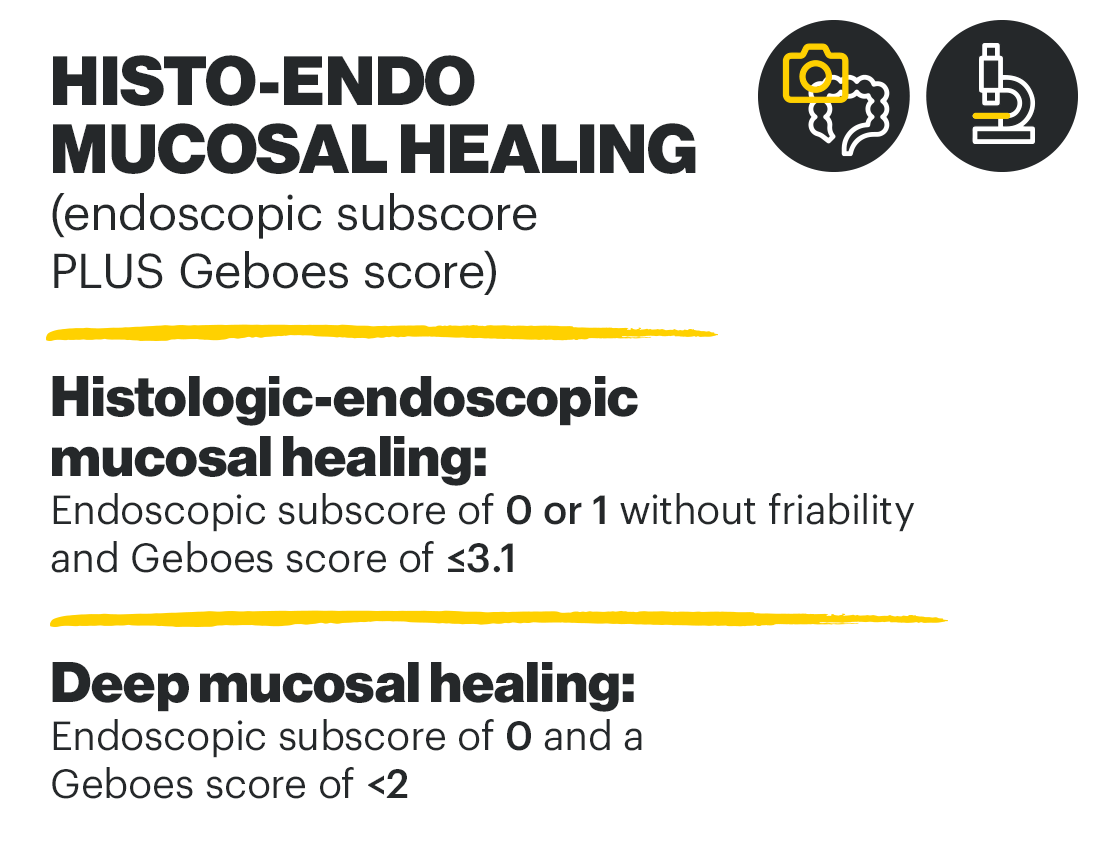

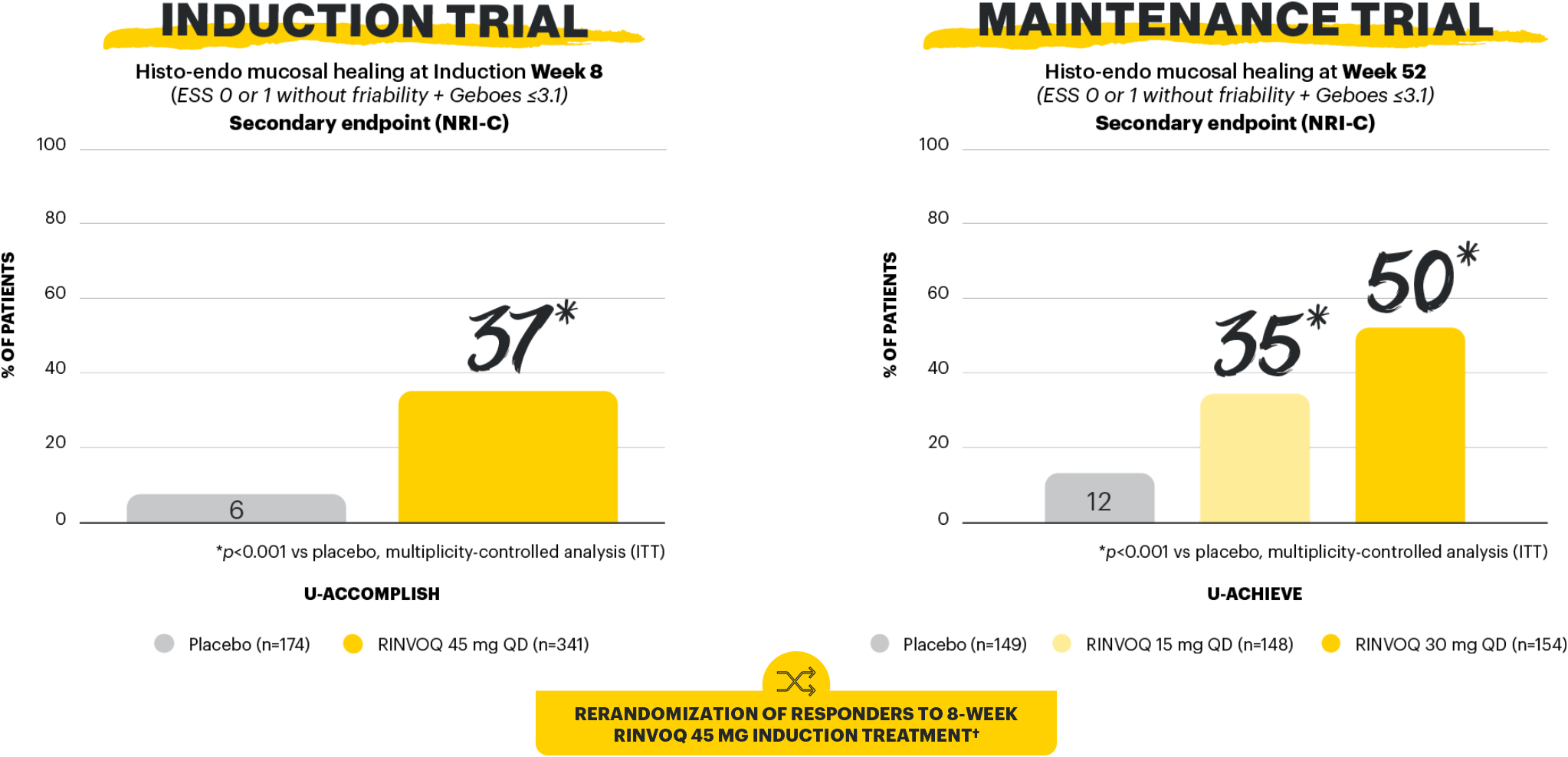
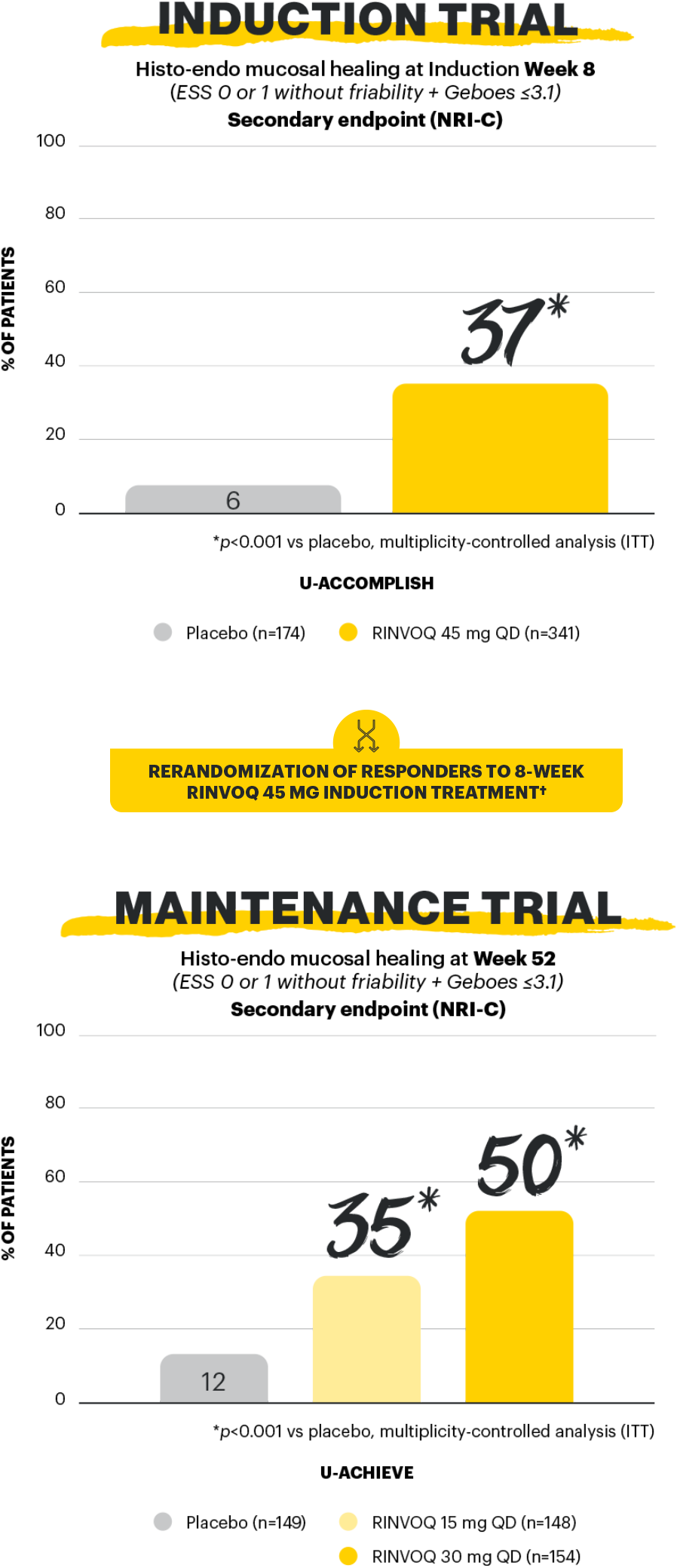
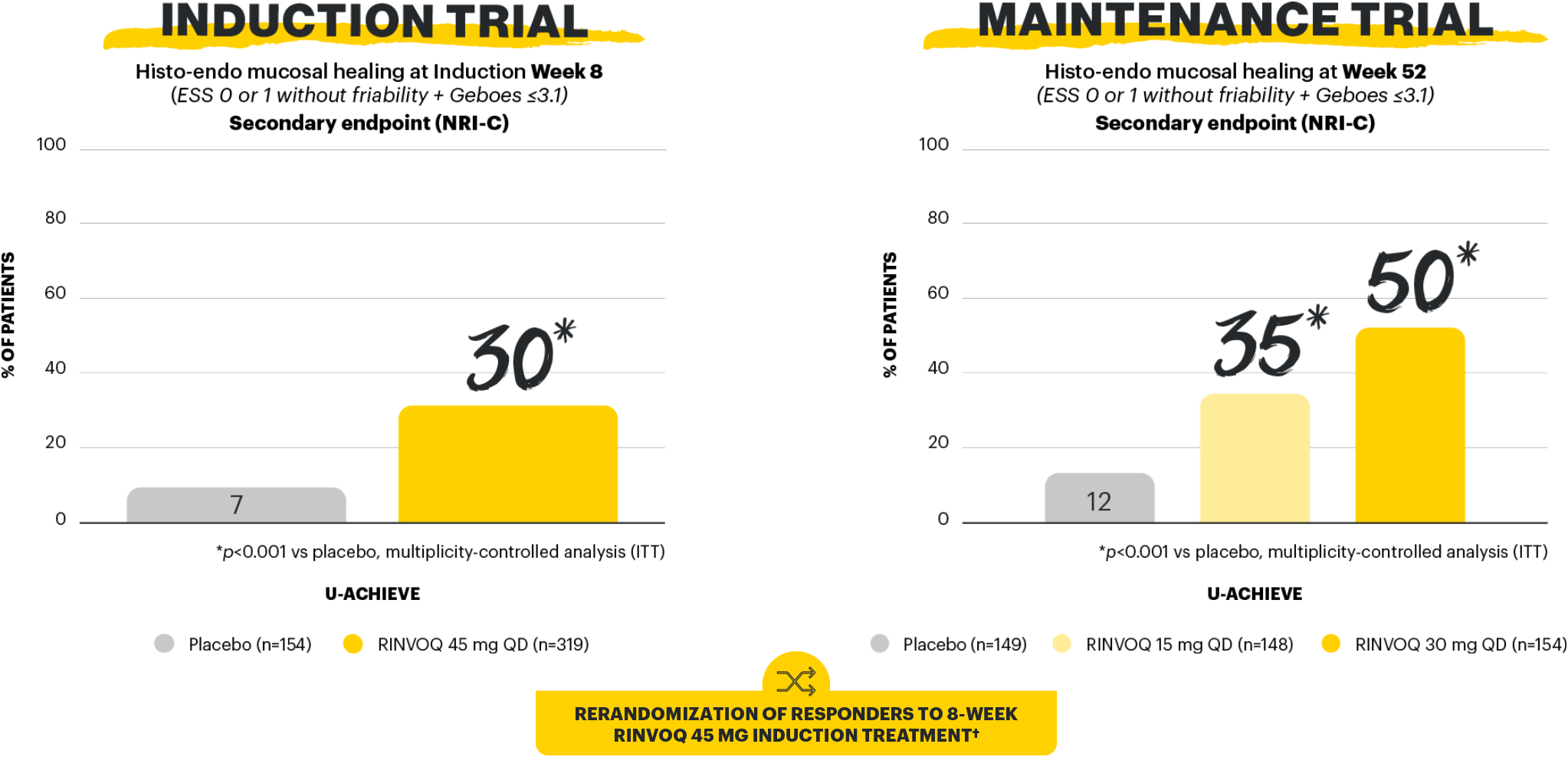
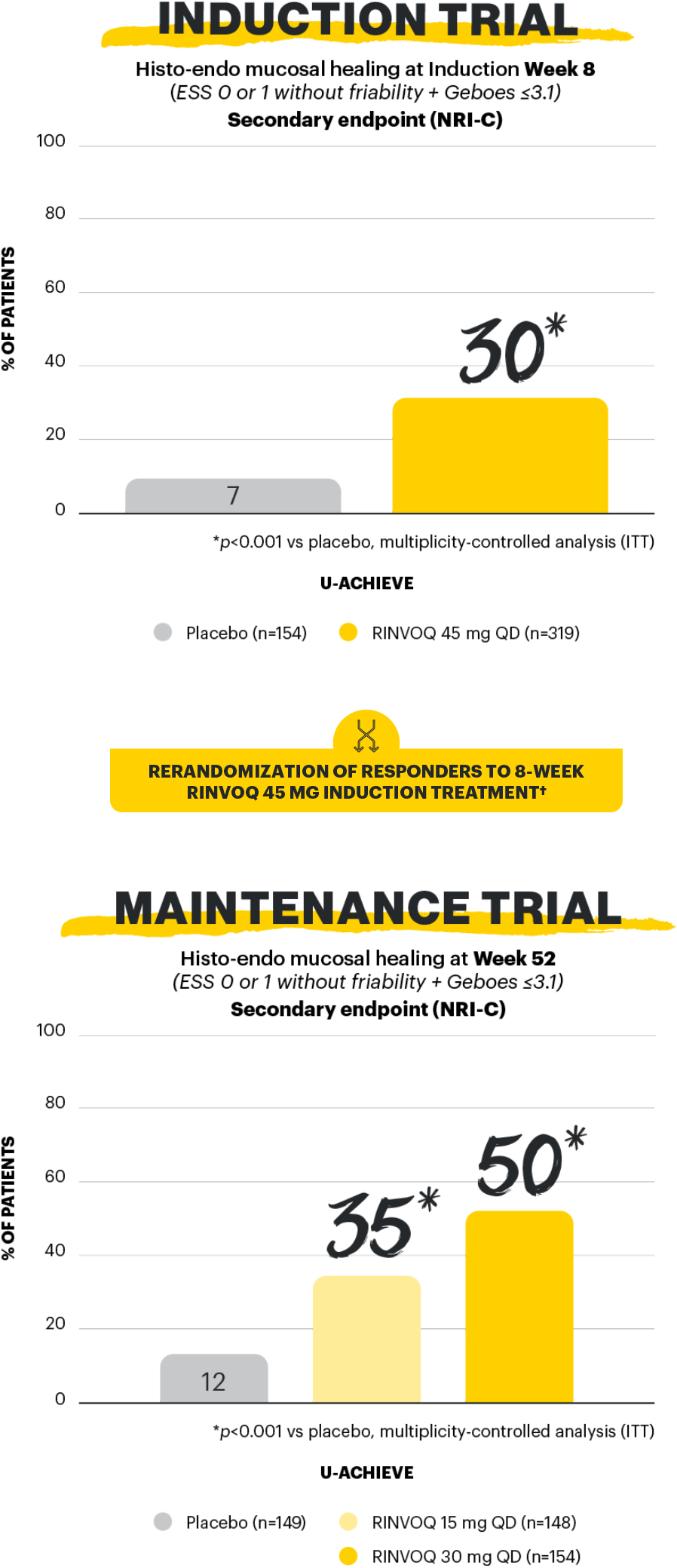
Histologic-endoscopic mucosal healing defined as a Mayo endoscopic subscore of 0 or 1 without friability and a Geboes score of ≤3.1.
Histologic-endoscopic mucosal healing at Induction Week 8 and Maintenance Week 52 were ranked secondary endpoints.1,2
†Patients who achieved clinical response (also known as symptomatic response) per adapted Mayo score (decrease ≥2 points and ≥30% from baseline and a decrease in RBS ≥1 from baseline or an absolute RBS ≤1) with 8-week RINVOQ 45 mg QD induction treatment were rerandomized 1:1:1 to receive either RINVOQ 15 mg QD, 30 mg QD or placebo.1,2
Study design: U-ACHIEVE Induction (UC-1) and U-ACCOMPLISH (UC-2) were replicate induction studies, both of which were multicenter, double-blind, placebo-controlled clinical studies. In UC-1 and UC-2, 988 patients (473 and 515 patients, respectively) were randomized to RINVOQ 45 mg QD or placebo for 8 weeks with a 2:1 treatment allocation ratio and included in the efficacy analysis. All enrolled patients had moderately to severely active UC defined as aMs of 5 to 9 with an ESS of 2 or 3 and demonstrated prior treatment failure including inadequate response, loss of response, or intolerance to prior conventional and/or biologic treatment. U-ACHIEVE Maintenance (UC-3) was a multicenter, double-blind, placebo-controlled clinical study with 451 patients who achieved clinical response per aMs (decrease ≥2 points and ≥30% from Baseline and a decrease in RBS ≥1 from Baseline or an absolute RBS ≤1) with 8-week RINVOQ 45 mg QD induction treatment. Patients were rerandomized 1:1:1 to receive either RINVOQ 15 mg QD, 30 mg QD or placebo.1,2



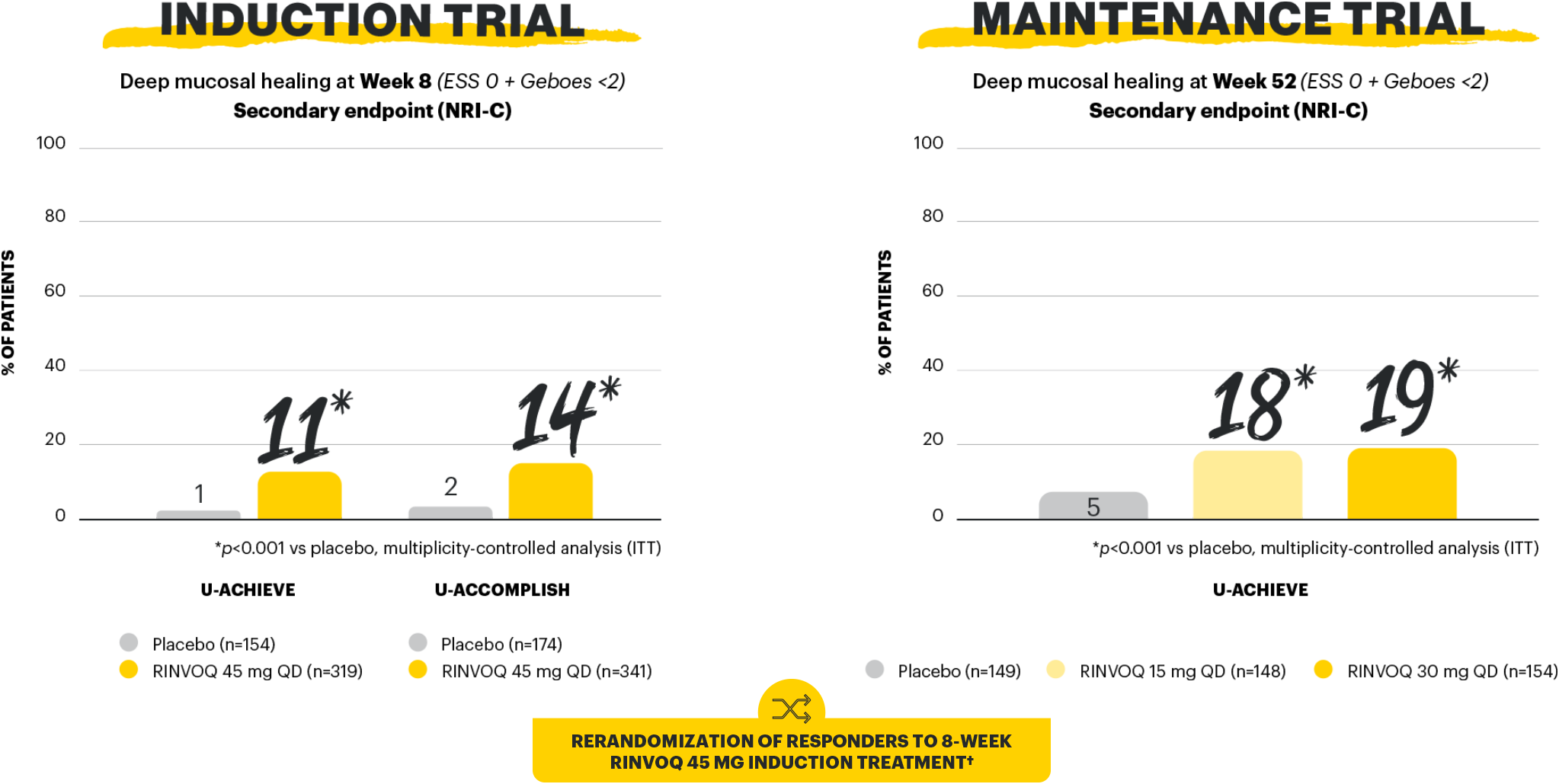
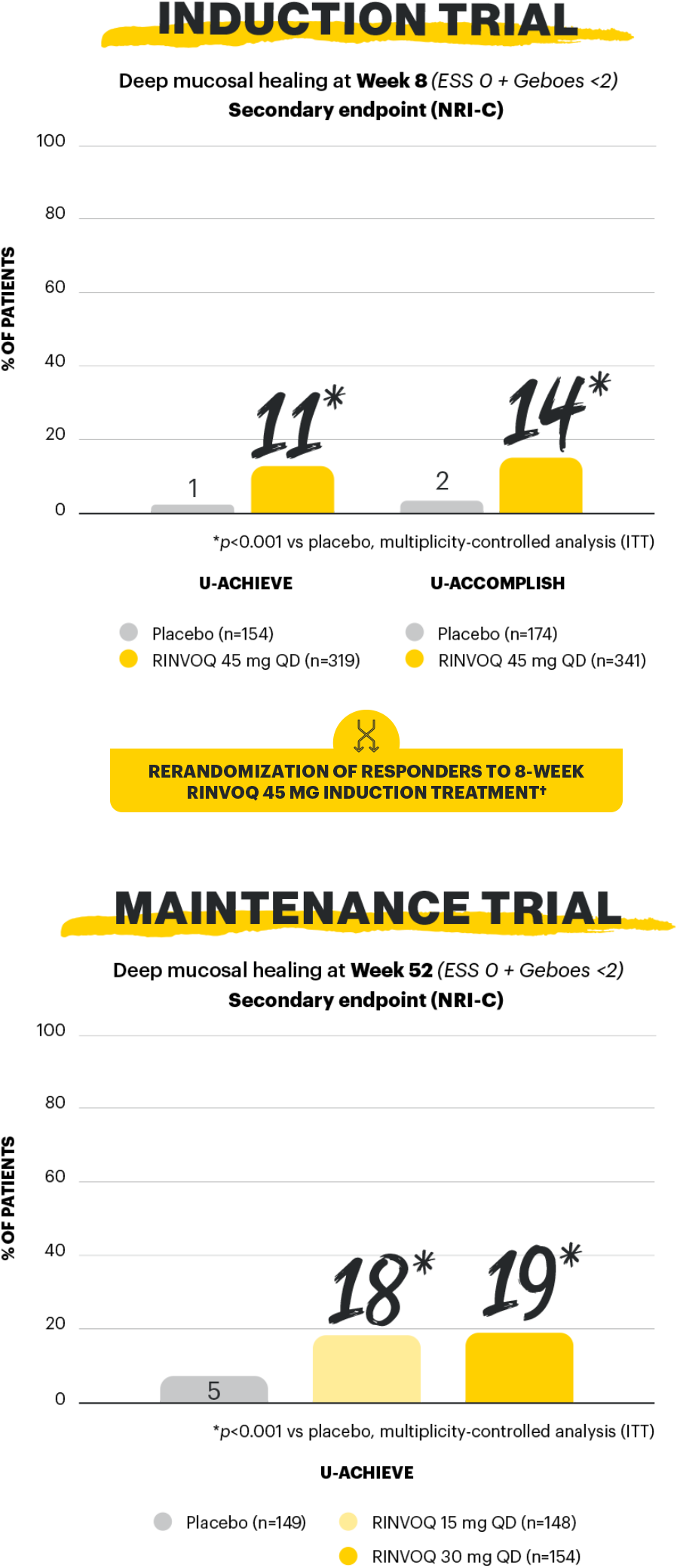
Deep mucosal healing at Induction Week 8 and Maintenance Week 52 were ranked secondary endpoints.1,2
Deep mucosal healing defined as a Mayo endoscopic subscore of 0 and Geboes score of <2.
†Patients who achieved clinical response per adapted Mayo score (decrease ≥2 points and ≥30% from baseline and a decrease in RBS ≥1 from baseline or an absolute RBS ≤1) with 8-week RINVOQ 45 mg QD induction treatment were rerandomized 1:1:1 to receive either RINVOQ 15 mg QD, 30 mg QD or placebo.1,2
Study design: U-ACHIEVE Induction (UC-1) and U-ACCOMPLISH (UC-2) were replicate induction studies, both of which were multicenter, double-blind, placebo-controlled clinical studies. In UC-1 and UC-2, 988 patients (473 and 515 patients, respectively) were randomized to RINVOQ 45 mg QD or placebo for 8 weeks with a 2:1 treatment allocation ratio and included in the efficacy analysis. All enrolled patients had moderately to severely active UC defined as aMs of 5 to 9 with an ESS of 2 or 3 and demonstrated prior treatment failure including inadequate response, loss of response, or intolerance to prior conventional and/or biologic treatment. U-ACHIEVE Maintenance (UC-3) was a multicenter, double-blind, placebo-controlled clinical study with 451 patients who achieved clinical response per aMs (decrease ≥2 points and ≥30% from Baseline and a decrease in RBS ≥1 from Baseline or an absolute RBS ≤1) with 8-week RINVOQ 45 mg QD induction treatment. Patients were rerandomized 1:1:1 to receive either RINVOQ 15 mg QD, 30 mg QD or placebo.1,2
AE: adverse event; AESI: adverse event of special interest; aMs: adapted Mayo score; CI: confidence interval; CPK: creatine phosphokinase; ESS: endoscopic subscore; GI: gastrointestinal; ITT: intention to treat; MACE: major adverse cardiac event; NMSC: non-melanoma skin cancer; NRI-C: non-responder imputation incorporating multiple imputations to handle missing data due to coronavirus disease 2019 (COVID-19); paMs: partial adapted Mayo score; QD: once-daily; RBS: rectal bleeding score; TEAE: treatment-emergent adverse event; UC: ulcerative colitis; URTI: upper respiratory tract infection; VTE: venous thromboembolism.

Learn from experts in gastroenterology on how you can help deliver mucosal healing for patients with UC, and how RINVOQ performed on mucosal healing as a secondary endpoint during a Phase 3 clinical trial program.
Doctor Walter Reinisch discusses the histologic endoscopic healing rates gathered from RINVOQ's moderately to severely active UC Phase 3 clinical trial program.

REFERENCES
- RINVOQ Summary of Product Characteristics [DRAFT].
- Danese S, Vermeire S, Zhou W, et al. Lancet. Published online May 26, 2022. doi: https://doi.org/10.1016/S0140-6736(22)00581-5.
- Turner D, Ricciuto A, et al. Gasteroenterology. 2021;160:1570-1583.