

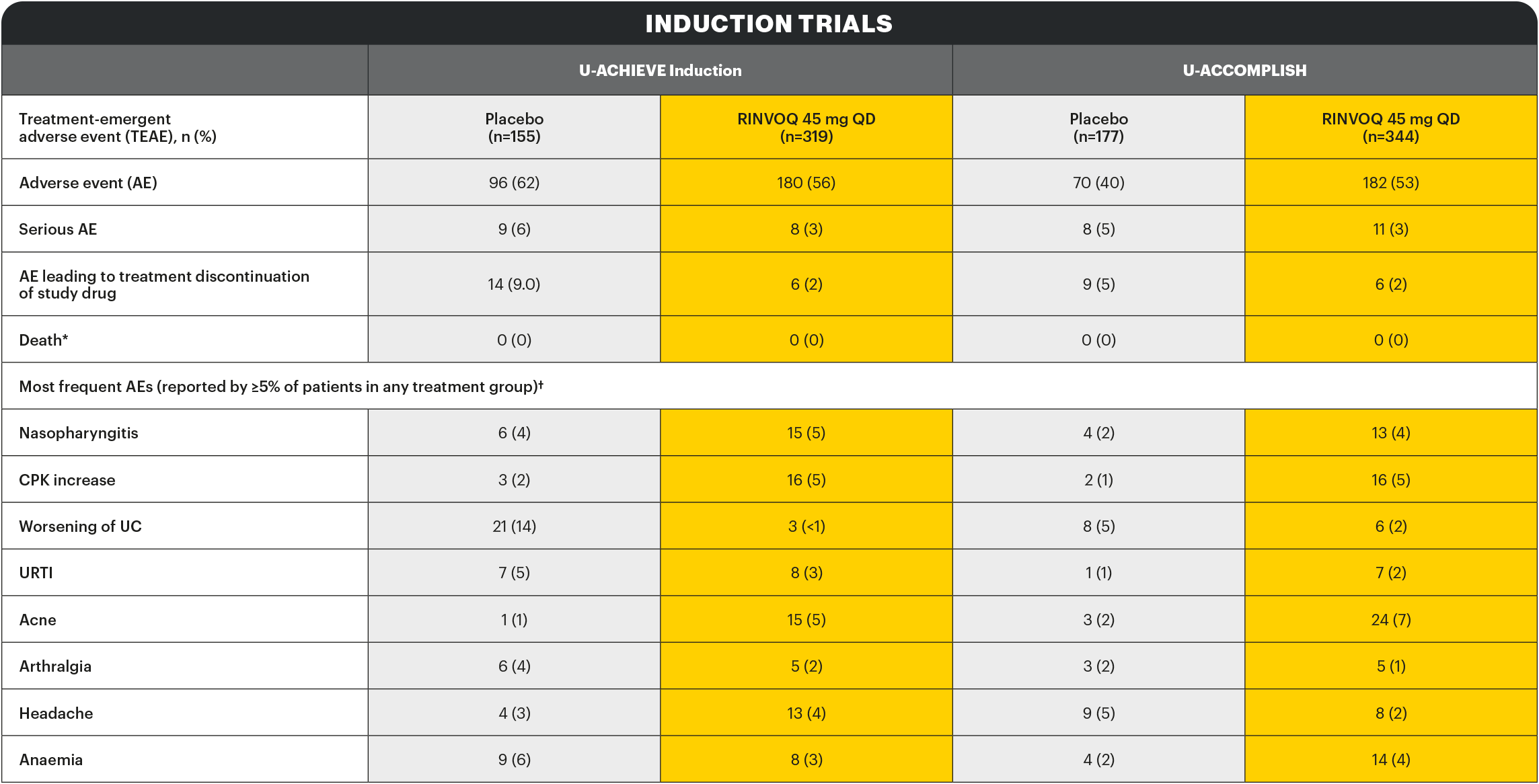
AE: adverse events; CPK: creatine phosphokinase; TEAE: treatmen-emergent adverse event; QD: once-daily; UC: ulcerative colitis; URTI: upper respiratory tract infection.
*Includes non-treatment emergent deaths. †The rates of the four most frequent adverse events are listed for all studies.

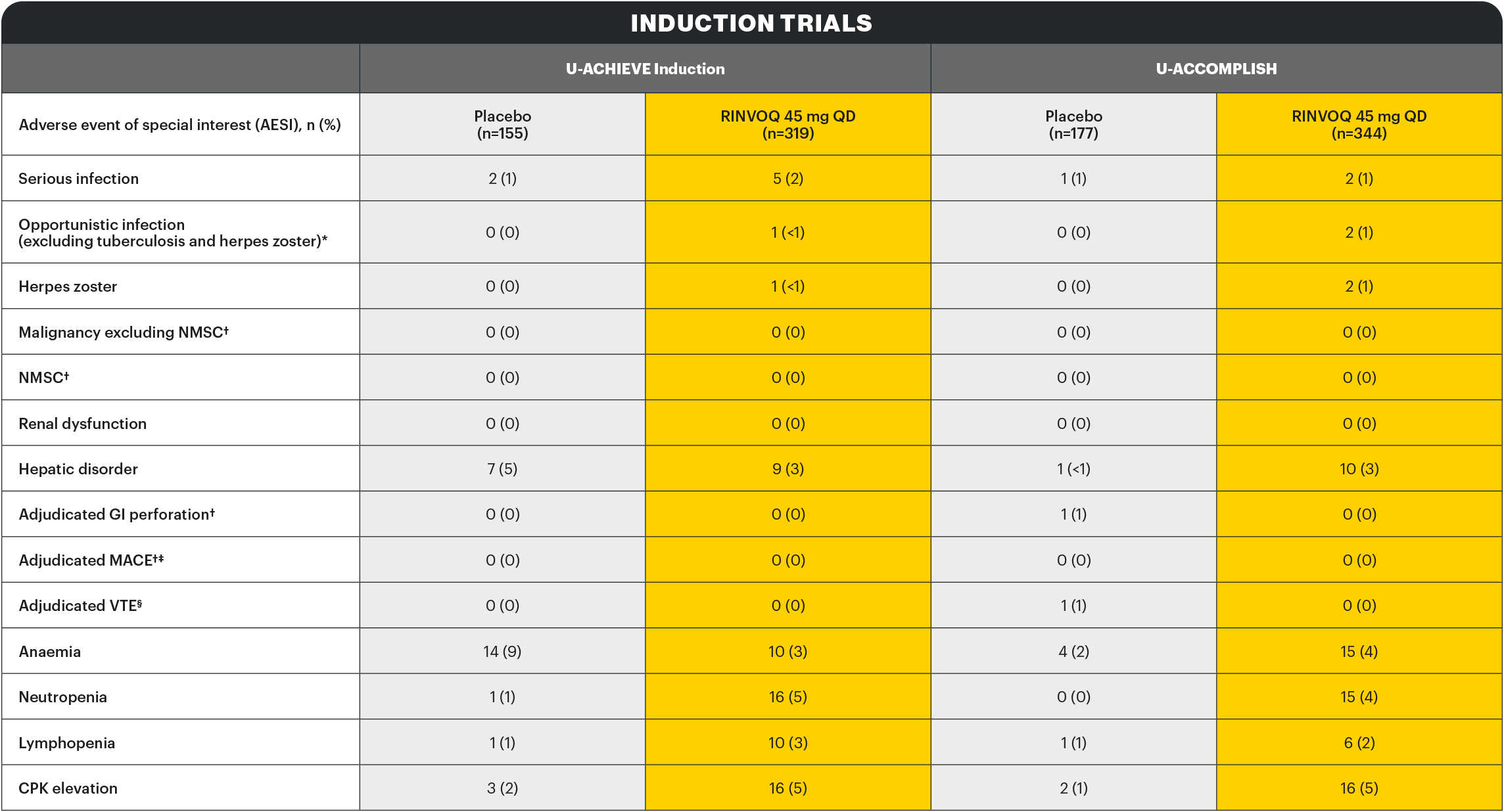
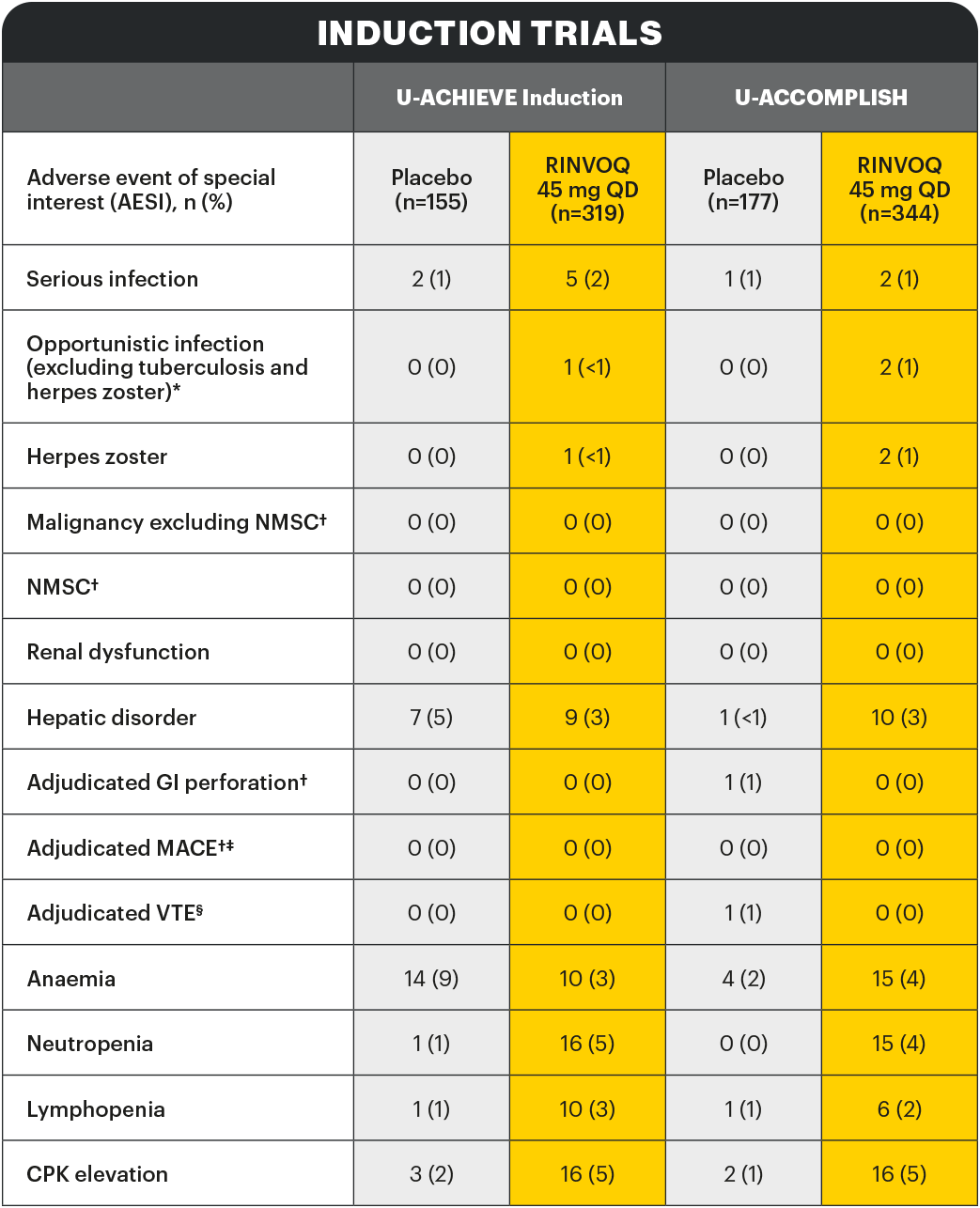
AESI: adverse event of special interest; CPK: creatine phosphokinase; GI: gastrointestinal; MACE: major adverse cardiac event; NMSC: non-melanoma skin cancer; QD: once-daily; VTE: venous thromboembolism.
*Search criteria were based on Company MedDRA Query. †These events were determined on the basis of external adjudication. ‡MACE is defined as cardiovascular death, non-fatal myocardial infarction, and non-fatal stroke. §VTE is defined as deep vein thrombosis and pulmonary embolism (fatal and non-fatal).
There were no AESIs of active tuberculosis or lymphoma in the study.

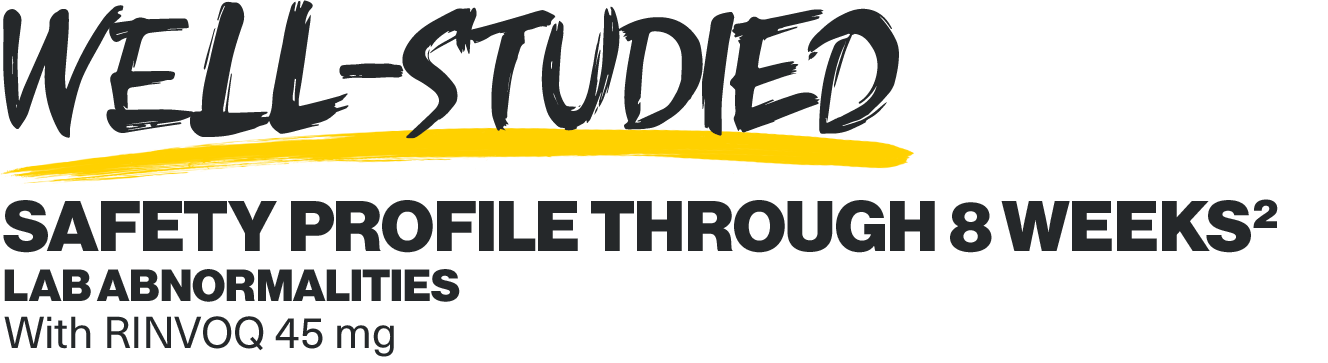


ALT: alanine aminotransferase; AST: aspartate aminotransferase; CTC: common toxicity criteria; QD: once-daily; ULN: upper limit of the normal.
*Indicates the number of patients with non-missing baseline and at least one post-baseline for the respective parameter.
Common adverse reactions
In the placebo-controlled ulcerative colitis induction and maintenance clinical trials, the most commonly reported adverse reactions (≥3% of patients) with RINVOQ 45 mg, 30 mg or 15 mg were upper respiratory tract infection (19.9%), blood CPK increased (7.6%), acne (6.3%), neutropenia (6.0%), rash (5.2%), herpes zoster (4.4%), hypercholesterolemia (4.0%), folliculitis (3.6%), herpes simplex (3.2%), and influenza (3.2%).1
Infections
The frequency of infection over 8 weeks in the RINVOQ 45 mg group compared to the placebo group was 20.7% and 17.5%, respectively. The frequency of serious infection over 8 weeks in both the RINVOQ 45 mg group and the placebo group was 1.3%. No additional serious infections were observed over 8-week extended treatment with RINVOQ 45 mg.1
Serious infection
The most frequently reported serious infection in UC studies was COVID-19 pneumonia.1
Opportunistic infections (excluding tuberculosis)
In the placebo-controlled induction studies over 8 weeks, the frequency of opportunistic infection (excluding tuberculosis and herpes zoster) in the RINVOQ 45 mg group was 0.4% and 0.3% in the placebo group. No additional opportunistic infections (excluding tuberculosis and herpes zoster) were observed over 8-week extended treatment with RINVOQ 45 mg.
In the placebo-controlled induction studies over 8 weeks, the frequency of herpes zoster in the RINVOQ 45 mg group was 0.6% and 0% in the placebo group. The frequency of herpes zoster was 3.9% over 16-week treatment with RINVOQ 45 mg.1
Herpes zoster
The majority of herpes zoster events observed with RINVOQ were mono-dermatornal and uncomplicated. One event led to RINVOQ discontinuation.2
CPK elevation
No events of CPK were serious and most were asymptomatic. Most events were mild or moderate in severity and assessed by investigator as possibly related to study drug. Discontinuation of RINVOQ due to CPK elevation was infrequent.2
Lab abnormalities
In the placebo-controlled 8-week induction and 52-week maintenance clinical studies, changes in the following lab measures were observed: increased ALT and/or AST (≥ 3 x ULN), CPK values (> 5 x ULN), and neutropenia (ANC < 1 x 10⁹ cells/L). These lab changes, associated with RINVOQ treatment were generally similar to what was observed in the rheumatologic disease and atopic dermatitis clinical studies.1
Dose dependent changes for these laboratory parameters associated with 15 mg and 30 mg RINVOQ treatment were observed.1
In the placebo-controlled induction studies for up to 8 weeks, decreases in lymphocyte counts below 0.5 x 10⁹ cells/L in at least one measurement occurred in 2.0% and 0.8% of patients in the RINVOQ 45 mg and placebo groups, respectively.1



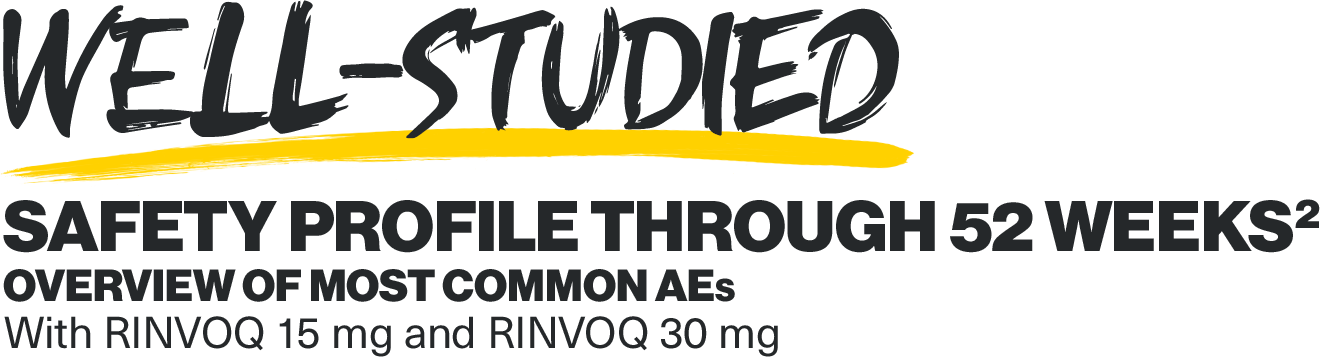
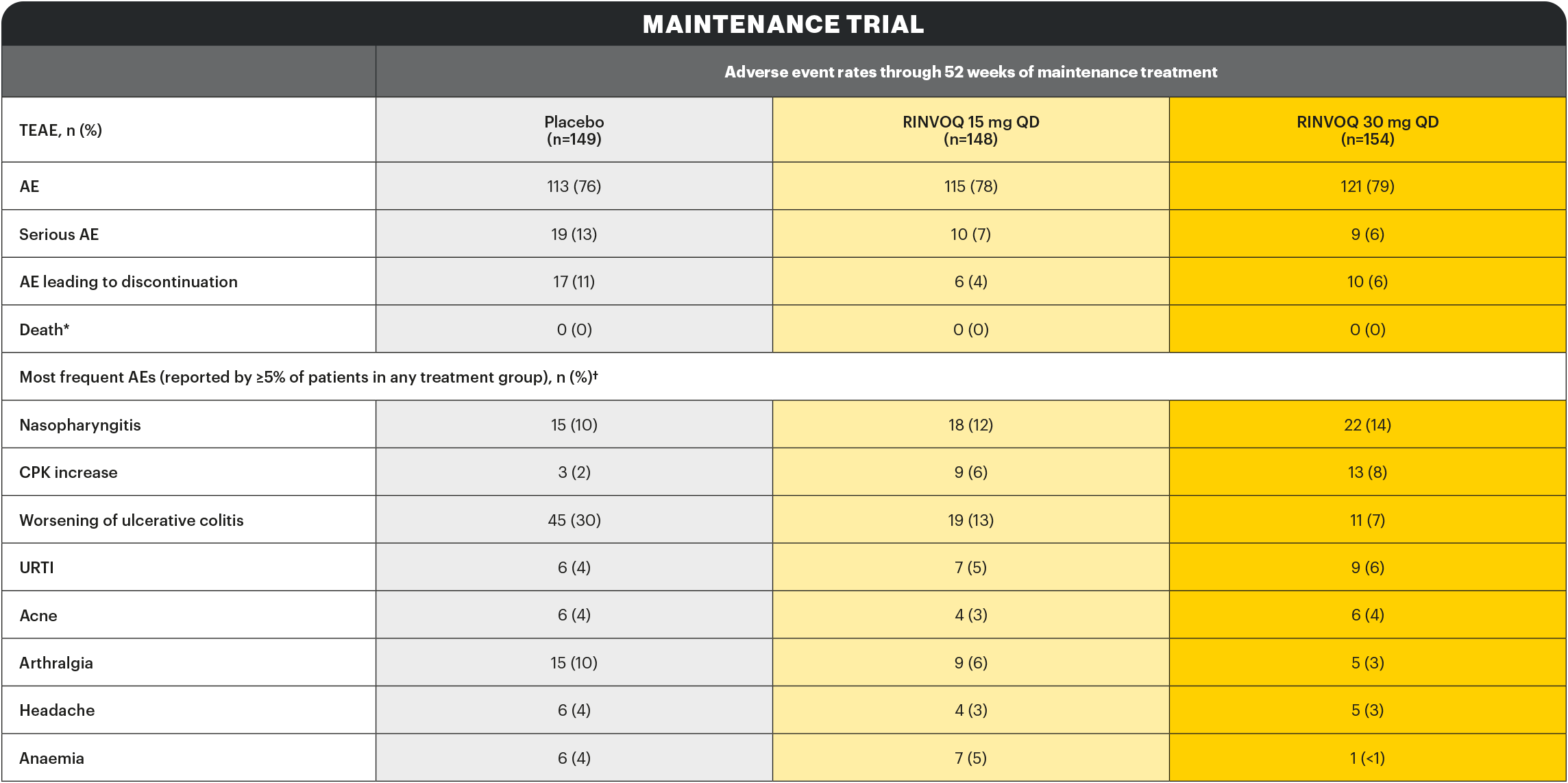
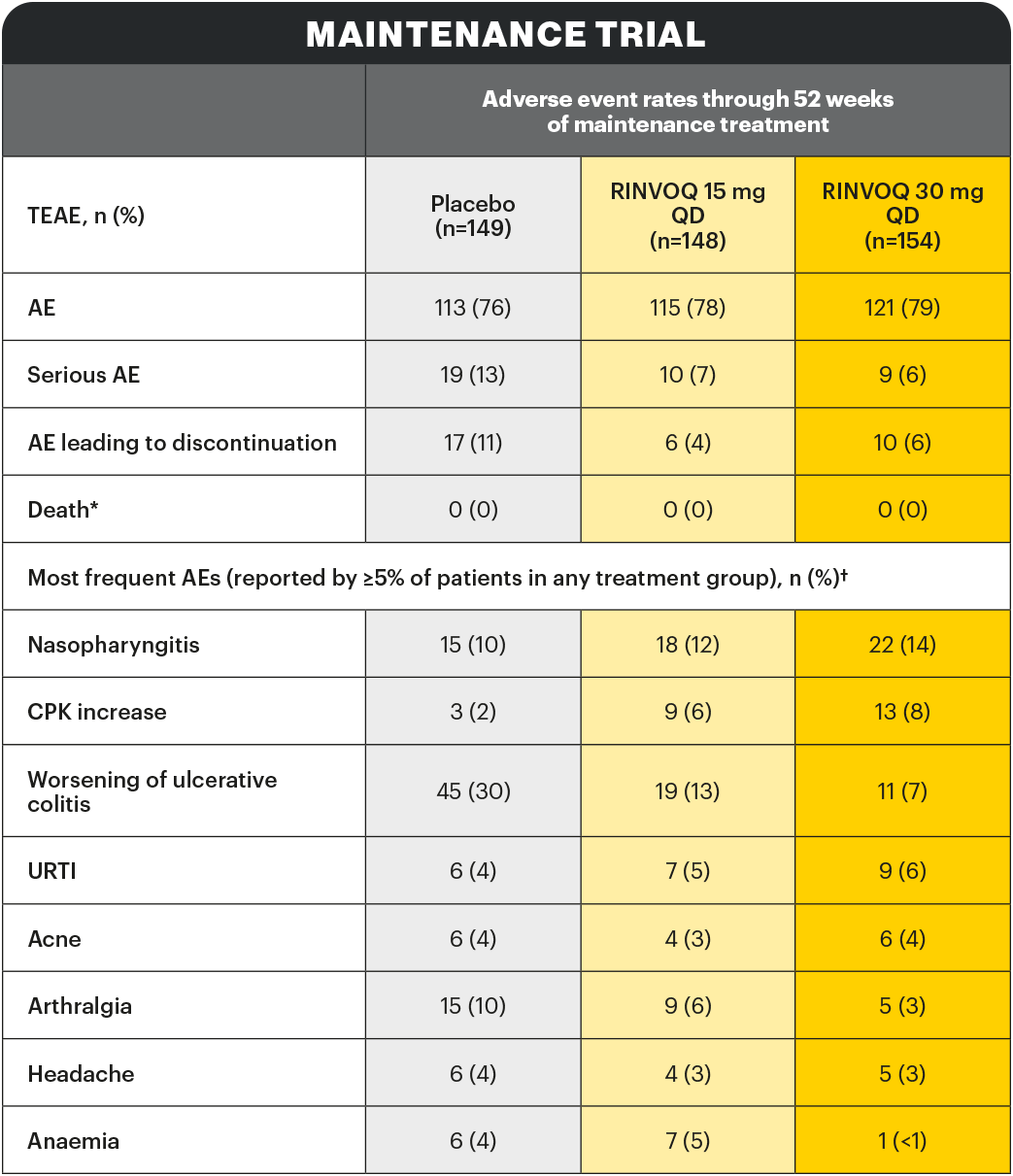
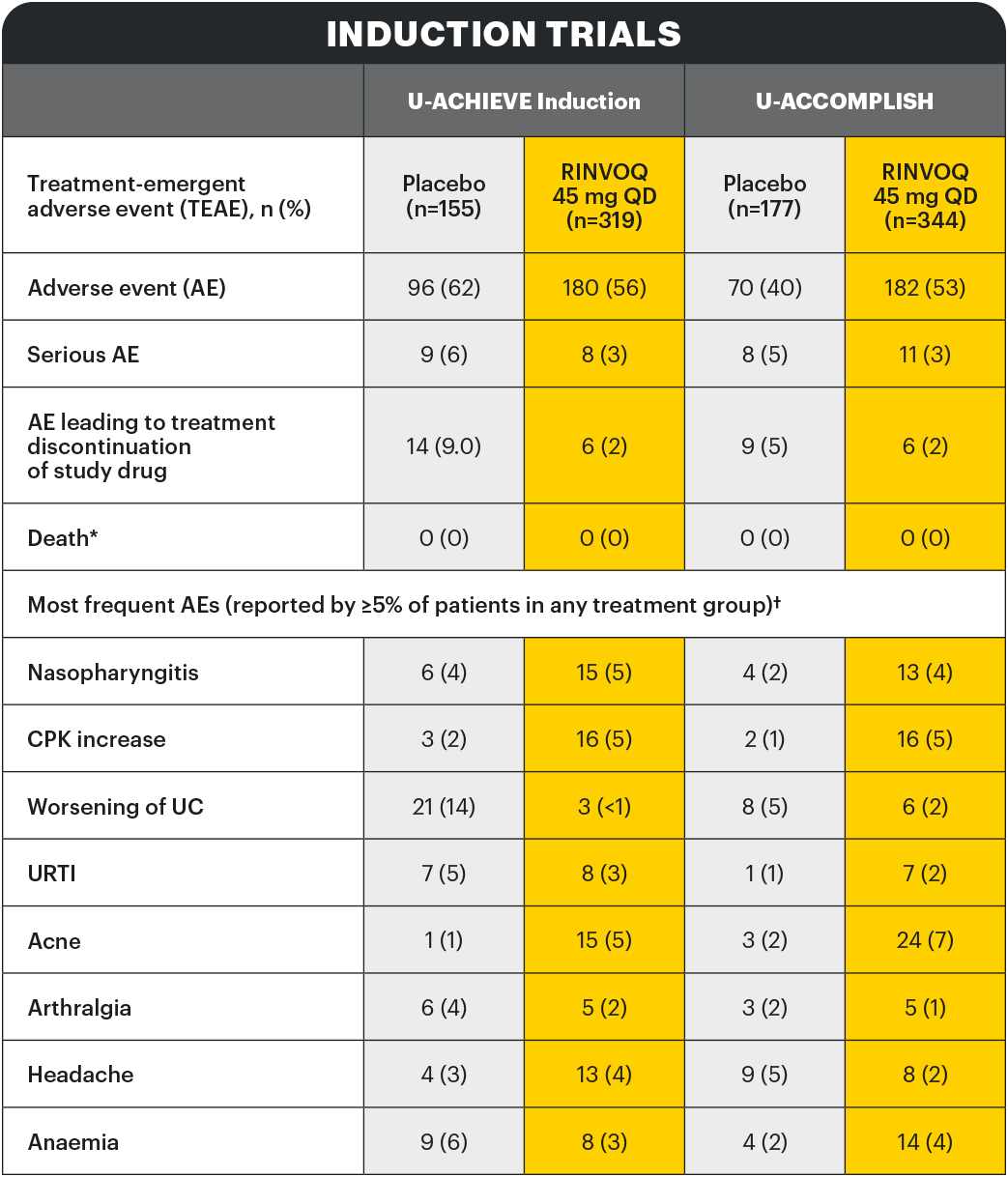
AE: adverse events; CPK: creatine phosphokinase; TEAE: treatmen-emergent adverse event; QD: once-daily; UC: ulcerative colitis; URTI: upper respiratory tract infection.
*Includes non-treatment emergent deaths. †The rates of the four most frequent adverse events are listed for all studies.

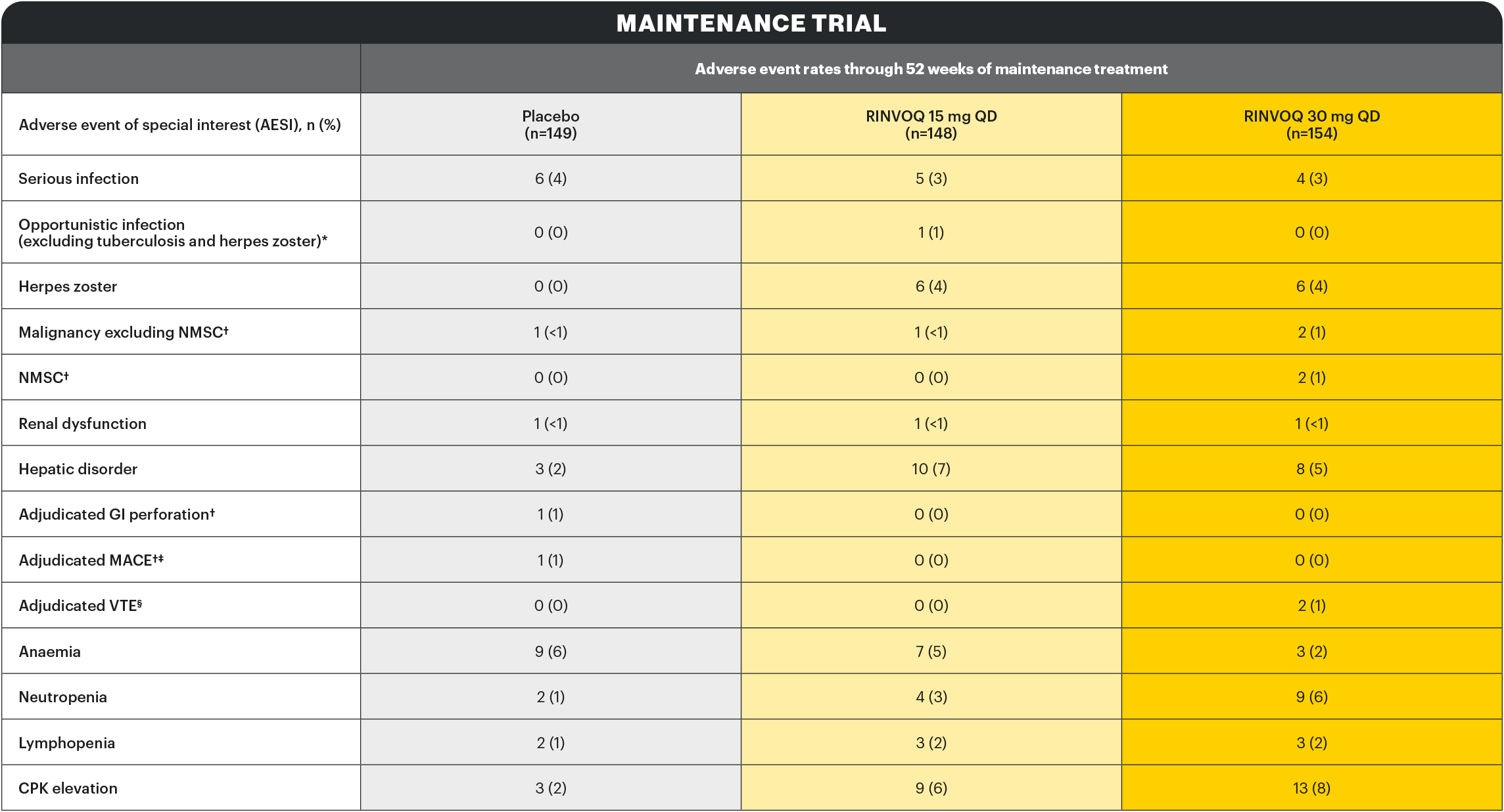
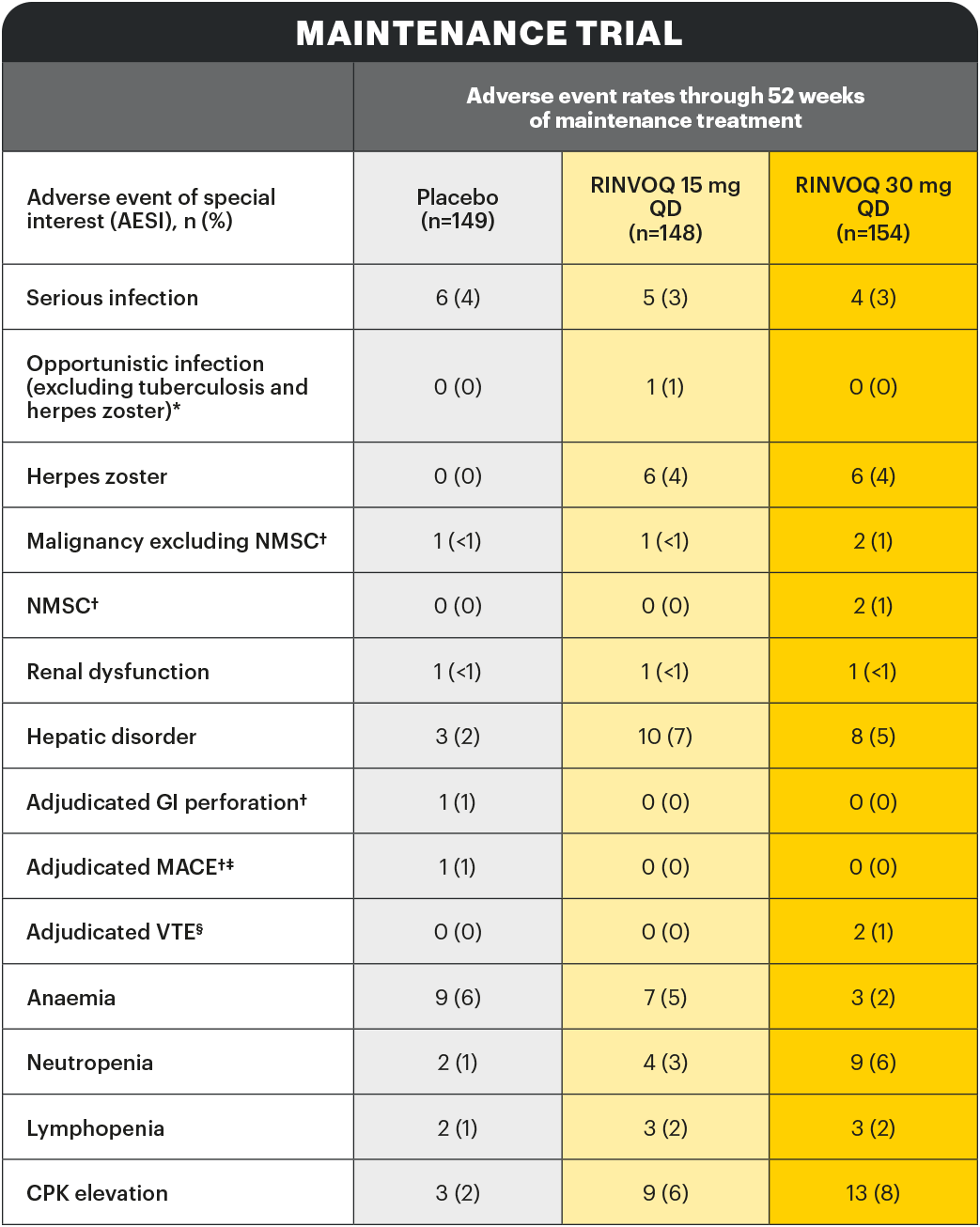
AESI: adverse event of special interest; CPK: creatine phosphokinase; GI: gastrointestinal; MACE: major adverse cardiac event; NMSC: non-melanoma skin cancer; QD: once-daily; VTE: venous thromboembolism.
*Search criteria were based on Company MedDRA Query. †These events were determined on the basis of external adjudication. ‡MACE is defined as cardiovascular death, non-fatal myocardial infarction, and non-fatal stroke. §VTE is defined as deep vein thrombosis and pulmonary embolism (fatal and non-fatal).
There were no AESIs of active tuberculosis or lymphoma in the study.

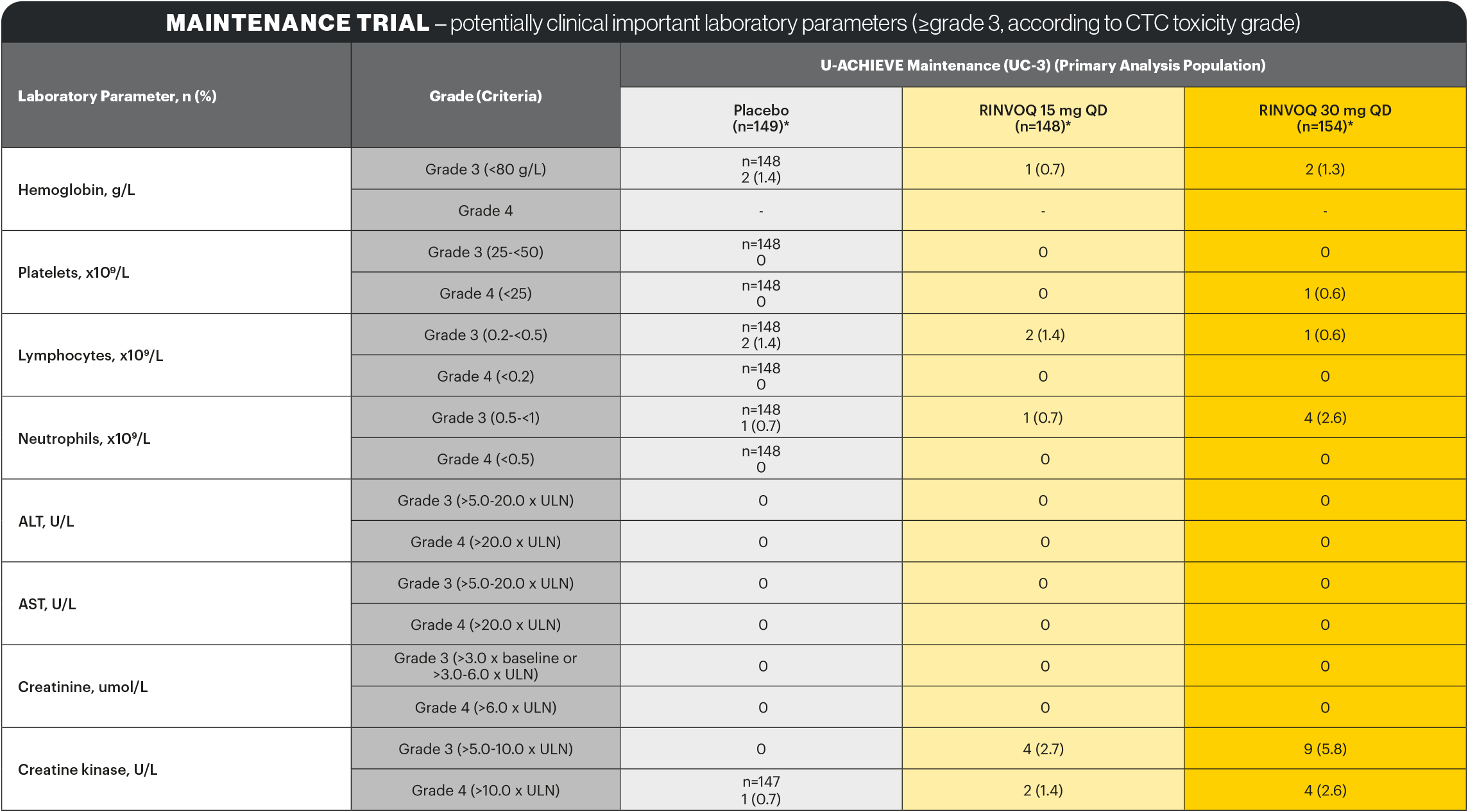
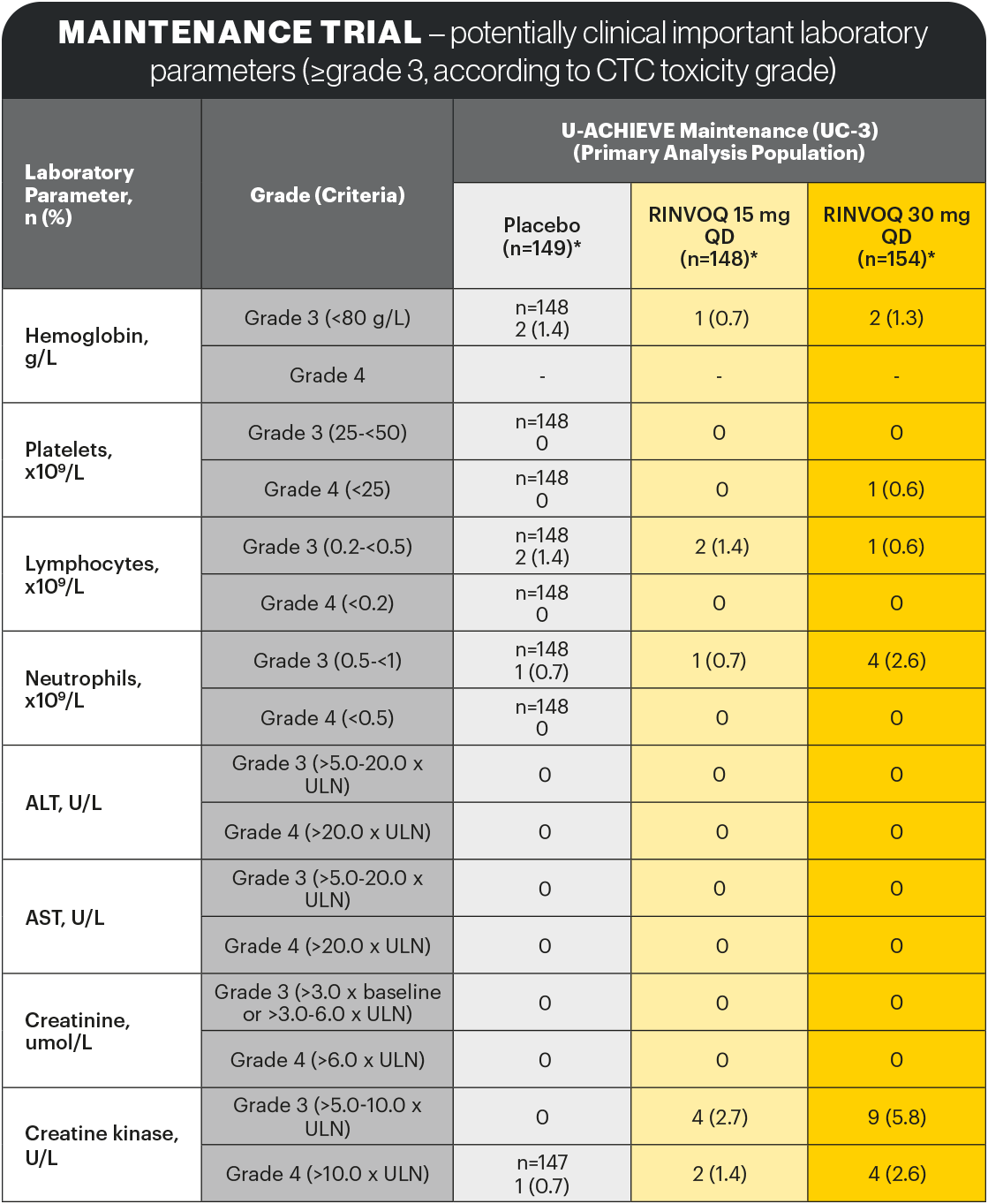
ALT: alanine aminotransferase; AST: aspartate aminotransferase; CTC: common toxicity criteria; QD: once-daily; ULN: upper limit of the normal.
*Indicates the number of patients with non-missing baseline and at least one post-baseline for the respective parameter.
Common adverse reactions
In the placebo-controlled ulcerative colitis induction and maintenance clinical trials, the most commonly reported adverse reactions (≥3% of patients) with RINVOQ 45 mg, 30 mg or 15 mg were upper respiratory tract infection (19.9%), blood CPK increased (7.6%), acne (6.3%), neutropenia (6.0%), rash (5.2%), herpes zoster (4.4%), hypercholesterolemia (4.0%), folliculitis (3.6%), herpes simplex (3.2%), and influenza (3.2%).1
Infections
The frequency of infection over 52 weeks in the RINVOQ 15 mg and 30 mg groups was 38.4% and 40.6%, respectively, compared to 37.6% in the placebo group. The long-term rate of infections for RINVOQ 15 mg and 30 mg was 73.8 and 82.6 events per 100 patient-years, respectively.1
Serious Infection
The frequency of serious infection over 52 weeks in the RINVOQ 15 mg and 30 mg groups was 3.2% and 2.4%, respectively, compared to 3.3% in the placebo group. The long-term rate of serious infections for the RINVOQ 15 mg and 30 mg groups was 4.1 and 3.9 events per 100 patient-years, respectively. The most frequently reported serious infection in the induction and maintenance phases was COVID-19 pneumonia.1
Opportunistic Infection
The frequency of opportunistic infection (excluding tuberculosis and herpes zoster) in the RINVOQ 15 mg and 30 mg groups was 0.8% and 0.4%, respectively, compared to 0.8% in the placebo group. The long-term rate of opportunistic infections (excluding tuberculosis and herpes zoster) for the RINVOQ 15 mg and 30 mg groups was 0.6 and 0.3 events per 100 patient-years, respectively.1
Herpes Zoster
The frequency of herpes zoster in the RINVOQ 15 mg and 30 mg groups was 4.4% and 4.0%, respectively, compared to 0% in the placebo group. The long-term rate of herpes zoster for the RINVOQ 15 mg and 30 mg groups was 5.7 and 6.3 events per 100 patient-years, respectively. The majority of herpes zoster events observed with RINVOQ were mono-dermatomal and uncomplicated. Few events led to RINVOQ discontinuation.1
Malignancy excluding NMSC
Two patients on 30 mg: colon cancer, prostate cancer. One patient on 15 mg: invasive breast cancer. One patient on placebo: invasive breast cancer.2
Adjudicated VTE
Patients with VTEs in RINVOQ Phase 3 UC studies had at least one VTE risk factor at baseline. Two non-serious events of deep vein thrombosis (DVT) were reported in the RINVOQ 30 mg group; one event led to study drug discontinuation. 63-year-old male: hospitalized with COVID-19, intubated due to respiratory failure, not related to study drug. 74-year-old male: DVT of left popliteal vein, not related to study drug. Risk factor: body mass index, hypertension.2
CPK elevation
No events of CPK were serious and most were asymptomatic. Most events were mild or moderate in severity and assessed by investigator as possibly related to study drug. Discontinuation of RINVOQ due to CPK elevation was infrequent.2
Lab abnormalities
In the placebo-controlled maintenance study, for up to 52 weeks decreases in lymphocyte counts below 0.5 x 10⁹ cells/L in at least one measurement occurred in 1.6%, 0.8% and 0.8% of patients in the RINVOQ 15 mg, 30 mg and placebo groups, respectively. In clinical studies, treatment was interrupted in response to ALC <0.5 x 10⁹ cells/L. No notable mean changes of lymphocyte counts were observed during RINVOQ treatment over time.1
Elevations in lipid parameters were observed at 8 weeks of treatment with RINVOQ 45 mg and remained generally stable with longer-term treatment with RINVOQ 15 mg and 30 mg. Among patients in the placebo-controlled induction studies with baseline values below the specified limits, the following frequencies of patients were observed to shift to above the specified limits on at least one occasion during 8 weeks (including patients who had an isolated elevated value):1
- Total cholesterol ≥ 5.17 mmol/L (200 mg/dL): 49% vs 11%, in the RINVOQ 45 mg and placebo groups, respectively
- LDL cholesterol ≥ 3.36 mmol/L (130 mg/dL): 27% vs 9%, in the RINVOQ 45 mg and placebo groups, respectively
- HDL cholesterol ≥ 1.03 mmol/L (40 mg/dL): 79% vs 36%, in the RINVOQ 45 mg and placebo groups, respectively
- Triglycerides ≥ 2.26 mmol/L (200 mg/dL): 6% vs 4% in the RINVOQ 45 mg and placebo group, respectively

The safety profile of RINVOQ was generally consistent with that observed in patients with rheumatoid arthritis1
AE: adverse event; AESI: adverse event of special interest; rase; ALT: alanine aminotransferase; AST: aspartate aminotransferase; CPK: creatine phosphokinase; CTC: common toxicity criteria; GI: gastrointestinal; MACE: major adverse cardiac event; NMSC: non-melanoma skin cancer; PY: patient-years; QD: once-daily; TEAE: treatment-emergent adverse event; UC: ulcerative colitis; UTRI: upper respiratory tract infection; VTE: venous thromboembolism.

Learn more about RINVOQ’s safety profile during a Phase 3 induction and maintenance clinical study program through Weeks 8 and 52.



RINVOQ is an oral, once daily, selective and reversible JAK inhibitor now approved for the treatment of adult patients with moderately to severely active ulcerative colitis who have had an inadequate response, lost response or were intolerant to either conventional therapy or a biologic agent.1
RINVOQ can be taken at any time of the day, with or without food.1
A Phase 3 clinical trial program involving 3 studies: 2 replicate induction studies and 1 maintenance study evaluated RINVOQ 45 mg vs placebo for induction, and RINVOQ 15 mg and 30 mg vs placebo for maintenance treatment.
REFERENCES
- RINVOQ Summary of Product Characteristics [DRAFT].
- Danese S, Vermeire S, Zhou W, et al. Lancet. Published online May 26, 2022. doi: https://doi.org/10.1016/S0140-6736(22)00581-5.