

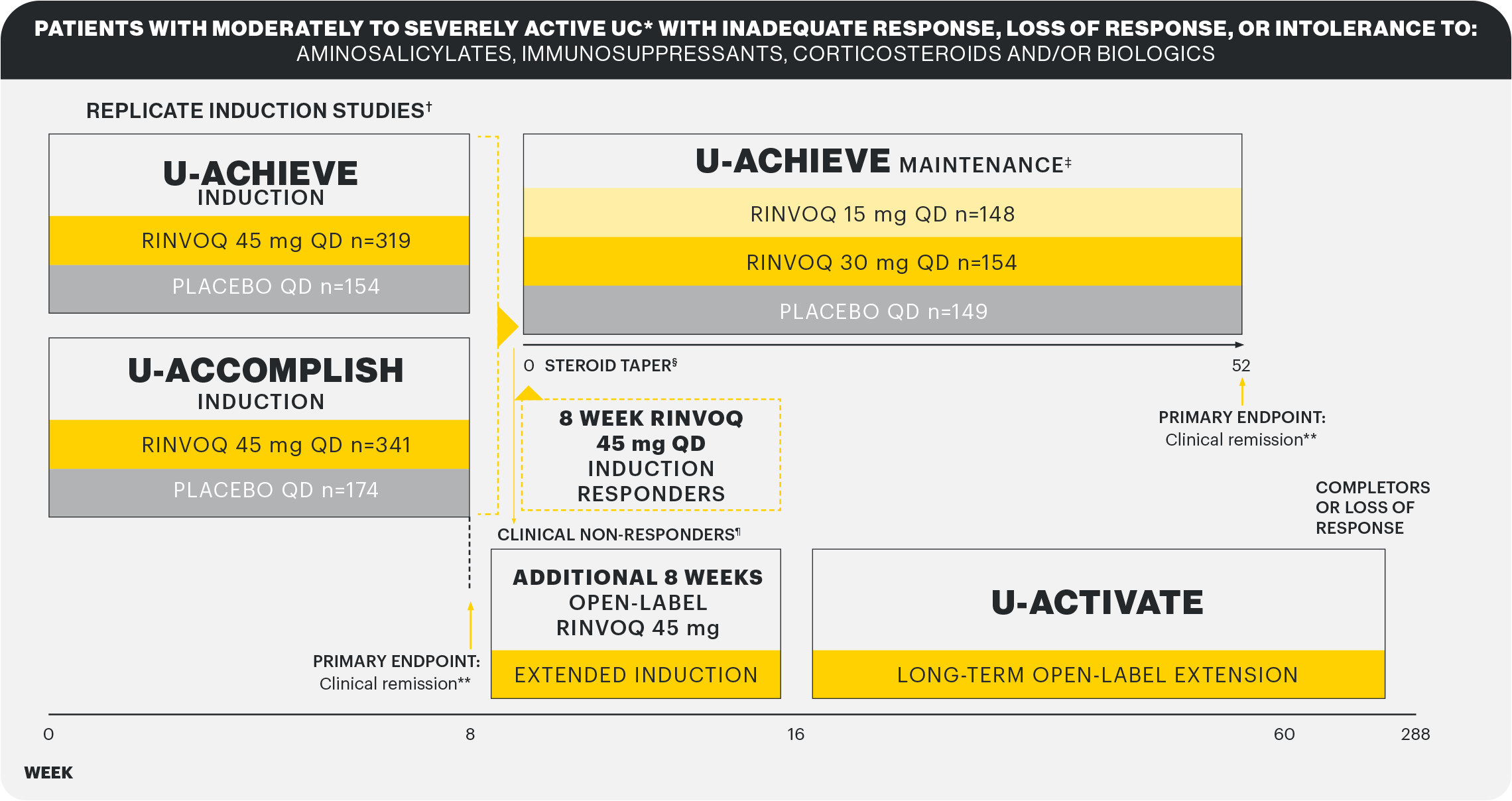
*Defined as adapted Mayo Score 5–9 with centrally assessed endoscopic subscore of 2–3. †Randomization stratified by history of biologic failure (IR, loss of response or intolerance [yes vs no]), baseline corticosteroid use (yes vs no) and baseline adapted Mayo Score (≤7 vs >7). ‡Randomization stratified by previous biologic failure, induction clinical remission status and corticosteroid use at the beginning of U-ACHIEVE maintenance. Primary efficacy analysis = first 450 [planned] clinical responders to 8-week RINVOQ 45 mg induction. §For subjects taking corticosteroid therapy at baseline of induction studies (~40%). At Week 0 of the maintenance study (Week 16 of the open-label extension), corticosteroid therapy was tapered according to a predefined schedule. IIPatients who did not achieve clinical response at Week 8 in U-ACHIEVE and U-ACCOMPLISH continued in an additional 8-week, open-label, induction extension period with RINVOQ 45 mg QD. Patients who received 8-weeks total RINVOQ 45 mg QD with response at Week 16 were rerandomized into the maintenance study. ¶Patients who received RINVOQ 45 mg QD for 16 weeks who had a response at Week 16 were randomized to RINVOQ 15 or 30 mg QD maintenance but were not included in the primary analysis. Patients who did not achieve clinical response by Week 16 of induction were discontinued. **Adapted Mayo Score ≤2 with SFS ≤1 and not greater than baseline AND RBS of 0 AND endoscopic subscore 0 or 1 without friability.
Study design: U-ACHIEVE Induction (UC-1) and U-ACCOMPLISH (UC-2) were replicate induction studies, both of which were multicenter, double-blind, placebo-controlled clinical studies. In UC-1 and UC-2, 988 patients (473 and 515 patients, respectively) were randomized to RINVOQ 45 mg QD or placebo for 8 weeks with a 2:1 treatment allocation ratio and included in the efficacy analysis. All enrolled patients had moderately to severely active UC defined as aMs of 5 to 9 with an ESS of 2 or 3 and demonstrated prior treatment failure including inadequate response, loss of response, or intolerance to prior conventional and/or biologic treatment.1,2 U-ACHIEVE Maintenance (UC-3) was a multicenter, doubleblind, placebo-controlled clinical study with 451 patients who achieved clinical response per aMs (decrease ≥2 points and ≥30% from Baseline and a decrease in RBS ≥1 from Baseline or an absolute RBS ≤1) with 8-week RINVOQ 45 mg QD induction treatment. Patients were rerandomized 1:1:1 to receive either RINVOQ 15 mg QD, 30 mg QD or placebo.1,2



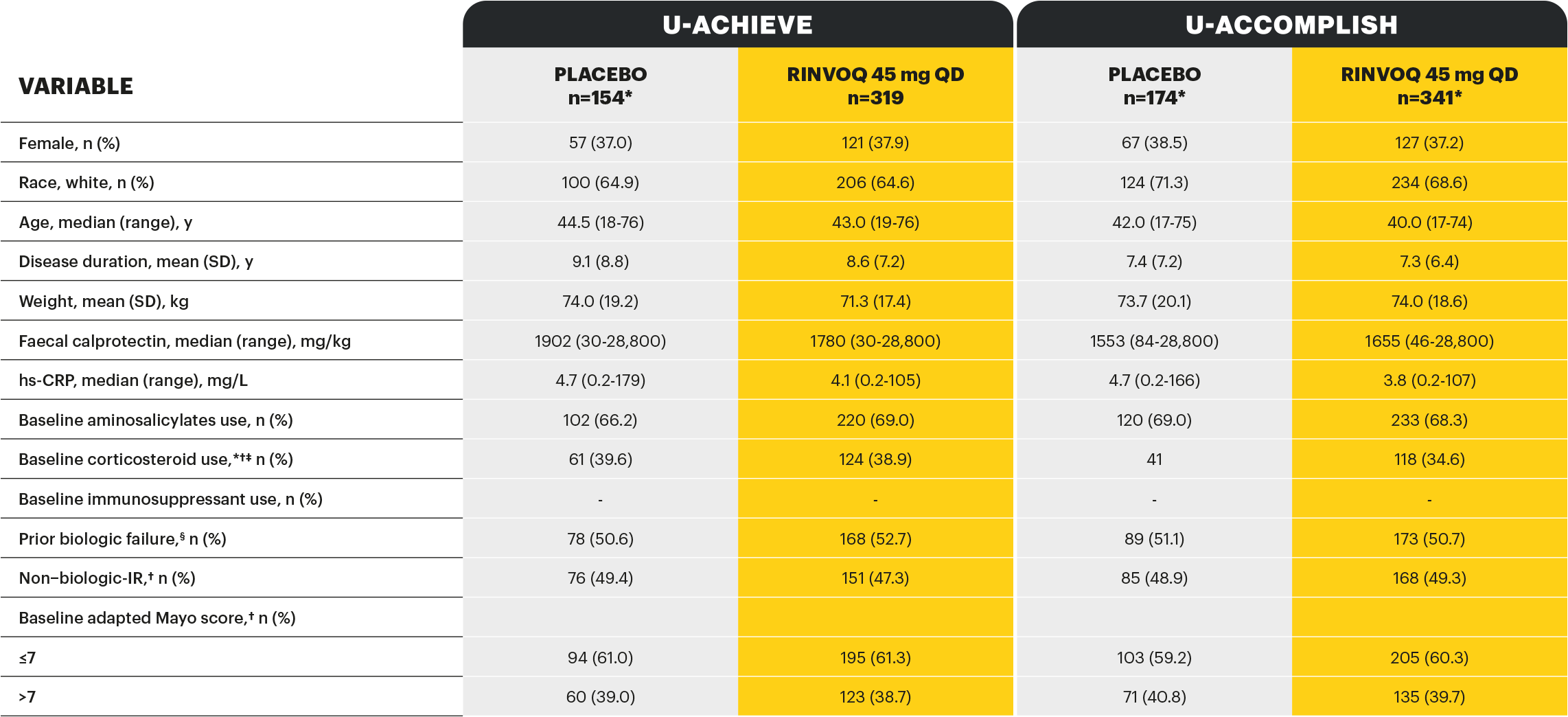
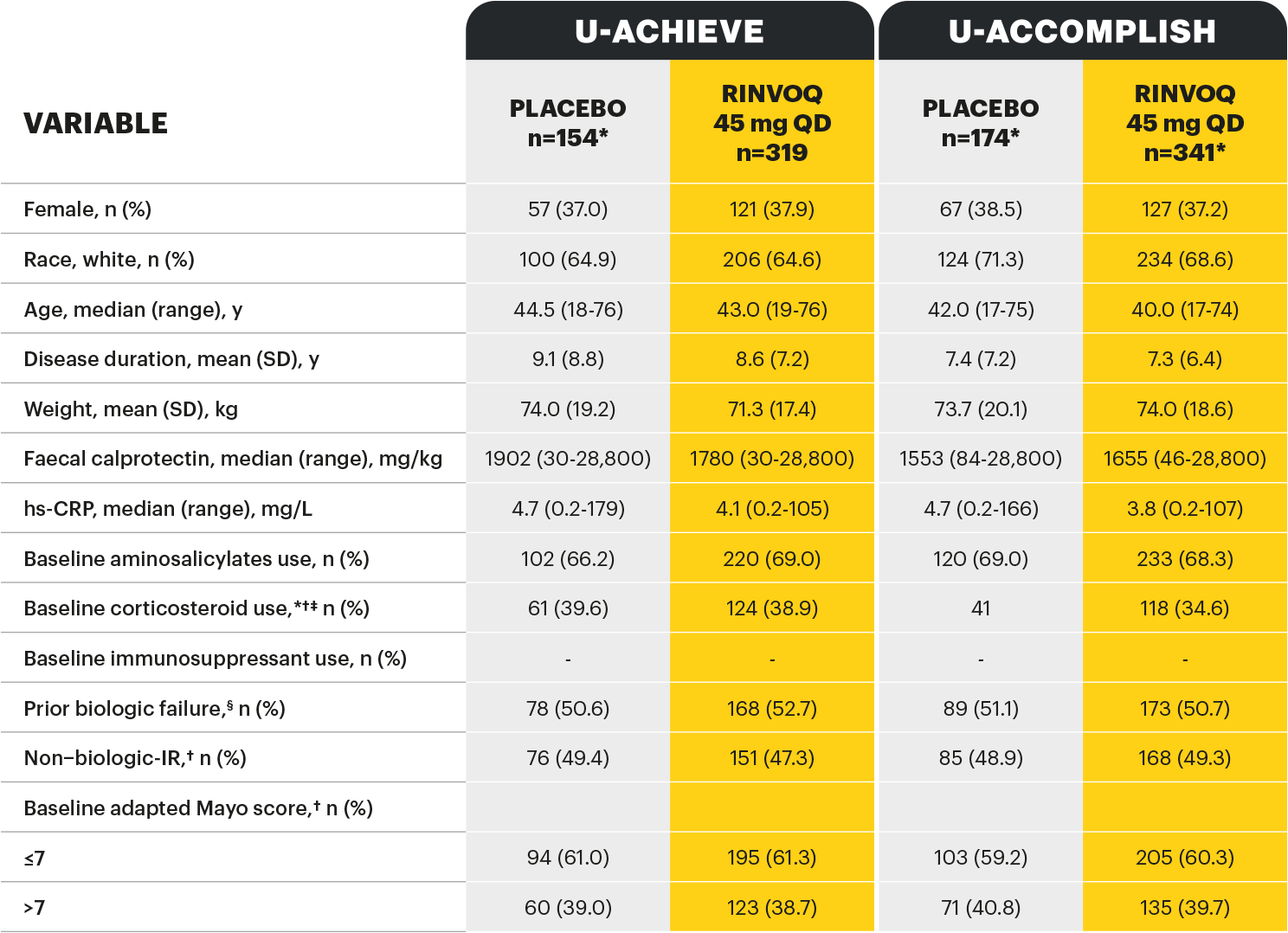
*One placebo patient in U-ACHIEVE Induction, 3 placebo patients from U-ACCOMPLISH, and 3 RINVOQ 45 mg patients from U-ACCOMPLISH were excluded from efficacy analyses because of site non-compliance; these patients were included in the safety analysis. †Stratification factors for randomization. ‡The highest allowed prednisolone dose at Baseline was 30 mg. §Biologic inadequate responder status, Baseline steroid use, and Baseline adapted Mayo score.



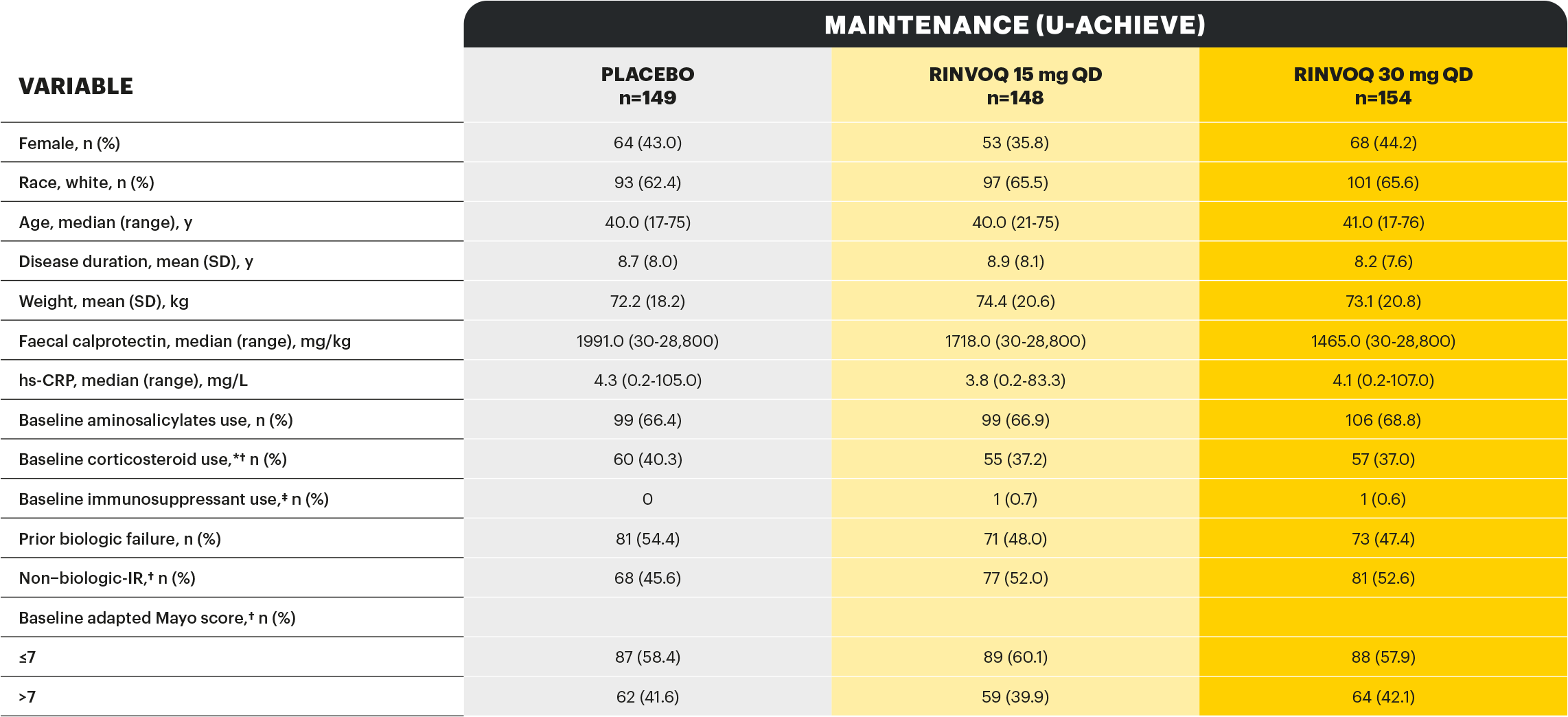
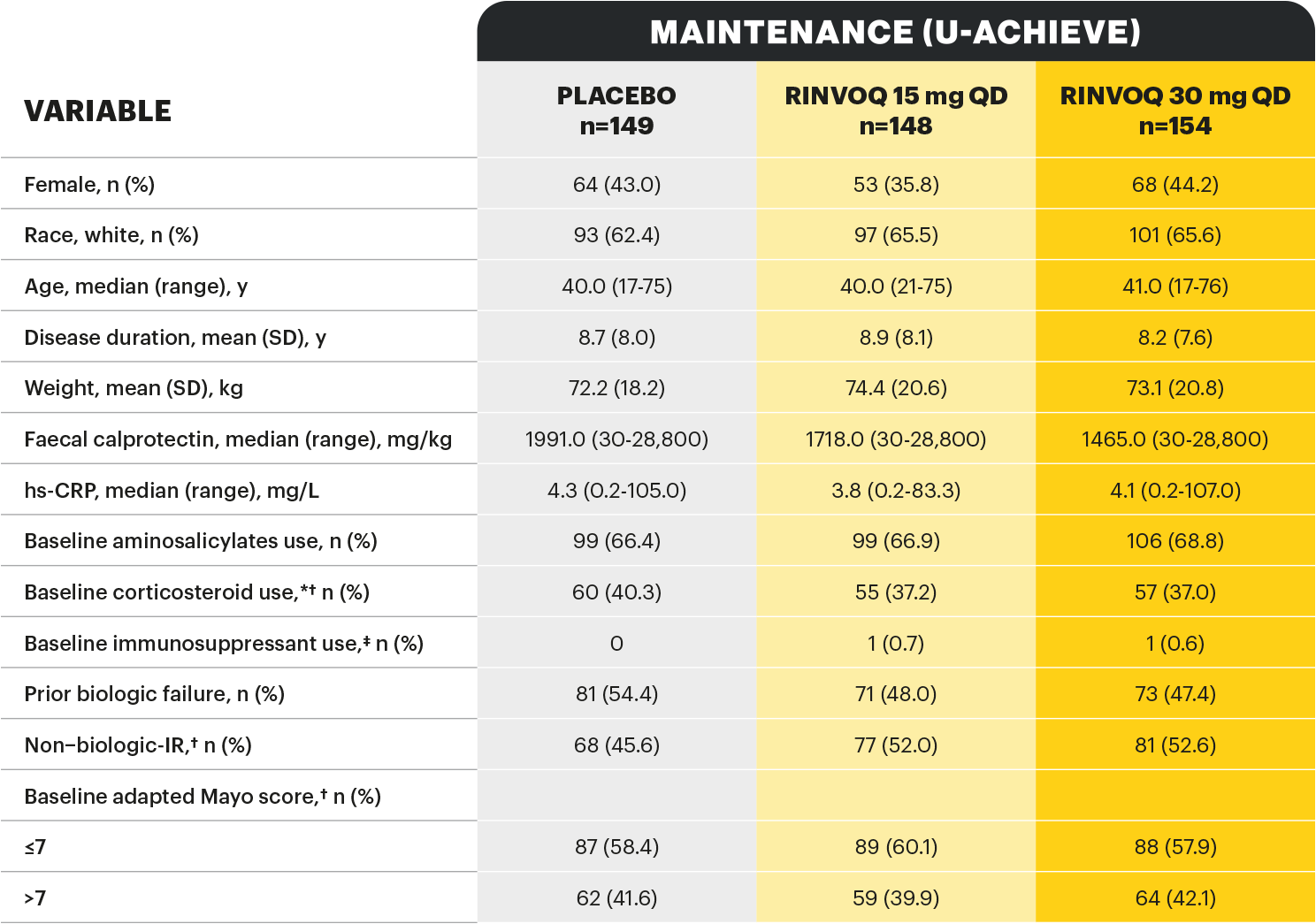
*Stratification factors for randomization. †The highest allowed prednisolone dose at baseline was 30 mg. ‡Rescue therapy could be provided to treat worsening of UC (initiated or increased dose: corticosteroids, aminosalicylates, methotrexate, or antibiotics) at the investigator’s discretion.2


16 to 75 yearsa with a diagnosis of active UC for ≥90 days prior to baseline,b with an aMs of 5 to 9 points and ESS of 2 to 3

Inadequate response to, loss of response to, or intolerance to at least one of the following treatments including oral aminosalicylates, corticosteroids, immunosuppressants and/or biologic therapiesc

Signs and symptoms of persistently active disease despite a history of certain UC biologic agentsd

Reoccurrence of symptoms during scheduled maintenance dosing following prior clinical benefite OR history of intolerance to at least one biologic agentf


Diagnosis of Crohn’s disease/indeterminate colitis/fulminant colitis/toxic megacolon

Disease limited to the rectum (ulcerative proctitis) during the screening endoscopy

History of colectomy (total or subtotal, ileoanal pouch, Kock pouch, or ileostomy or were planning bowel surgery

Active infection (Clostridium difficile)

Prior exposure to systemic JAK inhibitors

Systemic therapy for UC,g traditional Chinese medicineh or any investigational drugi within 4 weeks prior to BL
aBody weight ≥40 kg at BL for subjects 16 and 17 years. bConfirmed by colonoscopy during the screening period, with exclusion of current infection, colonic dysplasia and/or malignancy. cAn inadequate response, loss of response, or intolerance to oral aminosalicylates did not count towards eligibility in Austria, Czechia, Finland, France, Ireland, Italy, Latvia, Lithuania, Norway, Poland, Portugal, Spain, Sweden, and the United Kingdom. dAt least one 6-week induction regimen of infliximab or vedolizumab, at least one 4-week induction regimen of adalimumab, at least one 2-week induction regimen of golimumab and at least one induction regimen of ustekinumab. eDiscontinuation despite clinical benefit does not qualify. fIncluding, but not limited to infusion-related reaction, demyelination, congestive heart failure and infection. gSystemic use of known strong cytochrome P450 CYP3A inhibitors or strong CYP3A inducers during the screening period and through to the end of the study. hOral or parenteral. iWithin 4 weeks or five half-lives of the drug (whichever is longer) or is currently enrolled in another clinical study.

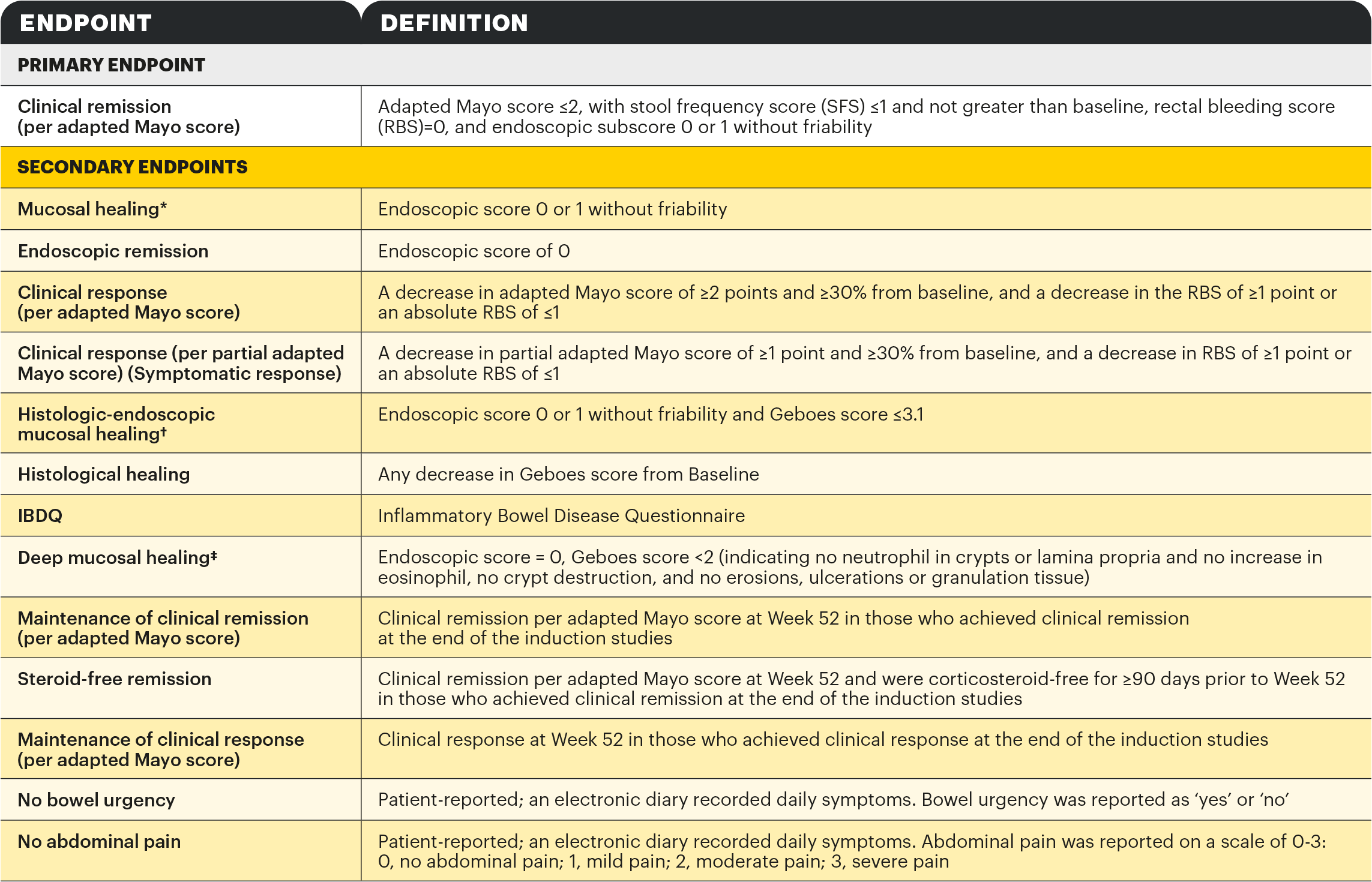
*Definition as per RINVOQ summary of product characteristics, the equivalent endpoint was referred to as 'endoscopic improvement' in the clinical study design. †Definition as per RINVOQ summary of product characteristics, the equivalent endpoint was referred to as 'histologic-endoscopic mucosal improvement' in the clinical study design. ‡Definition as per RINVOQ summary of product characteristics, the equivalent endpoint was referred to as 'mucosal healing' in the clinical study design.



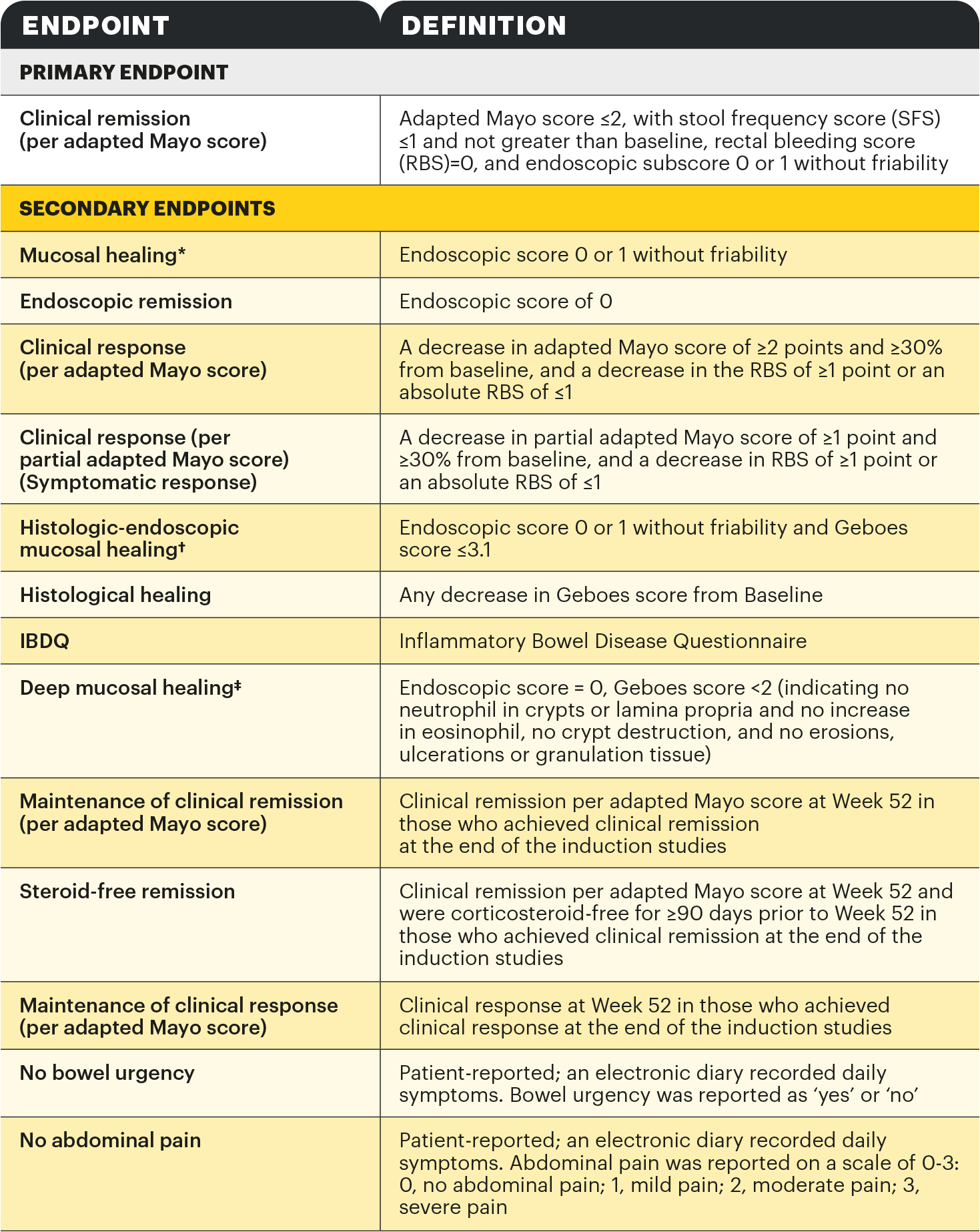
*Definition as per RINVOQ summary of product characteristics, the equivalent endpoint was referred to as 'endoscopic improvement' in the clinical study design. †Definition as per RINVOQ summary of product characteristics, the equivalent endpoint was referred to as 'histologic-endoscopic mucosal improvement' in the clinical study design. ‡Definition as per RINVOQ summary of product characteristics, the equivalent endpoint was referred to as 'mucosal healing' in the clinical study design.
aMs: adapted Mayo score; BL: baseline; ESS: endoscopic subscore; PGA: Physician Global Assessment; QD: once-daily; RBS: rectal bleeding score; SD: standard deviation; SFS: stool frequency score; UC: ulcerative colitis.

RINVOQ is an oral, once daily, selective and reversible JAK inhibitor now approved for the treatment of adult patients with moderately to severely active ulcerative colitis who have had an inadequate response, lost response or were intolerant to either conventional therapy or a biologic agent.1
RINVOQ can be taken at any time of the day, with or without food.1
A Phase 3 clinical trial program involving 3 studies: 2 replicate induction studies and 1 maintenance study evaluated RINVOQ 45 mg vs placebo for induction, and RINVOQ 15 mg and 30 mg vs placebo for maintenance treatment.


Watch Professor Edouard Louis discuss results from a Phase 3 clinical trial program that evaluated RINVOQ as an induction and maintenance therapy for adults with moderately to severely active UC.

Learn from experts in gastroenterology on how you can help deliver mucosal healing for patients with moderately to severely active UC, and RINVOQ’s rates of mucosal healing in UC through induction and maintenance in its clinical program.1,2



REFERENCES
- RINVOQ Summary of Product Characteristics.
- Danese S, Vermeire S, Zhou W, et al. Lancet. 2022;399(10341):2113–2128.