


This promotional material is intended for UK Healthcare Professionals experienced in the diagnosis and treatment of psoriasis and psoriatic arthritis. SKYRIZI® (risankizumab) and adalimumab prescribing information & adverse event reporting information can be found below.


UK-RISN-250214. Date of preparation July 2025.
Find out more about the efficacy of SKYRIZI
Explore the durability of response with SKYRIZI through clinical trials and long-term data in psoriasis and psoriatic arthritis. Start by selecting a study from the menu below.
LONG-TERM DATA
HEAD-TO-HEAD TRIALS
SKYRIZI IN PsA
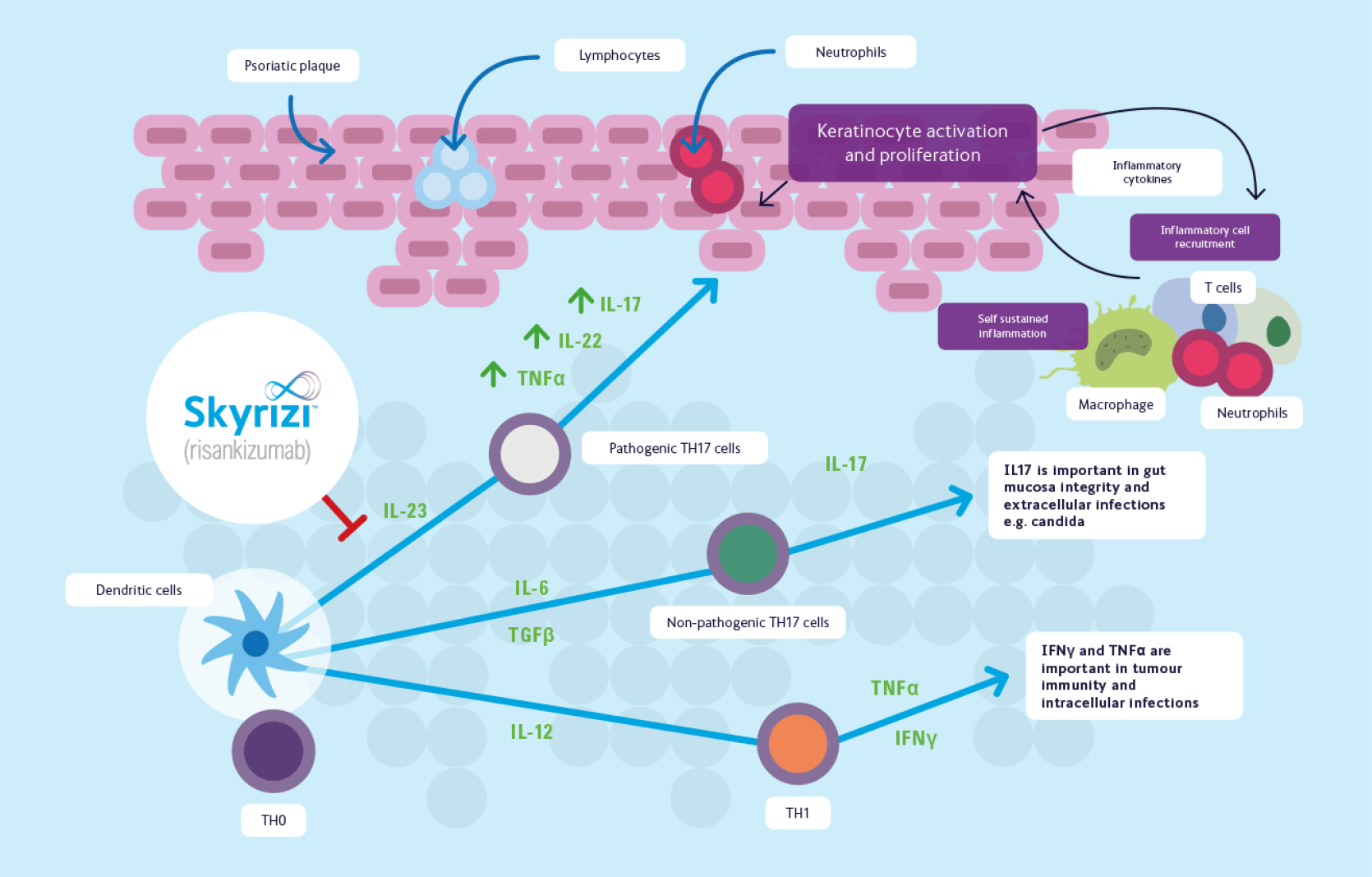
IL, interleukin; IFN-γ, interferon gamma; TGFβ, transforming growth factor beta; TH, T helper; TNFα, tumour necrosis factor alpha.
Featured content
More expert perspectives
View expert perspectives on SKYRIZI’s efficacy data, dosing regimen and safety profile.

UK-RISN-260030. Date of preparation April 2026.
References
- Reich K, et al. Lancet 2019; 394: 576-586.
- Gordon KB, et al. Lancet 2018; 392: 650-661.
- Warren RB, et al. Br J Dermatol 2021;184:50-59
- SKYRIZI: Summary of Product Characteristics.
- Gooderham MJ, et al. J Eur Acad Dermatol Venereol 2018; 32(7): 1111-1119.
- Kofoed K, et al. Acta Derm Venereol 2015; 95(2): 133-139.
- Gaffen SL, et al. Nat Rev Immunol 2014; 14(9): 585-600.
- Girolomoni G, et al. J Eur Acad Dermatol Venereol 2017; 31(1): 1616-1626.
- Lynde CW, et al. J Am Acad Dermatol 2014; 71(1): 141-150.
UK-RISN-260041. Date of preparation: April 2026.
