


This promotional website is for UK Healthcare Professionals involved in the management of haematological malignancies. Adverse event reporting information can be found below.

VENCLYXTO + obinutuzumab in 1st line CLL
VENCLYXTO + obinutuzumab (VEN+O) vs chlorambucil + obinutuzumab (Clb+O)1,2*
*CLL-14 was a multicentre, open-label, Phase III trial to compare the efficacy and safety of VEN+O Versus Clb+O in previously untreated CLL patients with coexisting medical conditions. Treatment was completed after twelve 28-day cycles.
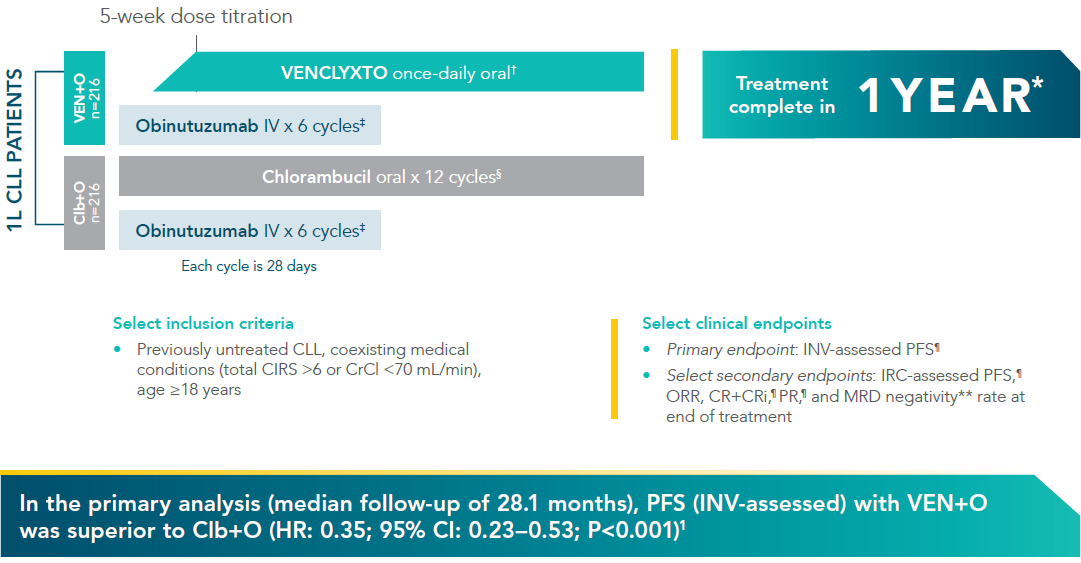
†VENCLYXTO was started on Cycle 1, Day 22 and increased to full dose for Cycle 3, Day 1. VENCLYXTO was continued until the end of Cycle 12. VENCLYXTO 400 mg daily after initial dose-titration period.
‡Obinutuzumab dosing: 100 mg Cycle 1, Day 1, followed by 900 mg on Days 1 or 2; 1000 mg on Days 8 and 15 and Day 1 of subsequent cycles.
§Chlorambucil dosing: 0.5 mg/kg on Days 1 and 15 of each 28-day cycle.
¶Assessed using the iwCLL updated NCI-WG guidelines (2008).
**MRD negativity was assessed at the end of treatment. MRD negativity = <1 tumour cell per 104 white cells.
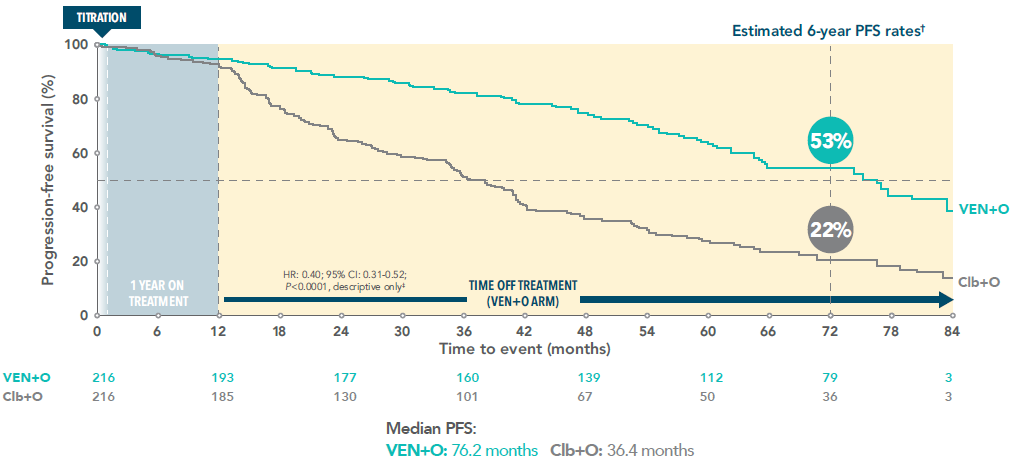
Over twice as many VEN+O patients remained progression-free vs Clb+O 6 years after initiating VEN+O treatment3
PFS (INV-assessed) of VEN+O vs Clb+O at 6 years (primary endpoint)3*
Adapted from Al-Sawaf O et al. 2024.
*In the primary analysis at 28.1 months in the ITT population, PFS with VEN+O was superior to Clb+O (HR: 0.35; 95% CI: 0.23–0.53; P<0.001)1
†Median follow-up 76.4 months.
‡Not tested for statistical significance.
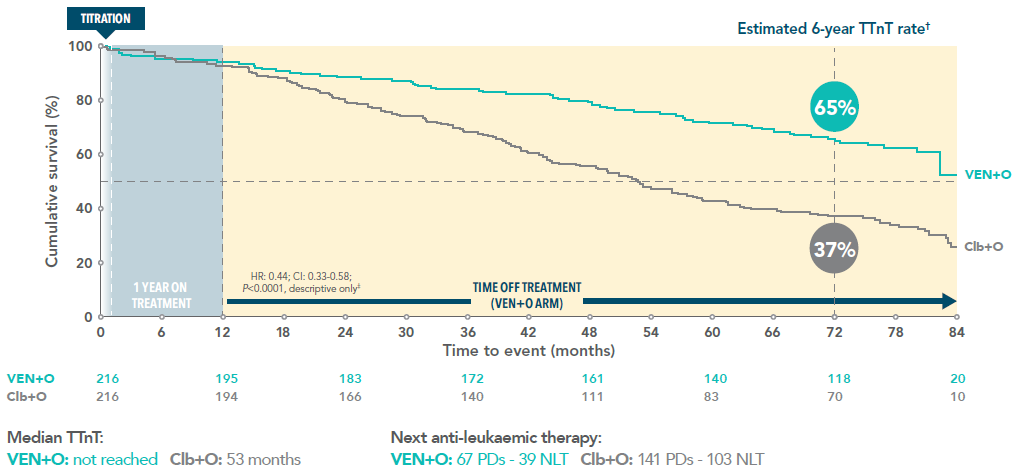
Over 6 out of 10 VEN+O patients were still treatment-free 6 years after initiating treatment3
Time to next treatment* for VEN+O vs Clb+O over 6 years (secondary endpoint)3
Adapted from Al-Sawaf O et al. 2024.
*TTnT was defined as the time between the date of randomisation to the date of first intake of new anti-CLL treatment or death prior to initiating new anti-CLL treatment.
†Median follow-up 76.4 months.
‡Not tested for statistical significance.
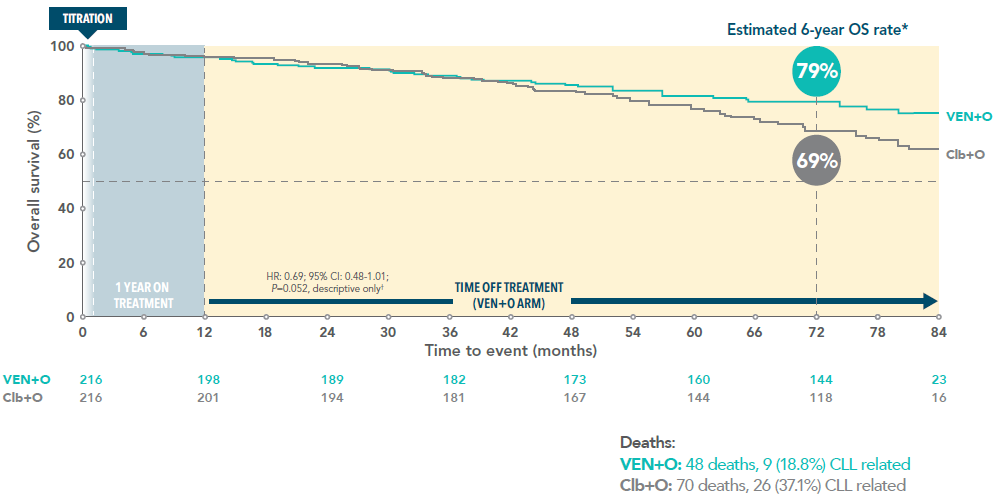
Over 75% overall survival for VEN+O patients 6 years after initiating treatment3
6-year overall survival rate of VEN+O vs Clb+O (ITT population; secondary endpoint)3
Adapted from Al-Sawaf O et al. 2024.
*Median follow-up 76.4 months.
†Not tested for statistical significance.
Rate of INV-assessed CR* 3 months after completing treatment (ITT population; secondary endpoint)1
Complete remission (CR+CRi) rate1
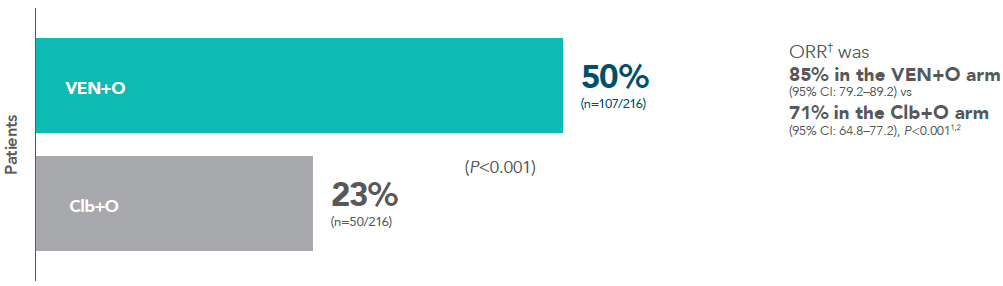
Median follow-up time in the primary analysis was 28 months (range: 0-36 months).
*Remission is based on CR and ORR. CR is defined in the SmPC as complete remission.
†ORR=CR+CRi+PR (secondary endpoint).
Most frequent Grade ≥3 adverse events during and after treatment across both treatment arms4
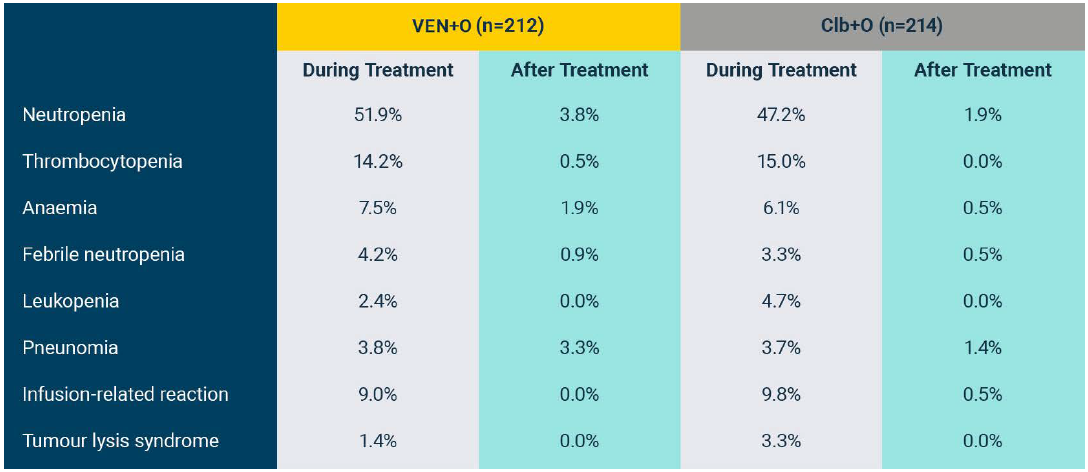
Adapted from Al-Sawaf O et al. 2023.
Median follow-up: 76.4 months.
For full safety information, please refer to the SmPC

CI, Confidence Interval; CIRS, Cumulative illness rating scale; Clb+O, Chlorambucil and Obinutuzumab; CLL, Chronic lymphocytic leukaemia; CrCl, Creatine clearance; CR, Complete response; CRi, CR with incomplete marrow recovery; HR, Hazard ratio; IRC, Independent review committee; INV, Investigator; ITT, Intent-to-treat; IV, Intravenous; iwCLL, International workshop for CLL; MRD, Minimal residual disease; NCI-WG, National Cancer Institute-sponsored working group; NLT, Next anti-leukaemic therapy; ORR, Overall response rate; OS, Overall survival; PD, Disease progression; PFS, Progression-free survival; PR, Partial response; SmPC, Summary of Product Characteristics; TTnT, Time to next treatment; uMRD, Undetectable minimal residual disease; VEN+O, VENCLYXTO + Obinutuzumab; 1L, First line.
References
- Fischer K et al. N Engl J Med. 2019; 380: 2225-36.
- VENCLYXTO Summary of Product Characteristics.
- Al-Sawaf O et al. Blood 2024. 144(18): 1924-1935.
- AI-Sawaf O et al. Abstract S145. EHA Congress 2023.
UK-VNCCLL-250361. Date of Preparation: November 2025
VENCLYXTO + obinutuzumab in 1st line CLL
VENCLYXTO + obinutuzumab (VEN+O) vs CIT (FCR or BR) arms1*
*CLL-13 was a multicentre, open-label, Phase III, multiple arm study for first-line treatment of fit CLL patients. The study evaluated whether standard chemoimmunotherapy (FCR, BR) in frontline treatment of physically fit CLL patients can be replaced by combinations of targeted drugs (venetoclax) with anti-CD20-antibodies (obinutuzumab). Treatment with VEN+O was completed after twelve 28-day cycles. The CLL-13 trial included two other arms which cannot be discussed as they are unlicensed in the UK.
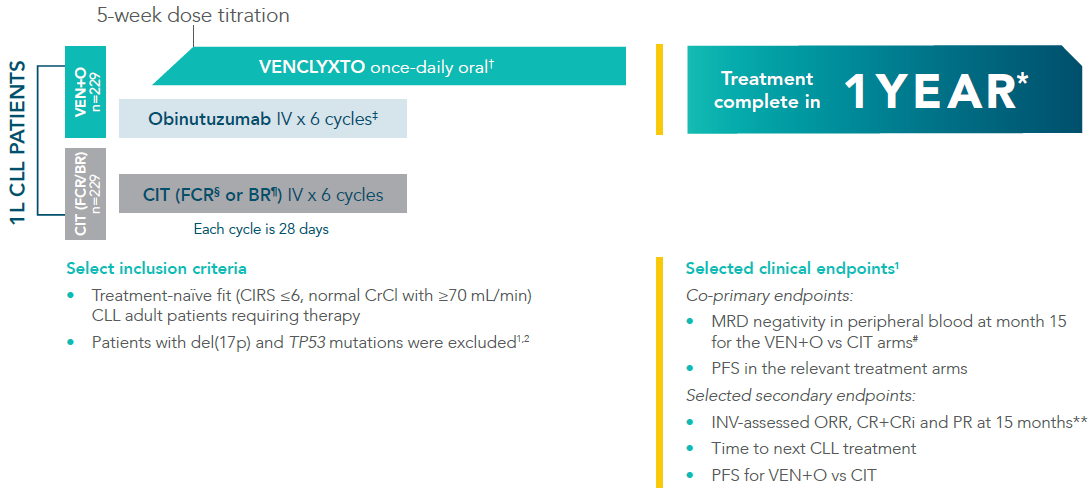
In the primary analysis (median follow-up of 38.8 months), both co-primary endpoints were met1
†VENCLYXTO was started on Cycle 1, Day 22 and increased to full dose for Cycle 3, Day 1. VENCLYXTO was continued until the end of Cycle 12. VENCLYXTO 400 mg daily after initial dose-titration period.
‡Obinutuzumab dosing: 100 mg Cycle 1, Day 1, followed by 900 mg on Days 1 or 2; 1000 mg on Days 8 and 15 and Day 1 of subsequent cycles.
§FCR for patients ≤65 years: fludarabine 25 mg/m2 days 1-3, cyclophosphamide 250 mg/m2 days 1-3, rituximab 375 mg/m2 day 1 cycle 1 and 500 mg/m2 day 1 cycles 2-6.
¶BR for patients >65 years: bendamustine 90 mg/m2 day 1-2 of cycles 1-6, rituximab 375 mg/m2 day 1 cycle 1 and 500 mg/m2 day 1 cycles 2-6. Each cycle was 28 days.
#MRD negativity was assessed at the end of treatment. uMRD = <1 tumour cell per 104 white cells.
**Assessed using the International Workshop on CLL (iwCLL) updated National Cancer Institute-sponsored Working Group (NCI-WG) guidelines (2008).
A higher PFS rate was observed for VEN+O vs CIT (FCR/BR) 5 years after initiating treatment
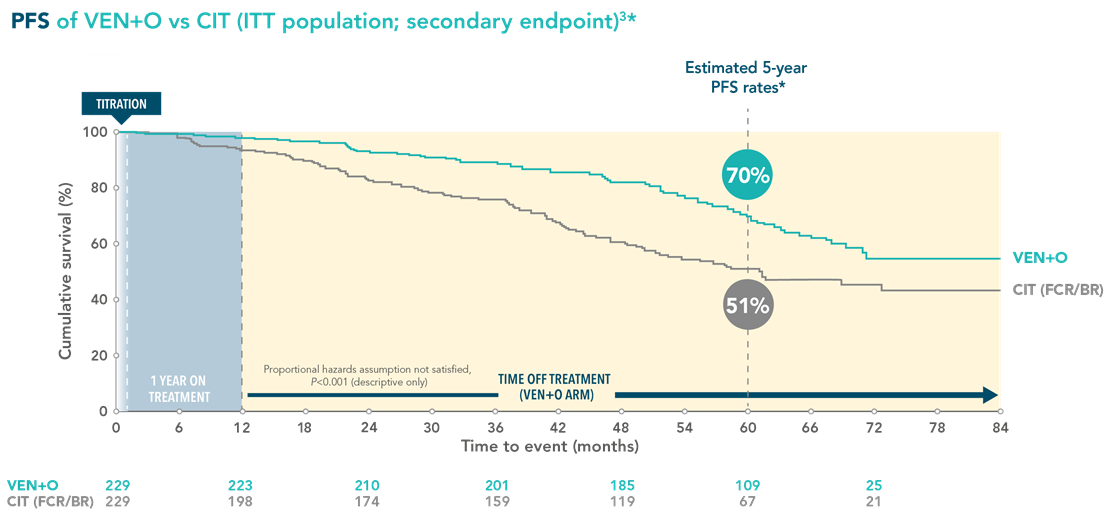
Co-primary endpoint of PFS between relevant arms was met at the primary analysis after median follow-up 38.8 months. At the primary analysis, the secondary endpoint of PFS between VEN+O and CIT was also met (p<0.001).1
Adapted from Fürstenau M et al. 2025.
Data cutoff February 2024.
*Median observation time was 63.8 months.
Over 8 out of 10 VEN+O patients were without a new treatment 5 years after initiating treatment3
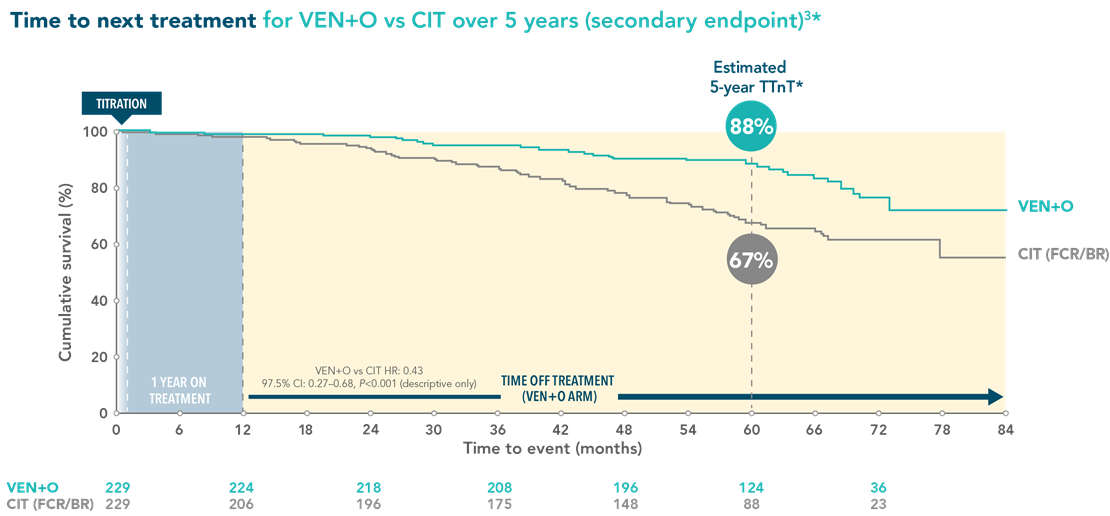
Adapted from Fürstenau M et al. 2025.
Data cutoff February 2024.
*Median observation time was 63.8 months.
Rate of INV-assessed CR* 3 months after completing treatment (ITT population; secondary endpoint)1†
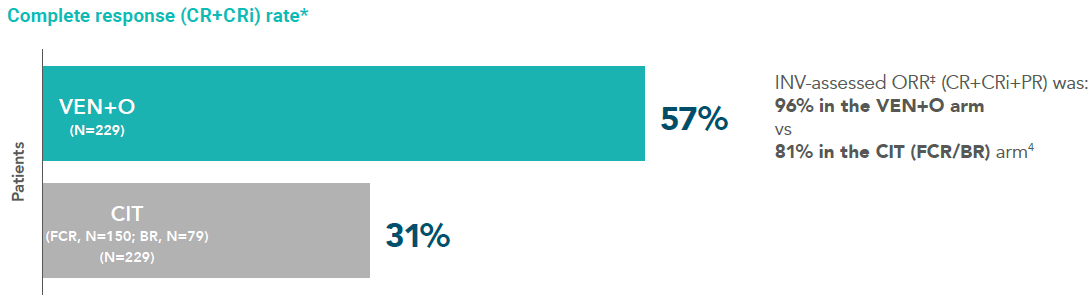
Adapted from Eichhorst B et al. 2023.
First data cutoff February 2021.
*Complete response rate is CR+CRi (secondary endpoint).
†Median follow-up 38.8 months.
‡ORR=CR+CRi+PR (secondary endpoint).
Co-primary endpoint of uMRD between VEN+O and CIT arms was met:1
At month 15, a significantly higher percentage of patients in the VEN+O arm had uMRD in peripheral blood compared to the CIT arm (86.5% [97.5% CI: 80.6–91.1] vs. 52.0% [97.5% CI: 44.4–59.5]; p<0.001)
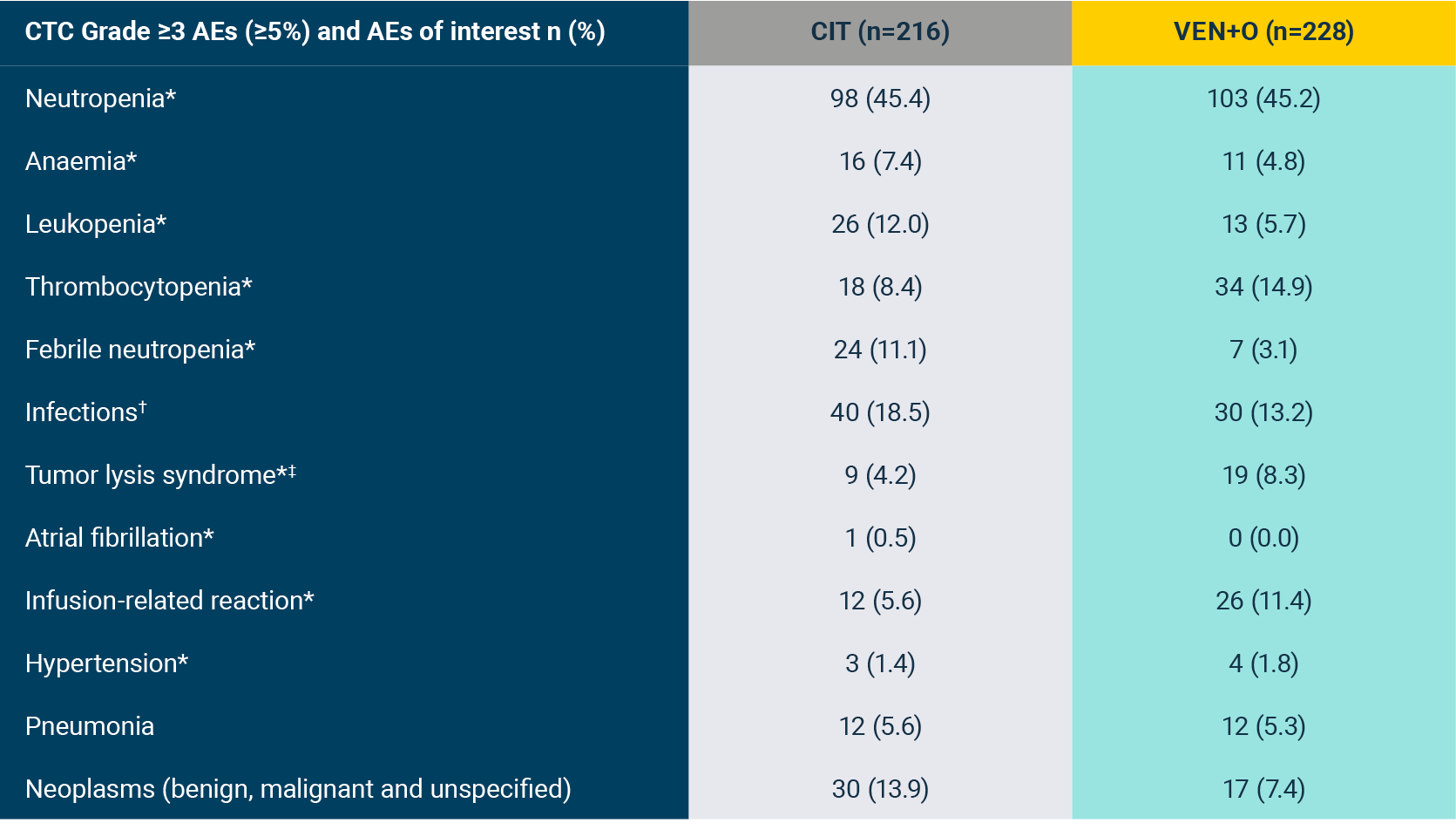
Adapted from Eichhorst B et al. 2023.
Median follow-up: 38.8 months.
*Adverse events reported as single term.
†Adverse event reported as high-level term.
‡Including clinical and laboratory. TLS according to Cairo–Bishop as per protocol; no fatal TLS occurred.
For full safety information, please refer to the SmPC

AEs, Adverse events; BR, Bendamustine–rituximab; CI, Confidence Interval; CIRS, Cumulative illness rating scale; CIT, Chemoimmunotherapy; CLL, Chronic lymphocytic leukaemia; CR, Complete response; CrCl, Creatine clearance; CRi, CR with incomplete marrow recovery; CTC, Common terminology criteria; del(17p), 17p deletion; FCR, fludarabine–cyclophosphamide–rituximab; HR, Hazard ratio; INV, Investigator; ITT, Intent-to-treat; IV, Intravenous; iwCLL, International workshop on CLL; MRD, Minimal residual disease; NCI-WG, National Cancer Institute-sponsored working group; ORR, Overall response rate; PFS, Progression-free survival; PR, Partial response; TLS, Tumour lysis syndrome; TP53, Tumour protein 53; TTnT, Time to next treatment; uMRD, Undetectable minimal residual disease; VEN+O, VENCLYXTO + Obinutuzumab; 1L, First line.
References
- Eichhorst B et al. N Engl J Med. 2023; 388: 1739–54.
- VENCLYXTO Summary of Product Characteristics.
- Fürstenau M, et al. Presented at EHA 2025. June 12, 2025. S191.
UK-VNCCLL-250336. Date of preparation: February 2026.
VENCLYXTO + ibrutinib in 1st line CLL
VENCLYXTO + ibrutinib (VEN+I) vs chlorambucil + obinutuzumab (Clb+O)1,2*
*GLOW was a randomised, open-label, Phase III trial evaluating the efficacy and safety of VEN+I versus Clb+O in untreated CLL patients. Treatment in the VEN+I arm was completed after fifteen 28-day cycles.
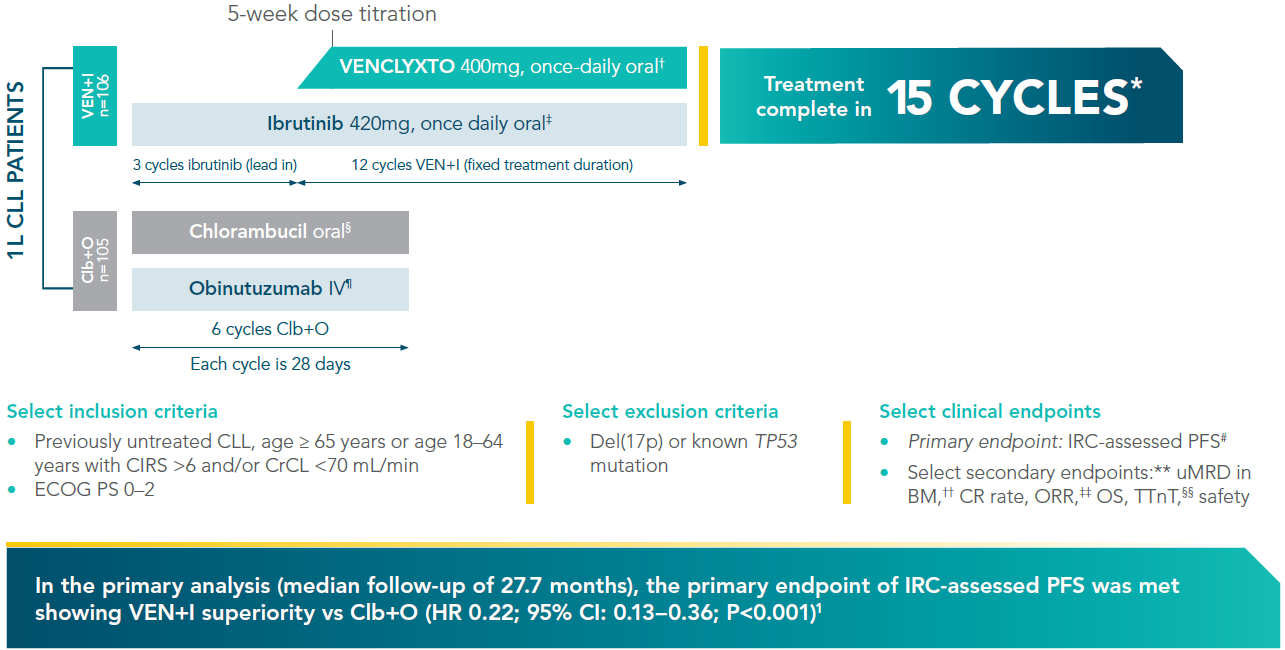
†VENCLYXTO was initiated on day 1 of cycle 4 with dose ramp-up over 5 weeks (20, 50, 100, 200, and 400 mg/day) and continued at 400 mg/day from cycle 5 onward.
‡Ibrutinib 420 mg daily was administered as a single agent for the first 3 cycles, followed by VENCLYXTO in combination with ibrutinib for twelve 28-day cycles.
§Chlorambucil dosing: 0.5 mg/kg body weight on Days 1 and 15 of cycle 1–6.
¶Obinutuzumab dosing: 1000 mg on Days 1 (or 100 mg on Day 1 and 900 mg on Day 2), 8 and 15 in cycle 1. In cycles 2–6, 1000 mg was given on Day 1.
#Defined as time from randomisation to disease progression or death from any cause, whichever occurred first.
**The statistical testing hierarchy for secondary endpoints, in order, was uMRD rate in bone marrow, CR rate, OR rate, and OS.
††Defined as the proportion of patients who are MRD-negative in the bone marrow (<1 CLL cell per 104 leukocytes; or <0.01%).
‡‡Defined as the proportion of patients who achieve a response (CR, CRi, nPR and PR).
§§Measured from the date of randomisation to start date of any antileukemic treatment subsequent to study treatment.
Almost three times as many VEN+I patients remained progression free vs Clb+O at 5.5-year follow-up3
PFS for VEN+I vs Clb+O at 5.5 years (primary endpoint)3*
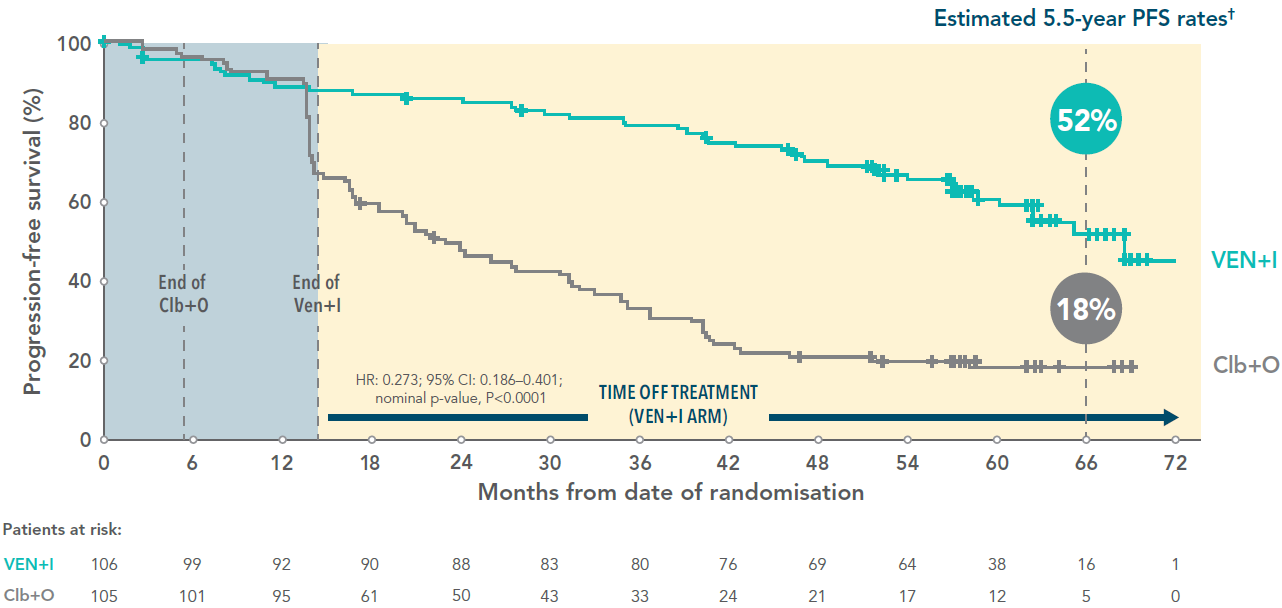
Adapted from Niemann C et al. 2024.
*In the primary analysis at 27.7 months in the ITT population, PFS with VEN+I was superior vs Clb+O (HR 0.22; 95% CI: 0.13–0.36; P<0.001).1
†Median follow-up 67 months
At 5.5 years, 19% of of VEN+I patients required subsequent treatment vs 52% for Clb+O patients3
Time to next treatment* for VEN+I vs Clb+O at 5.5 years (secondary endpoint)3
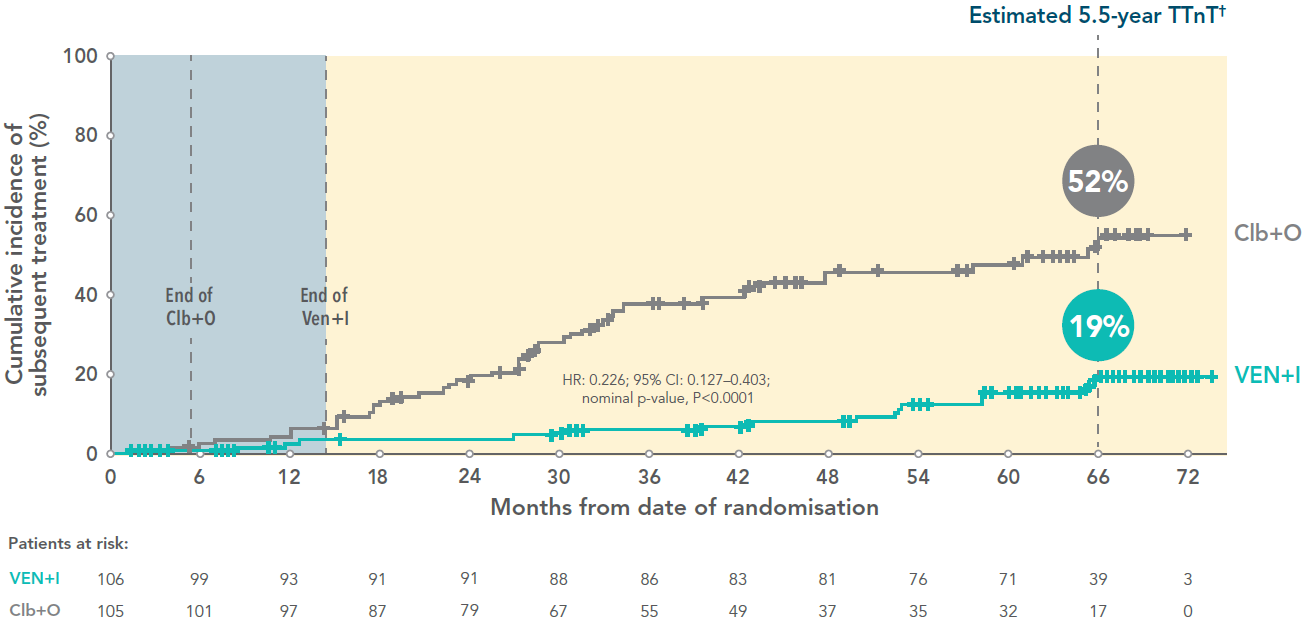
Adapted from Niemann C et al. 2024.
*Time to next treatment was defined as the time from randomisation to the start of any subsequent anticancer therapy; deaths were censored.
†Median follow-up 67 months
Over 75% overall survival for VEN+I patients 5.5 years after initiating treatment3
5.5-year-overall survival rate of VEN+I vs Clb+O (secondary endpoint)3
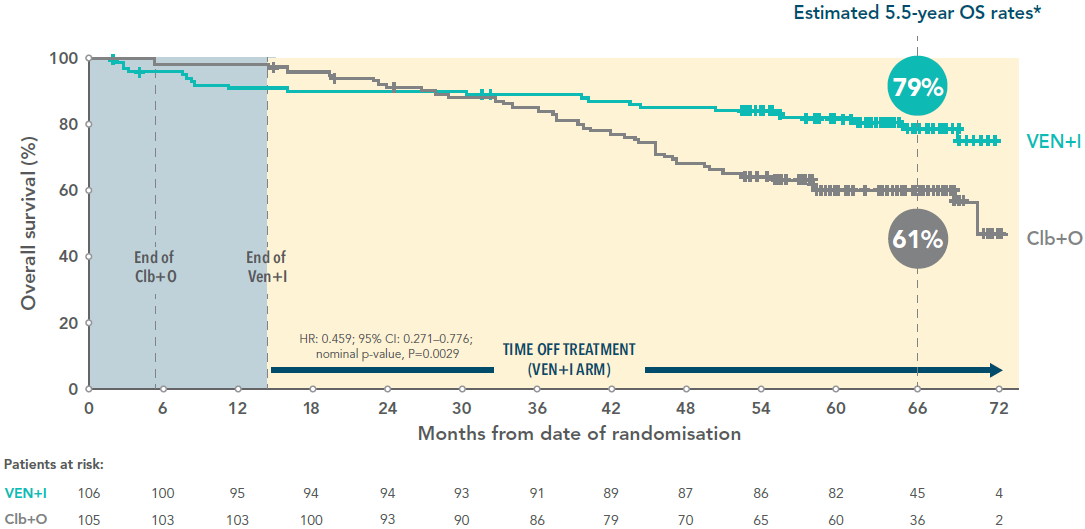
In the primary analysis at a median follow-up of 27.7 months, testing of OS was exploratory. No difference between VEN+I and Clb+O was observed (HR: 1.048 [95% CI: 0.454-2.419])1†
Adapted from Niemann C et al. 2024.
†The hypothesis for a secondary endpoint was tested only if the null hypotheses for the primary endpoint and preceding secondary endpoint(s) were rejected. The statistical testing hierarchy for secondary endpoints, in order, was uMRD rate in bone marrow, complete response rate, overall response rate, and overall survival.
*Median follow-up 67 months
Data from primary analysis, median follow-up was 27.7 months (range 1.7–33.8 months). Response rates by IRC (ITT population; secondary endpoints)1
Complete response (CR+CRi) rate*
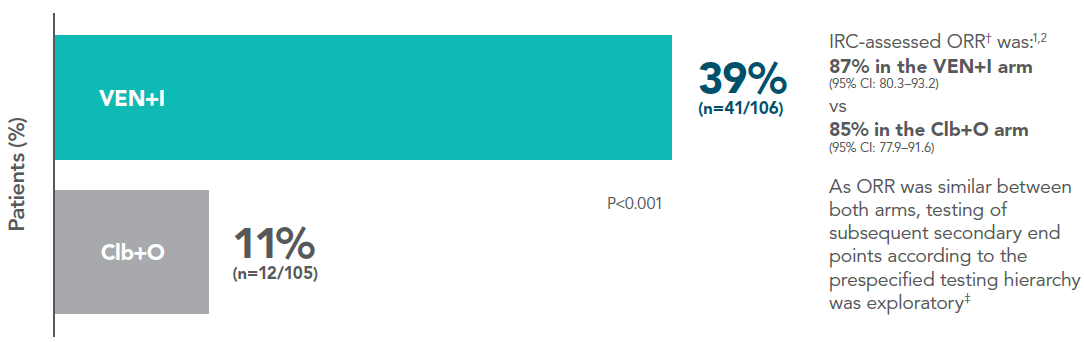
Adapted from Kater A et al. 2022.
*Complete response rate is CR + CRi (secondary endpoint).
†Overall Response Rate = CR+CRi+nPR+PR (secondary endpoint).
‡The hypothesis for a secondary endpoint was tested only if the null hypotheses for the primary endpoint and preceding secondary endpoints were rejected.
The statistical testing hierarchy for secondary endpoints, in order, was uMRD rate in bone marrow, CR rate, ORR, and OS.
Grade 3/4 AEs occurring in ≥5% of either arm and Grade 5 AEs occurring in any patient in the GLOW study (safety population)1*
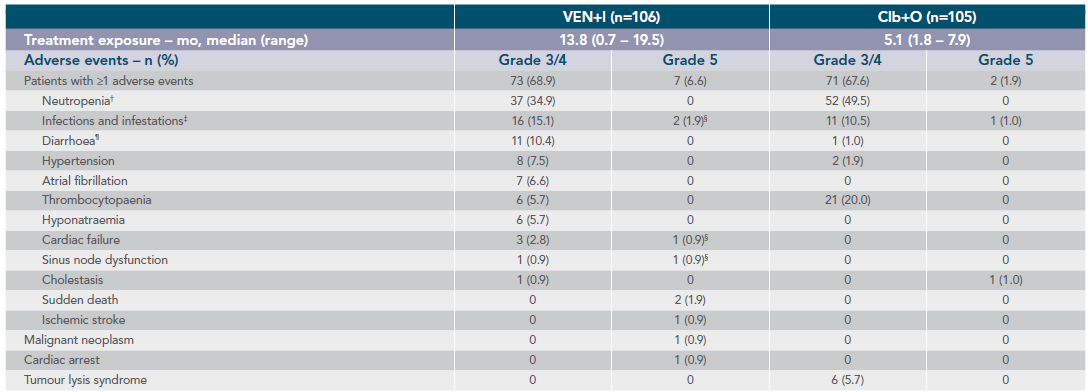
*Fifteen 28-day cycles are equivalent to 13.8 months for VEN+I and six 28-day cycles are equivalent to 5.5 months for Clb+O. Patients may have had treatment exposure times exceeding these limits due to cycle holds.
†Includes ‘neutrophil count decreased’. Rates of febrile neutropenia (grade ≥3): 1.9% for VEN+I vs 2.9% for Clb+O.
‡Includes multiple preferred terms. Only pneumonia (grade ≥3) occurred in 5% or more of patients in the VEN+I (7 [6.6%]) and Clb+O (6 [5.7%]) arms.
§Both grade 5 AEs were pneumonia (one patient experienced three grade 5 AEs: pneumonia, cardiac failure, and sinus node dysfunction).
¶In the VEN+I arm, 3 diarrhoea (grade ≥3) resolved or improved after a median of 9.0 days.
Adapted from Kater A et al. 2022.
Median follow-up of 27.7 months.
Serious adverse events in GLOW occurring in ≥2% of patients in either treatment arm (safety population)1
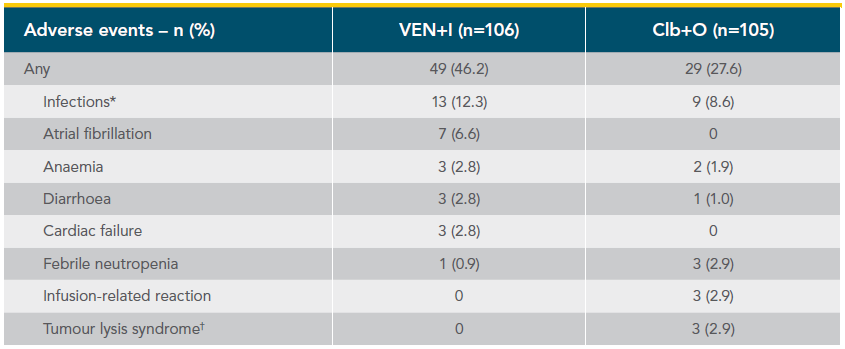
*Includes multiple preferred terms. For the VEN+I arm, these included: pneumonia (n=6 [5.7%]); bronchitis, bronchopulmonary aspergillosis, cellulitis, Clostridium colitis, erysipelas, gastroenteritis, gastrointestinal infection, infection, influenza, cytomegaloviral pneumonia, septic shock, tonsillitis (all n=1 [0.9%]; patients may have had more than one adverse event). For the Clb+O arm, these included: pneumonia (n=6 [5.7%]); Escherichia urinary tract infection, pneumococcal sepsis, respiratory tract infection, urinary tract infection (all n=1 [1.0%]).
†By Howard criteria.
Adapted from Kater A et al. 2022.
Adverse events are reported by Medical Dictionary for Regulatory Activities (MedDRA) superclass and preferred terms and the National Cancer Institute Common Terminology
Criteria for Adverse Events grade.
Median follow-up of 27.7 months.
For full safety information, please refer to the SmPC
AEs, Adverse events; BM, Bone marrow; CI, Confidence interval; CIRS, Cumulative illness rating scale; Clb+O, Chlorambucil + obinutuzumab; CLL, Chronic lymphocytic leukaemia; CrCl, Creatine clearance; CR, Complete response; CRi, CR with incomplete haematologic recovery; ECOG PS, Eastern Cooperative Oncology Group performance status; HR, Hazard ratio; IRC, Independent review committee; ITT, Intent-to-treat; MRD, Minimal residual disease; nPR, Nodular partial response; ORR, Overall response rate; OS, Overall survival; PFS, Progression-free survival; PR, Partial response; SmPC, Summary of Product Characteristics; TP53, Tumour protein 53; TTnT, Time-to-next treatment; uMRD, Undetectable minimal residual disease; VEN+I, VENCLYXTO + ibrutinib.
References
- Kater A et al. N Engl J Med. 2022; 1(7): DOI: 10.1056/EVIDoa2200006 (and Suppl.).
- VENCLYXTO Summary of Product Characteristics.
- Niemann C et al. Presented at ASH 2024. Oral presentation #1871.
UK-VNCCLL-250048. Date of preparation: March 2025.
VENCLYXTO + ibrutinib in 1st line CLL
VENCLYXTO + ibrutinib (VEN+I) in fit patients with previously untreated CLL (FD Cohort)1,2*
*CAPTIVATE (FD Cohort) was an open-label, multicentre, single-arm, Phase II study evaluating fixed-duration VEN+I in 1L treatment of CLL. Treatment was completed after fifteen 28-day cycles.
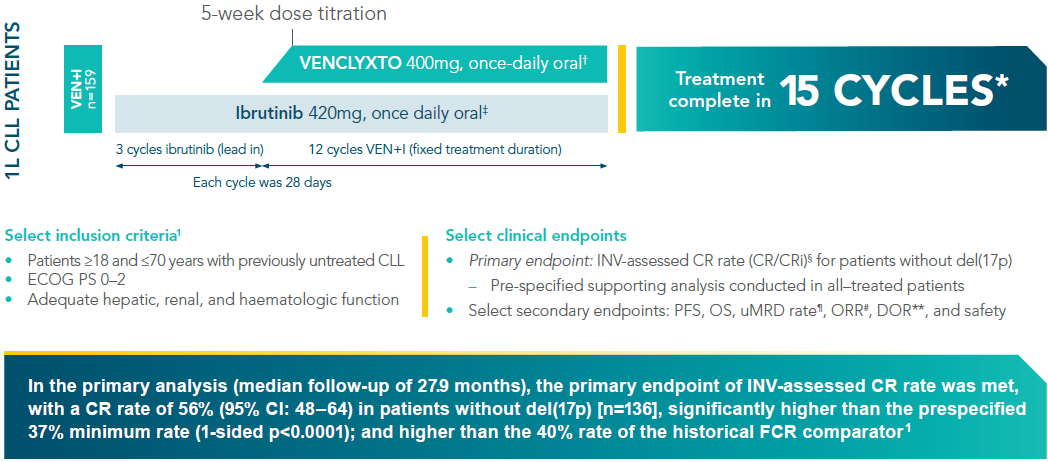
†VENCLYXTO was initiated on day 1 of cycle 4 with dose ramp-up over 5 weeks (20, 50, 100, 200, and 400 mg/day) and continued at 400 mg/day from cycle 5 onward.
‡Ibrutinib 420 mg daily was administered as a single agent for the first 3 cycles, followed by VENCLYXTO in combination with ibrutinib for twelve 28-day cycles.
§Assessed using the iwCLL criteria (2008).
¶Defined as proportion of patients who are MRD negative (<1 CLL cell per 104 leukocytes).
#Defined as proportion of patients with PR or better, as per iwCLL criteria.
**Defined as time from initial documentation of response until PD or death from any cause.
The majority of all-treated patients had not progressed and were off treatment at 5.5 years3*
5.5-year PFS rate in all-treated patients and by del(17p)/mTP53 status
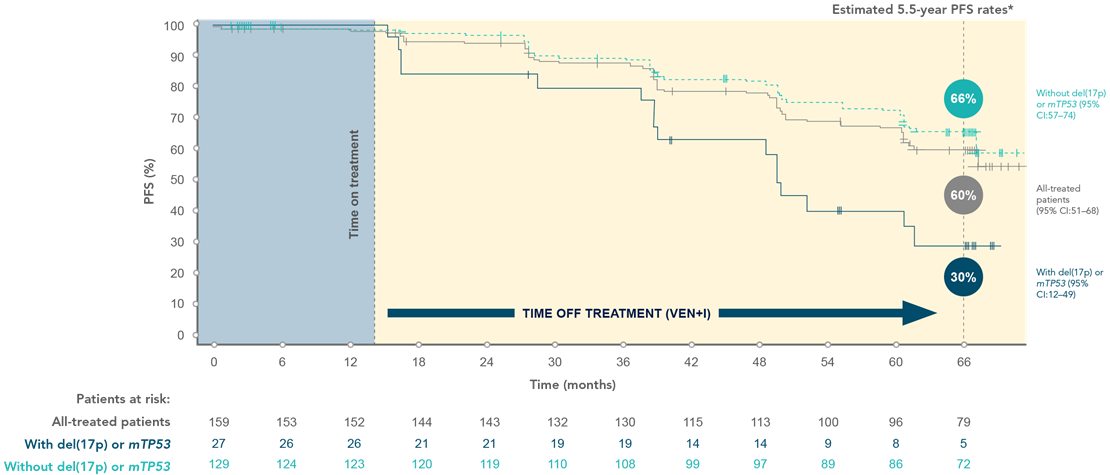
Adapted from Wierda W et al. 2025.
*Median follow-up time: 69.0 months (range, 0.8-73.2)
69% of VEN+I patients did not require subsequent treatment at 5.5 years3*
Time to next treatment for VEN+I at 5.5 years
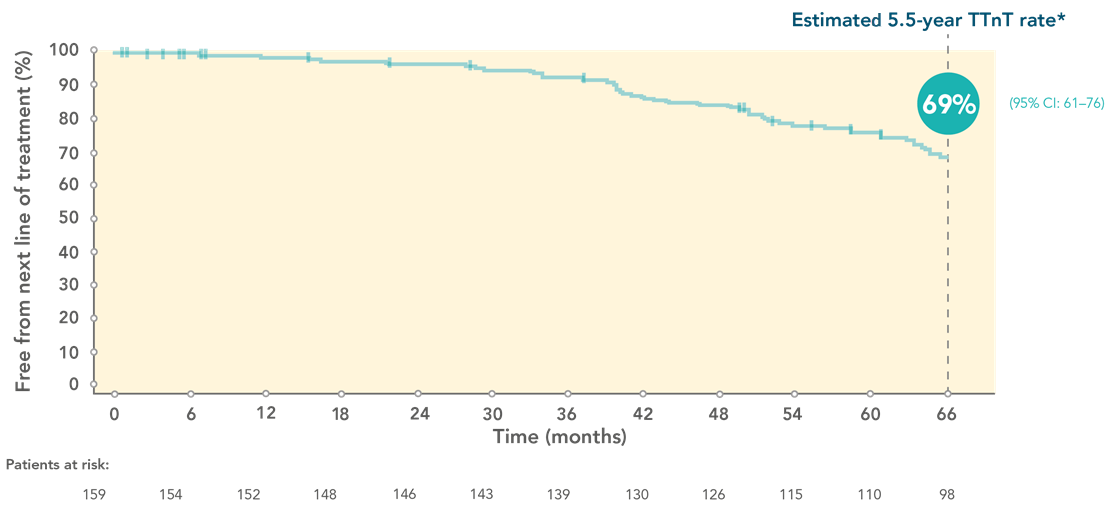
Adapted from Wierda W et al. 2025.
*Median time on study was 69.0 months (range, 0.8–73.2).
>90% overall survival for all treated patients at 5.5-years3*
OS for VEN+I at 5.5 years
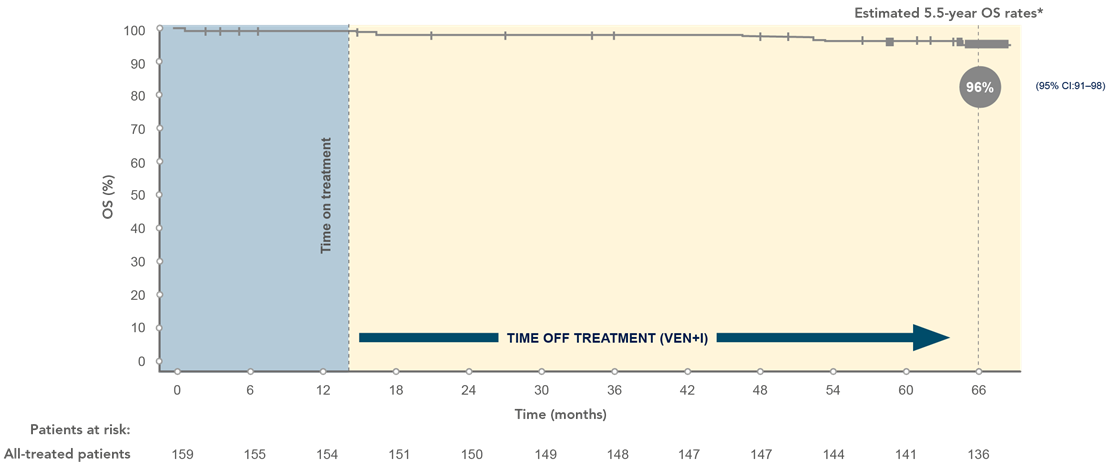
Adapted from Wierda W et al. 2025.
*Median follow-up time: 69.0 months (range, 0.8-73.2)
INV-assessed CR rate* (CR/CRi) in patients without del(17p), (FD Cohort; primary endpoint)1
In the primary analysis (median follow-up of 27.9 months), the primary endpoint of INV-assessed CR rate was met, with a CR rate of 56% (95% CI: 48–64) in patients without del(17p) [n=136], significantly higher than the prespecified 37% minimum rate (1-sided p<0.0001); and higher than the 40% rate of the historical FCR comparator.1
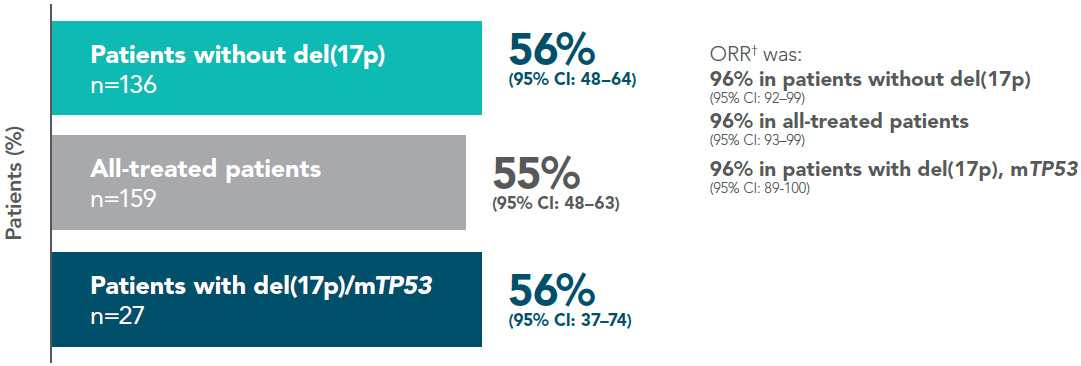
Adapted from Tam C et al. 2022.
Median observation time of 27.9 months.
*Proportion of patients with CR or CRi, assessed using iwCLL criteria (2008).
†Defined as proportion of patients with PR or better, as per iwCLL criteria.
Treatment-emergent adverse events in CAPTIVATE (FD Cohort)1,2
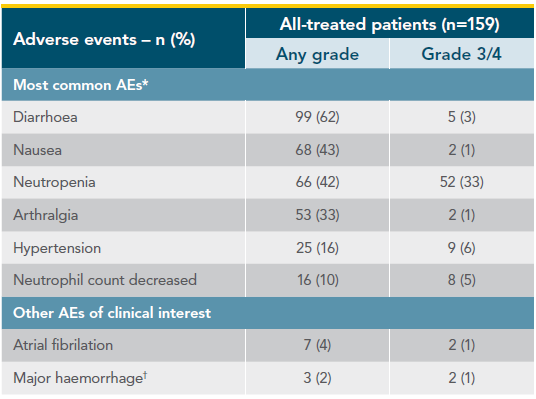
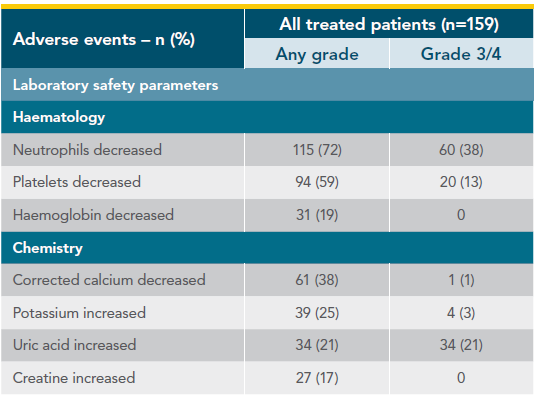
Adapted from Tam C et al. 2022.
Median follow-up of 27.9 months.
*AEs of any grade occurring in ≥30% of patients or grade 3/4 occurring in ≥5% of patients.
†Major haemorrhage was identified using the Standardised MedDRA Query for Haemorrhage, excluding laboratory terms.
Most common serious adverse events of any grade in CAPTIVATE (FD Cohort) occurring in ≥2 patients1
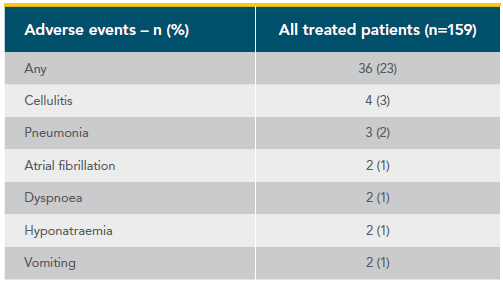
Adapted from Tam C et al. 2022.
For full safety information, please refer to the SmPC
AEs, Adverse events; CI, Confidence interval; CLL, Chronic lymphocytic leukaemia; CR, Complete response; CRi, CR with incomplete haematologic recovery; DOR, Duration of response; ECOG PS, Eastern Cooperative Oncology Group performance status; FCR, Fludarabine, cyclophosphamide, rituximab; FD, Fixed-duration; INV, Investigator; iwCLL, International Workshop on CLL; MedDRA, Medical Dictionary for Regulatory Activities; MRD, Minimal residual disease; mTP53, mutated TP53; ORR, Overall response rate; OS, Overall survival; PD, Progressive disease; PFS, Progression-free survival; PR, Partial response; SmPC, Summary of Product Characteristics; TP53, Tumour protein 53; TTnT, Time to-next treatment; uMRD, Undetectable minimal residual disease; VEN+I, VENCLYXTO + ibrutinib; 1L, First-line.
References
- Tam C et al. Blood. 2022; 139(22): 3278–89 (and Suppl.).
- VENCLYXTO Summary of Product Characteristics.
- Wierda W et al. Presented at EHA 2025; Oral presentation.
UK-VNCCLL-250337. Date of preparation: March 2026.
CLL-17: Fixed duration VEN+O or VEN+I vs continuous ibrutinib in 1L CLL
VENCLYXTO + obinutuzumab or VENCLYXTO + ibrutinib vs ibrutinib1-3*
*CLL17 is a prospective, investigator-initiated, randomised, open-label, multicentre Phase III trial assessing the non-inferiority of VEN+O vs ibrutinib and VEN+I vs ibrutinib in patients with previously untreated CLL. Treatment completed after fifteen and twelve 28-day cycles in the VEN+I and VEN+O arms, respectively.
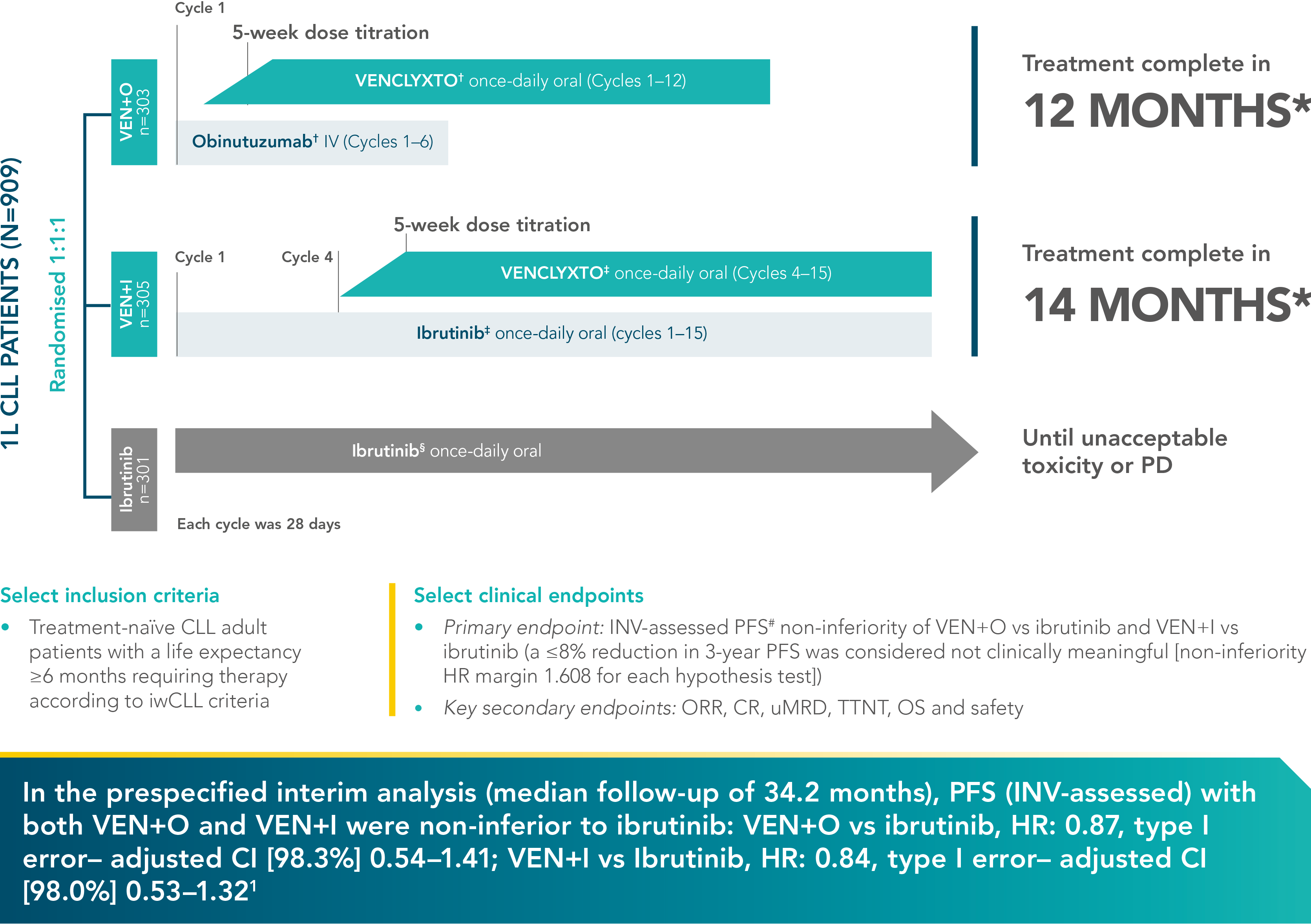
Note, this study was designed to assess outcomes for VEN+O vs ibrutinib and VEN+I vs ibrutinib only. Comparisons between VEN+O and VEN+I arms can not be made.
†VENCLYXTO + obinutuzumab dosing: VEN dosing: initiated on Day 22 of Cycle 1, with dose ramp-up over 5 weeks (20, 50, 100, 200 mg, and 400 mg/day), followed by 400 mg/day until completion of Cycle 12. Obinutuzumab dosing: 100 mg Cycle 1, Day 1, followed by 900 mg on Days 1 or 2; 1000 mg on Days 8 and 15 and Day 1 of Cycles 2–6.
‡VENCLYXTO + ibrutinib dosing: VEN dosing: initiated on Day 1 of Cycle 4 with dose ramp-up over 5 weeks (20, 50, 100, 200 mg, and 400 mg/day) and continued at 400 mg/day from Cycle 5 until completion of Cycle 15. Ibrutinib dosing: 420 mg daily as a single agent for the first 3 cycles, followed by VEN in combination with ibrutinib (continued at 420 mg until completion of Cycle 15).
#PFS defined as the time from randomisation until the first occurrence of progression, relapse (as per iwCLL guidelines, 2018), or death.
§Oral ibrutinib was administered 420 mg once daily, continuous until disease progression or unacceptable toxicity.
In the prespecified interim analysis INV-assessed PFS with VEN+O and VEN+I were non-inferior to continuous ibrutinib1–3*†
INV-assessed PFS for VEN+O and VEN+I vs I (primary endpoint; ITT)1–3*‡
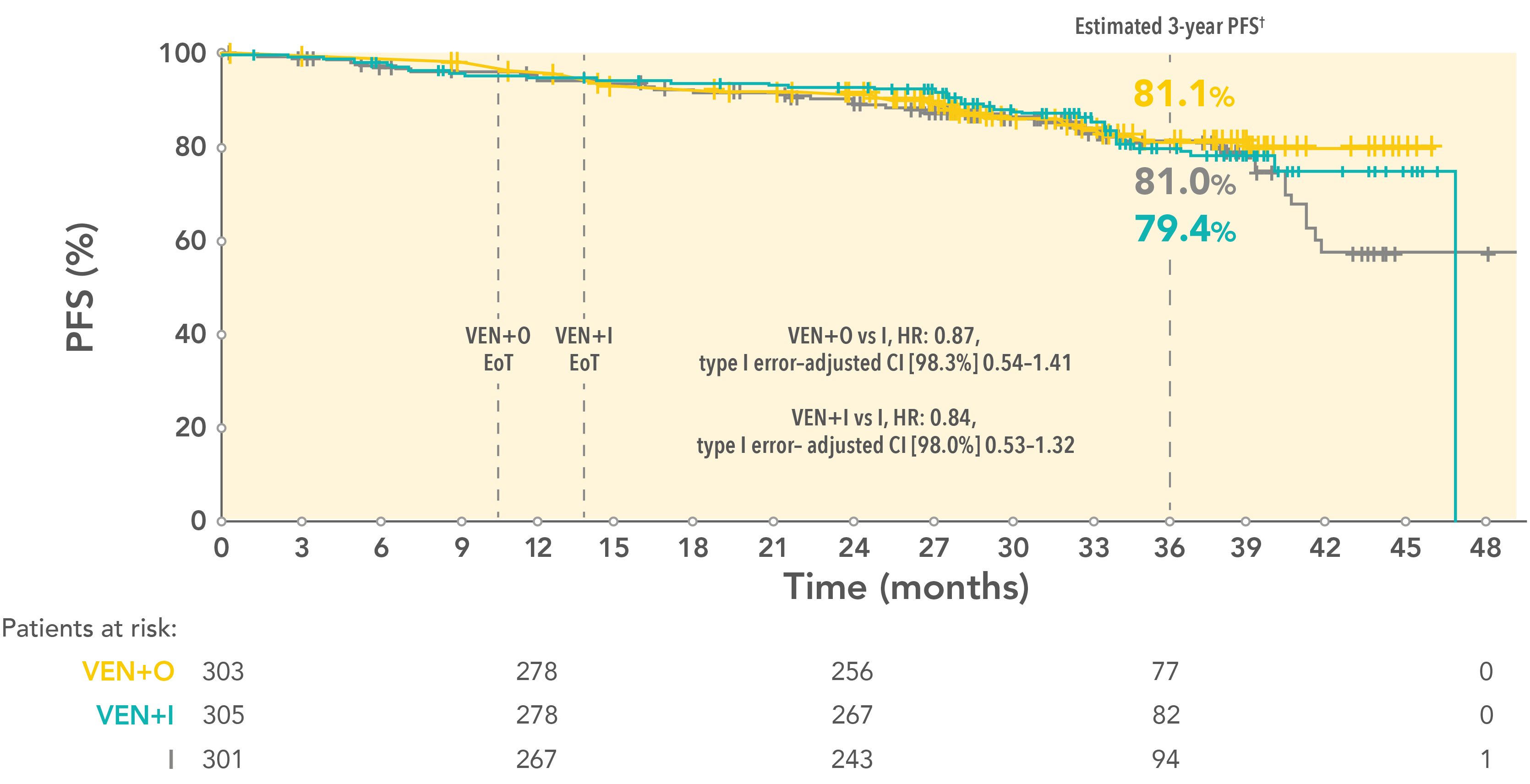
Adapted from from Al-Sawaf O et al. 2025
*Median follow-up of 34.2 months.
†A ≤8% reduction in 3-year PFS was considered not clinically meaningful (non-inferiority HR margin 1.608 for each hypothesis test).
‡PFS defined as the time from randomisation until the first occurrence of progression, relapse (as per iwCLL guidelines, 2018), or death.
3-year OS rates for VEN+O and VEN+I arms were numerically similar to the ibrutinib arm1–3*
Overall survival for VEN+O and VEN+I vs I (secondary endpoint; ITT)*
OS analysis was not powered or tested for statistical significance1-3
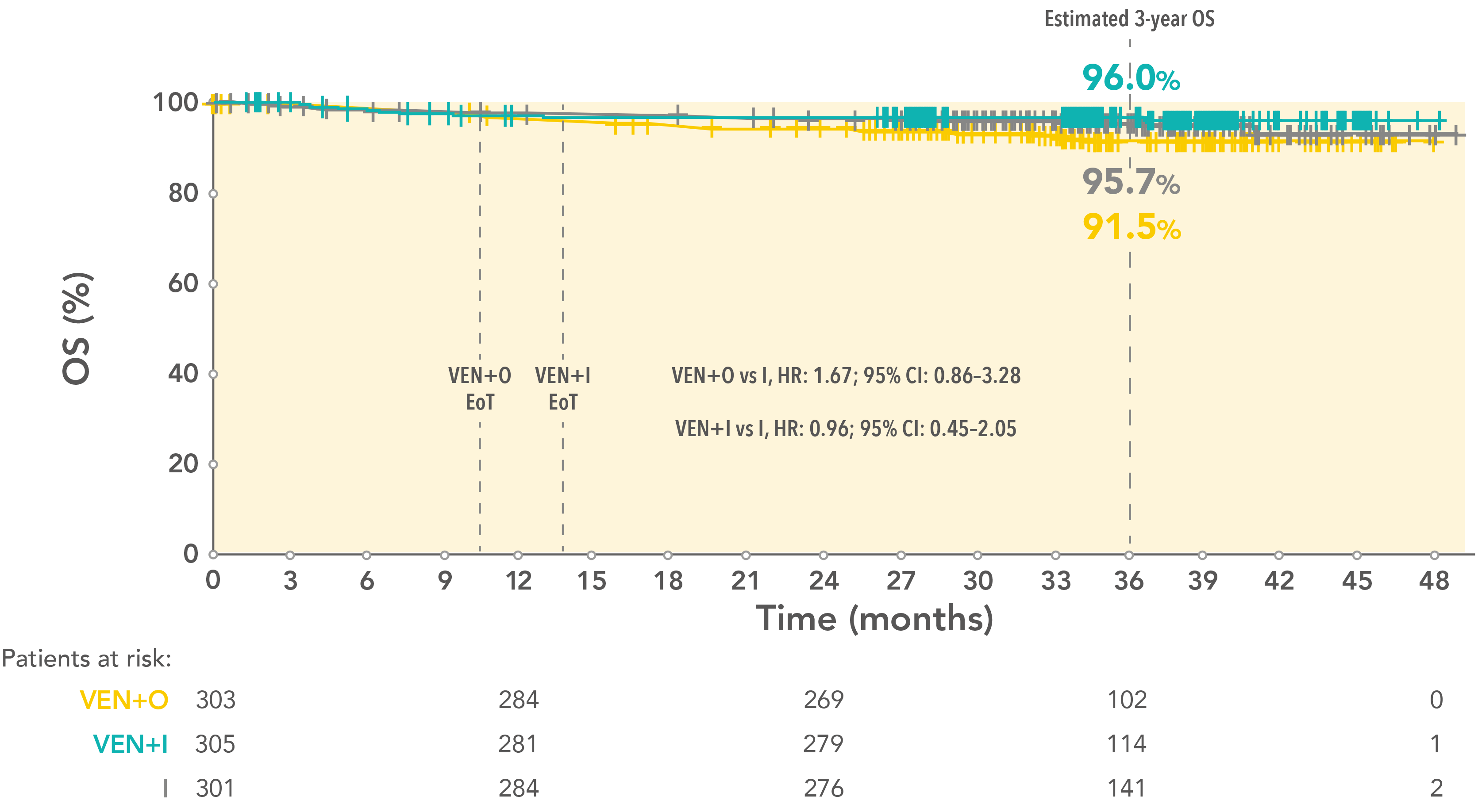
Adapted from from Al-Sawaf O et al. 2025
*Median follow-up of 34.2 months.
CLL-17 subgroup analysis included INV-assessed 3-year PFS with VEN+O, VEN+I and ibrutinib by IGHV and del(17p)/TP53 status1*
INV-assessed PFS by IGHV and TP53 status for VEN+O and VEN+I vs I (subgroup analysis; ITT)1*
Subgroup analyses was not powered or tested for statistical significance
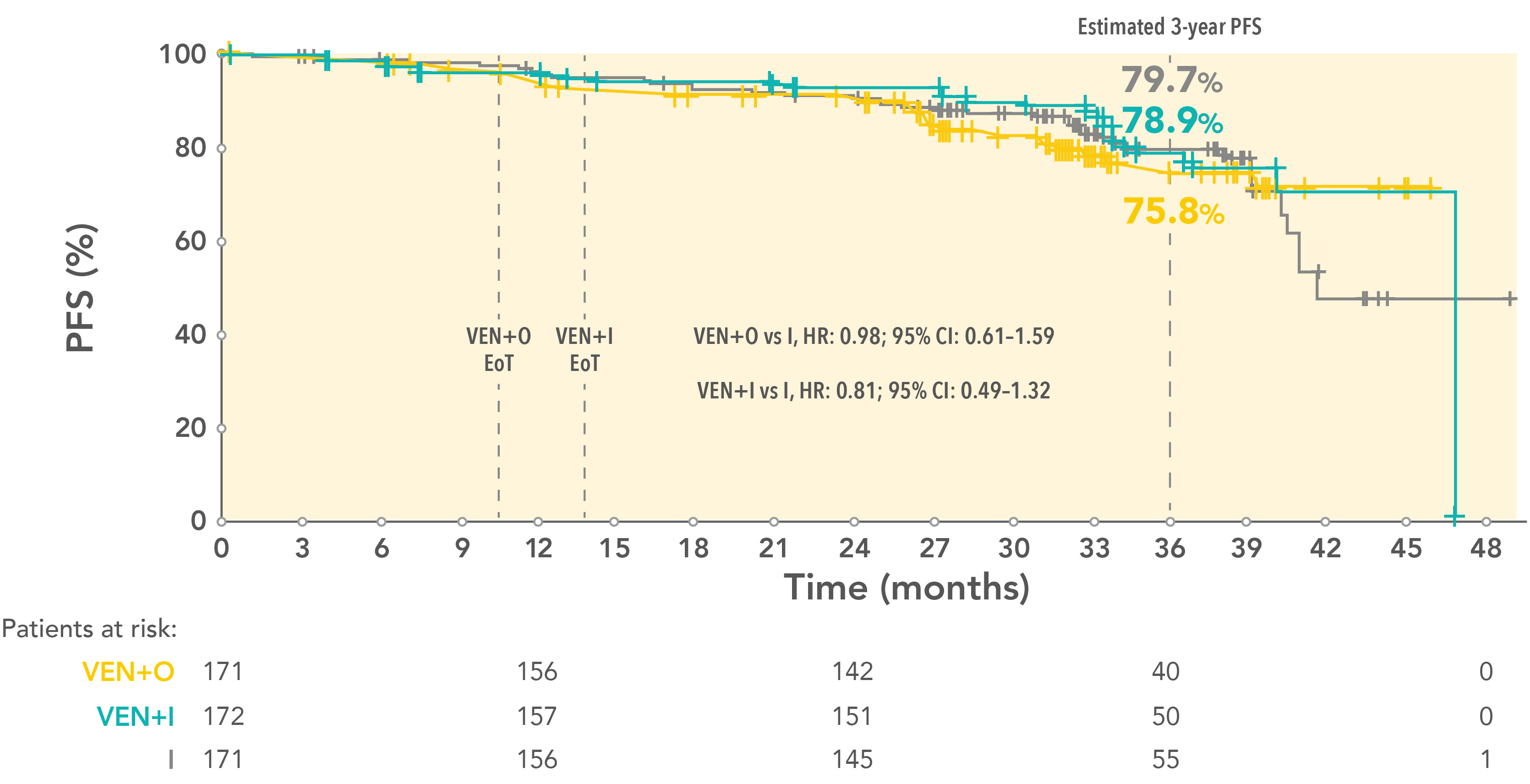
Adapted from Al-Sawaf O et al. 2025.
*Median follow-up of 34.2 months.
INV-assessed PFS by IGHV and TP53 status for VEN+O and VEN+I vs I (subgroup analysis; ITT)1*
Subgroup analyses was not powered or tested for statistical significance
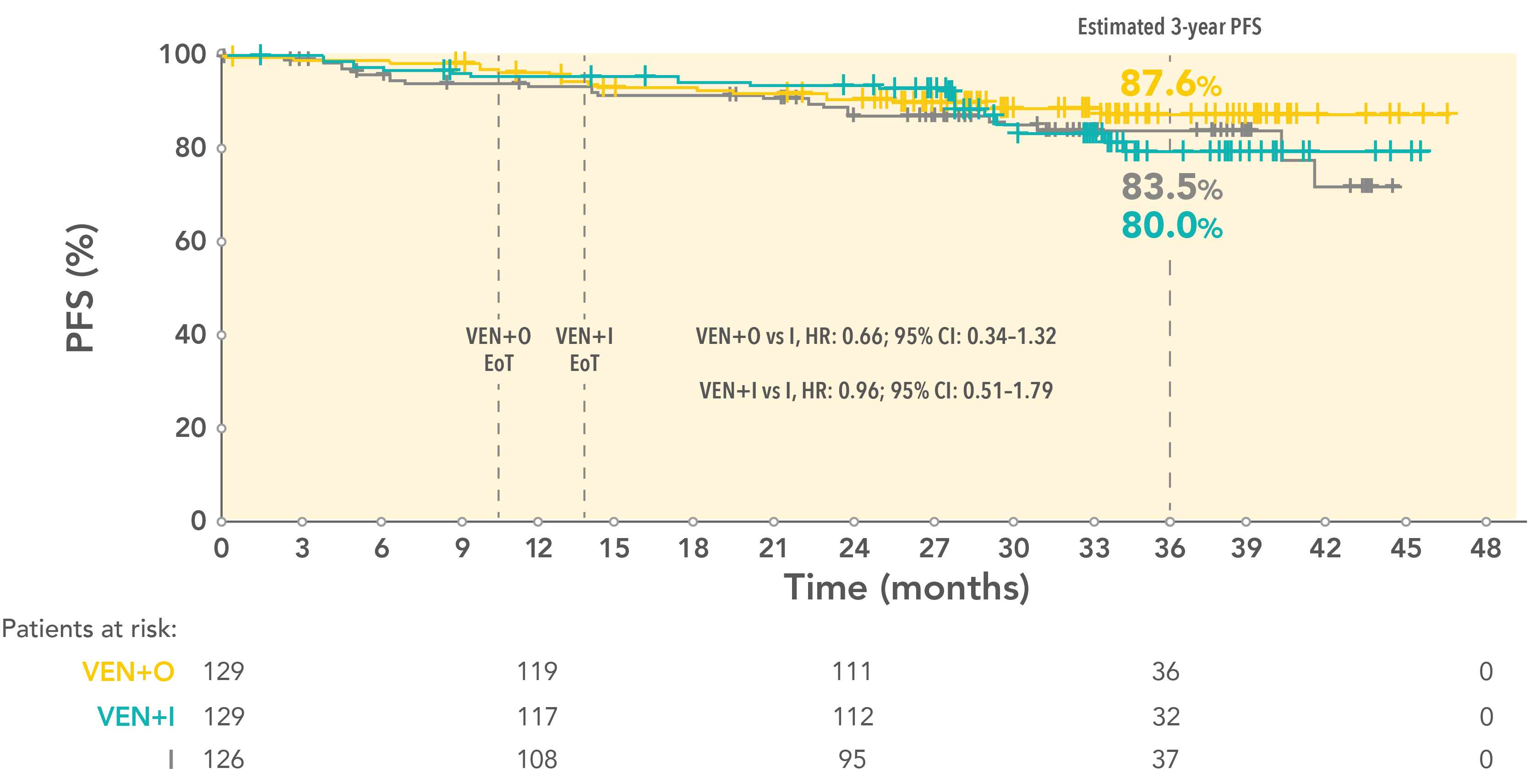
Adapted from Al-Sawaf O et al. 2025.
*Median follow-up of 34.2 months.
INV-assessed PFS by IGHV and TP53 status for VEN+O and VEN+I vs I (subgroup analysis; ITT)1*
Subgroup analyses was not powered or tested for statistical significance
mTP53.png)
Adapted from from Al-Sawaf O et al. 2025
*Median follow-up of 34.2 months.
INV-assessed PFS by IGHV and TP53 status for VEN+O and VEN+I vs I (subgroup analysis; ITT)1*
Subgroup analyses was not powered or tested for statistical significance
mTP53.png)
Adapted from from Al-Sawaf O et al. 2025
*Median follow-up of 34.2 months.
Safety profiles were consistent with the known AE profile of these agents1–5
In the safety population (VEN+O, n=295; VEN+I, n=303; Ibrutinib, n=298), the most common AEs were infections and infestations, GI disorders, and blood and lymphatic system disorders.1
Serious AEs occurred in 64.1% of the patients in VEN+O arm, 46.9% in VEN+I arm, and 47.7% in Ibrutinib arm.1
Selected AEs of interest, all CTC grades (Safety Population)3
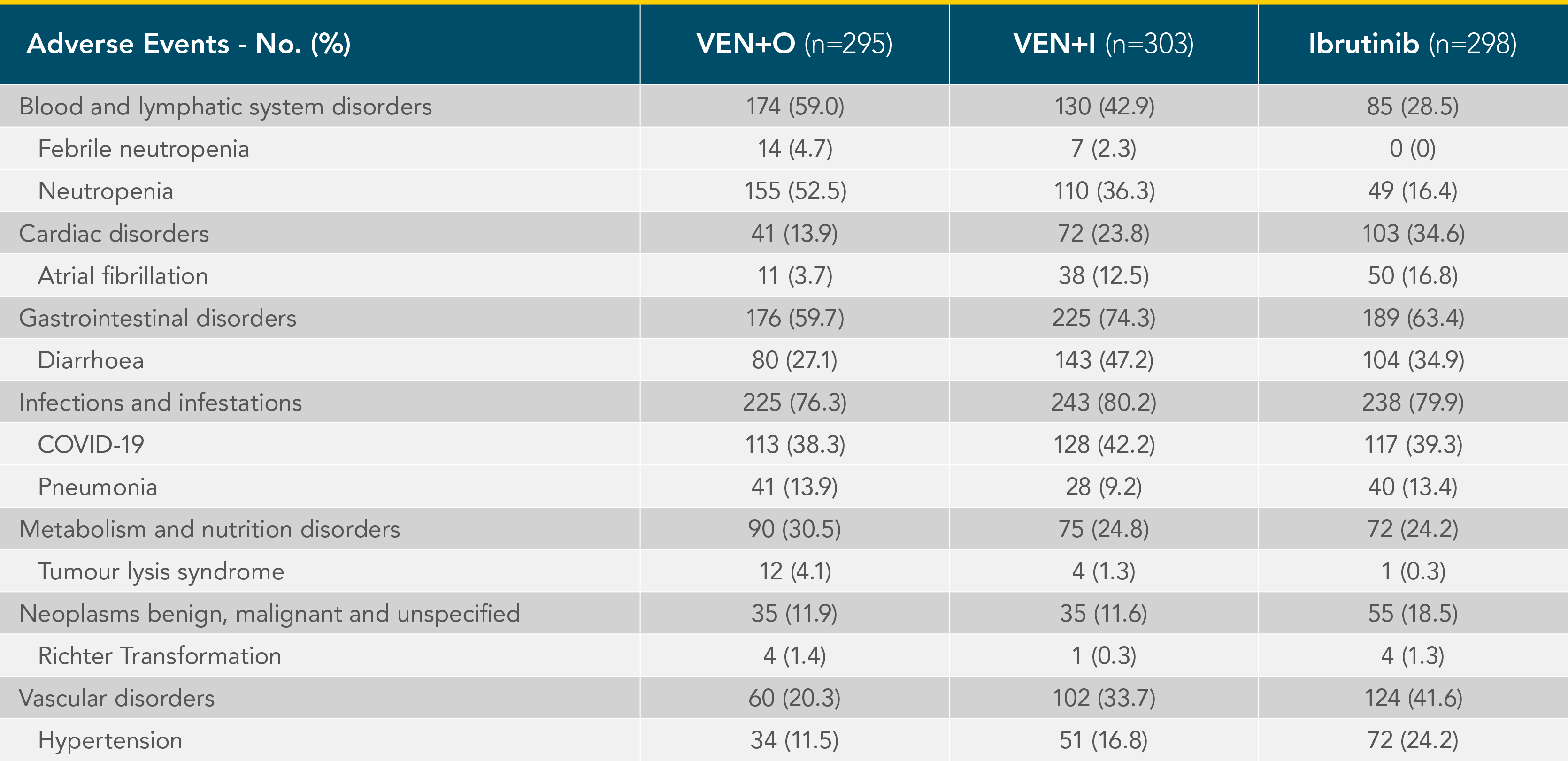
Adapted from from Al-Sawaf O et al. ASH 2025
Median follow-up: 34.2 months
For full safety information, please refer to each of the respective SmPCs
1L, First line; AE, Adverse event; BTKi, Bruton tyrosine kinase inhibitor; CI, Confidence interval; CLL, Chronic lymphocytic leukaemia; CTC, Common terminology criteria; HR, Hazard ratio; ITT, Intention to treat; iwCLL, International workshop for CLL; INV, Investigator; IV, Intravenous; mIGHV, Mutated immunoglobulin heavy-chain variable region; MRD, Minimal residual disease; mTP53, Mutated tumour protein 53; OS, Overall survival; PD, Progression of disease; PFS, Progression-free survival; SmPC, Summary of Product Characteristics; uIGHV, Unmutated immunoglobulin heavy-chain variable region; VEN, VENCLYXTO; VEN+O, VENCLYXTO + obinutuzumab; VEN+I, VENCLYXTO + ibrutinib.
References
- Al‑Sawaf O et al. N Engl J Med. 2025; DOI: 10.1056/ NEJMoa2515458 (and suppl.).
- AI-Sawaf O et al. Blood. 2025;146 (Suppl. 1):1.
- AI-Sawaf O et al. Abstract presented at: American Society of Hematology (ASH) 2025.
- VENCLYXTO Summary of Product Characteristics.
- Ibrutinib Summary of Product Characteristics.
UK-VNCCLL-260053. Date of Preparation: July 2026.
VENCLYXTO + acalabrutinib in 1st line CLL
VENCLYXTO + acalabrutinib (with or without obinutuzumab) vs CIT (FCR or BR)1*
*AMPLIFY was a multicentre, open-label, Phase III trial comparing the efficacy and safety of VEN+A (with or without obinutuzumab) vs investigator’s choice of CIT in previously untreated CLL patients. Treatment with VEN+A (with or without obinutuzumab) completed after fourteen 28-day cycles.
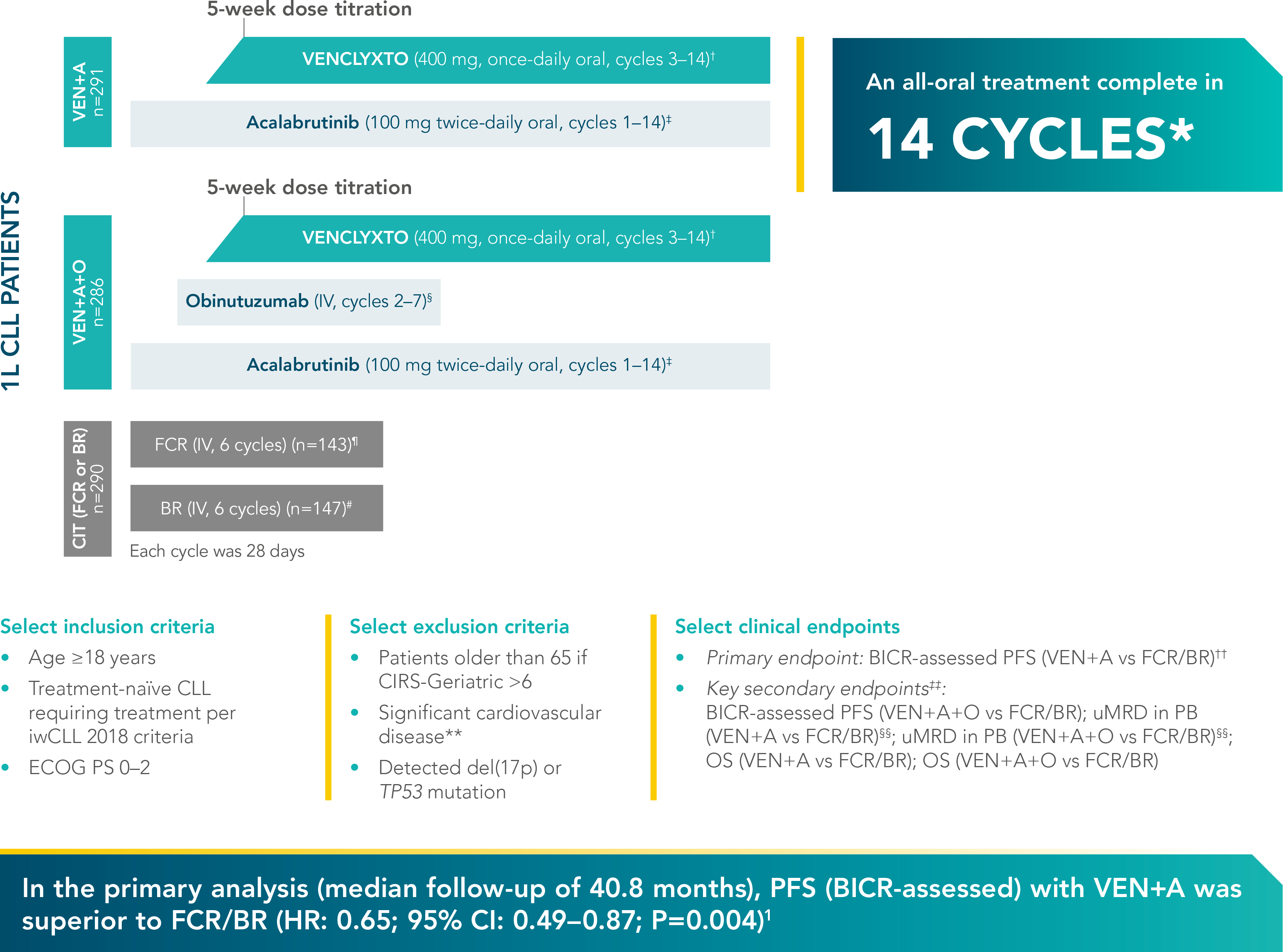
†VENCLYXTO was initiated on D1 of C3 with dose ramp-up over 5 weeks (20, 50, 100, 200 mg, and 400 mg/day) and continued at 400 mg/day from C4 onward.
‡100 mg acalabrutinib twice daily was administered as a single agent for the first 2 cycles, followed by VENCLYXTO in combination with acalabrutinib for twelve 28-day cycles.
§Obinutuzumab dosing: 100 mg C2 D1, followed by 900 mg on D1 or D2; 1000 mg on D8 and D15; and D1 of C3–7.
¶FCR restricted to patients ≤65 years of age who had creatinine clearance of ≥70 mL per minute. Fludarabine 25 mg/m2 D1–3 of C1–6; cyclophosphamide 250 mg/m2 D1–3 of C1–6; rituximab 375 mg/m2 D1 of C1 and 500 mg/m2 D1 of C2–6.
#Bendamustine 90 mg/m2 D1–2 of C1–6; rituximab 375 mg/m2 D1 of C1 and 500 mg/m2 D1 of C2–6.
**Such as symptomatic arrhythmias, congestive heart failure, or myocardial infarction within 6 months of screening or any class 3/4 cardiac disease as defined by the New York Heart Association Functional Classification at screening. Note: Patients with controlled, asymptomatic atrial fibrillation were allowed to enroll on study.
††PFS defined as the time from randomisation to the first occurrence of disease progression or death from any cause (whichever occurred first), as per iwCLL 2018 criteria.
‡‡If primary endpoint was met, secondary endpoints tested in fixed sequential hierarchy, as per order shown.
§§uMRD defined as <1 CLL cell per 104 leukocytes as measured by flow cytometry in PB at start of C9 in the VEN+A group, the start of C10 in VEN+A+O group, or 12 weeks after the start of C6 in CIT group.
VEN+A demonstrated superior PFS response vs CIT (FCR/BR) 3 years after initiating treatment1
PFS (BICR-assessed) for VEN+A vs CIT at 36 months (primary endpoint)1*†
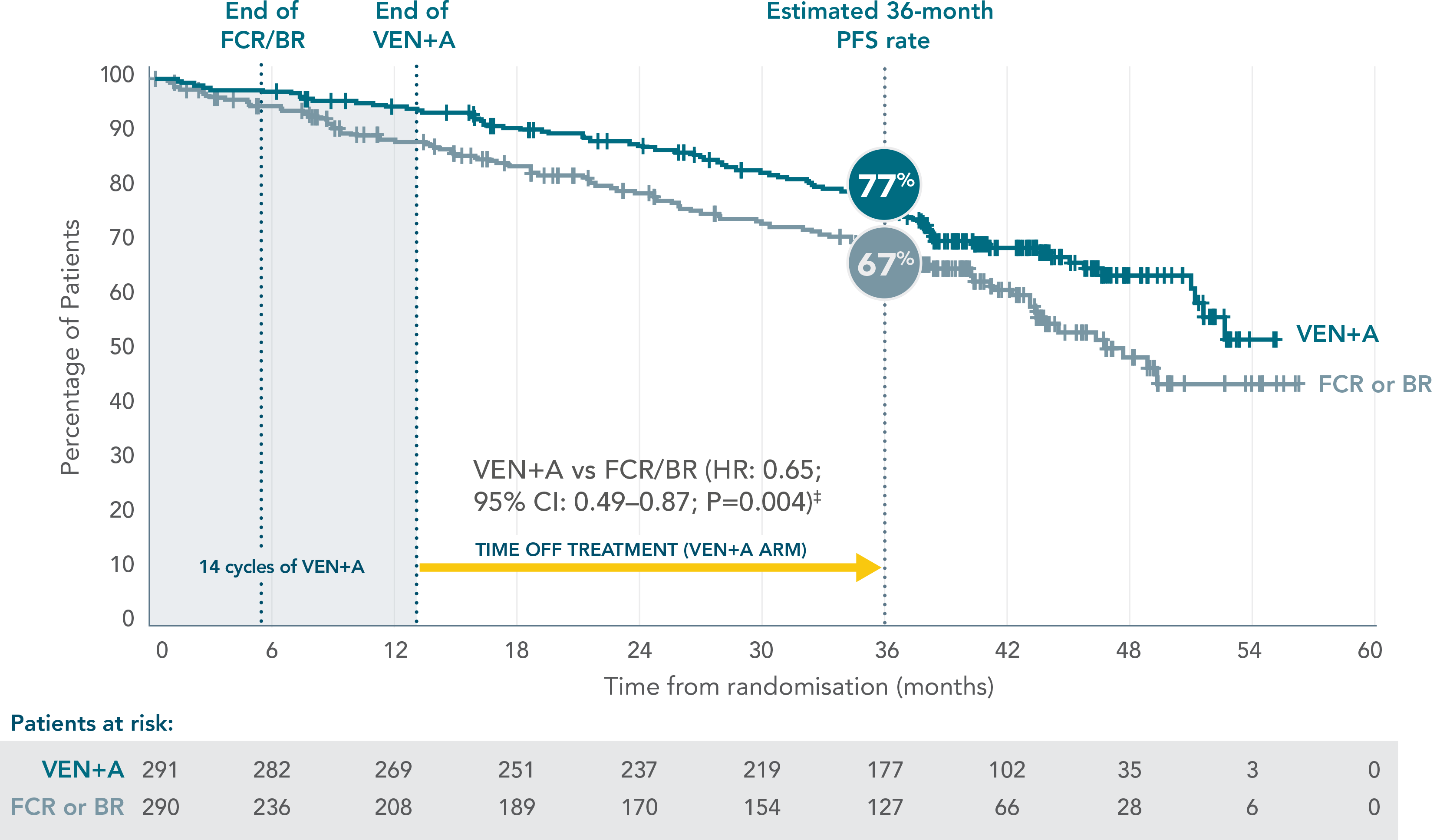
Median PFS:
VEN+A: Not calculable
FCR/BR: 47.6 months

Adapted from Brown JR et al. 2025.1
*Median follow-up of 40.8 months.
†PFS defined as the time from randomisation to the first occurrence of disease progression or death from any cause (whichever occurred first), as per iwCLL 2018 criteria.
‡HR based on stratified Cox-Proportional-Hazards model.
PFS (BICR-assessed) by IGHV status for VEN+A vs CIT at 36 months (prespecified analysis)1
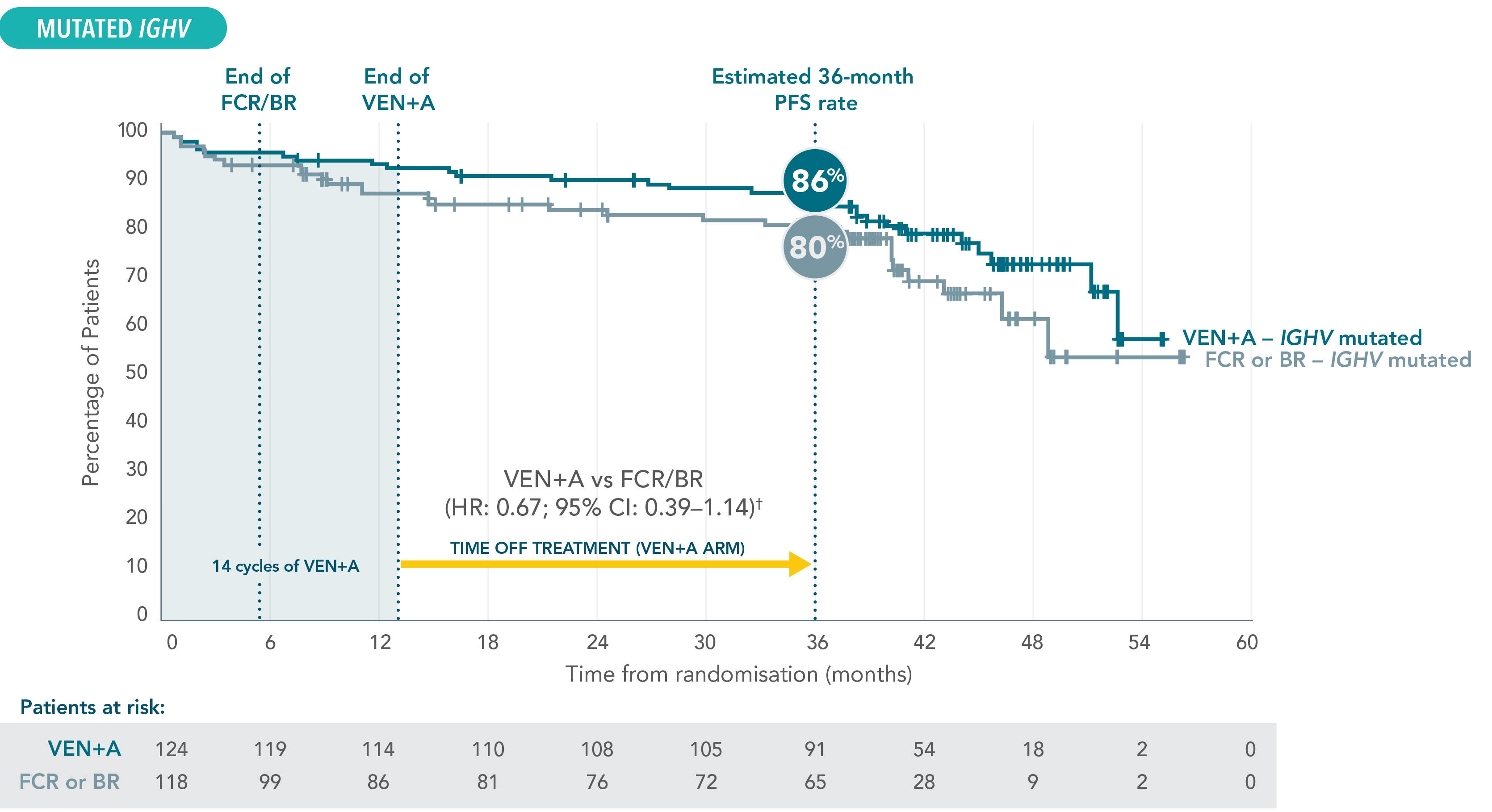
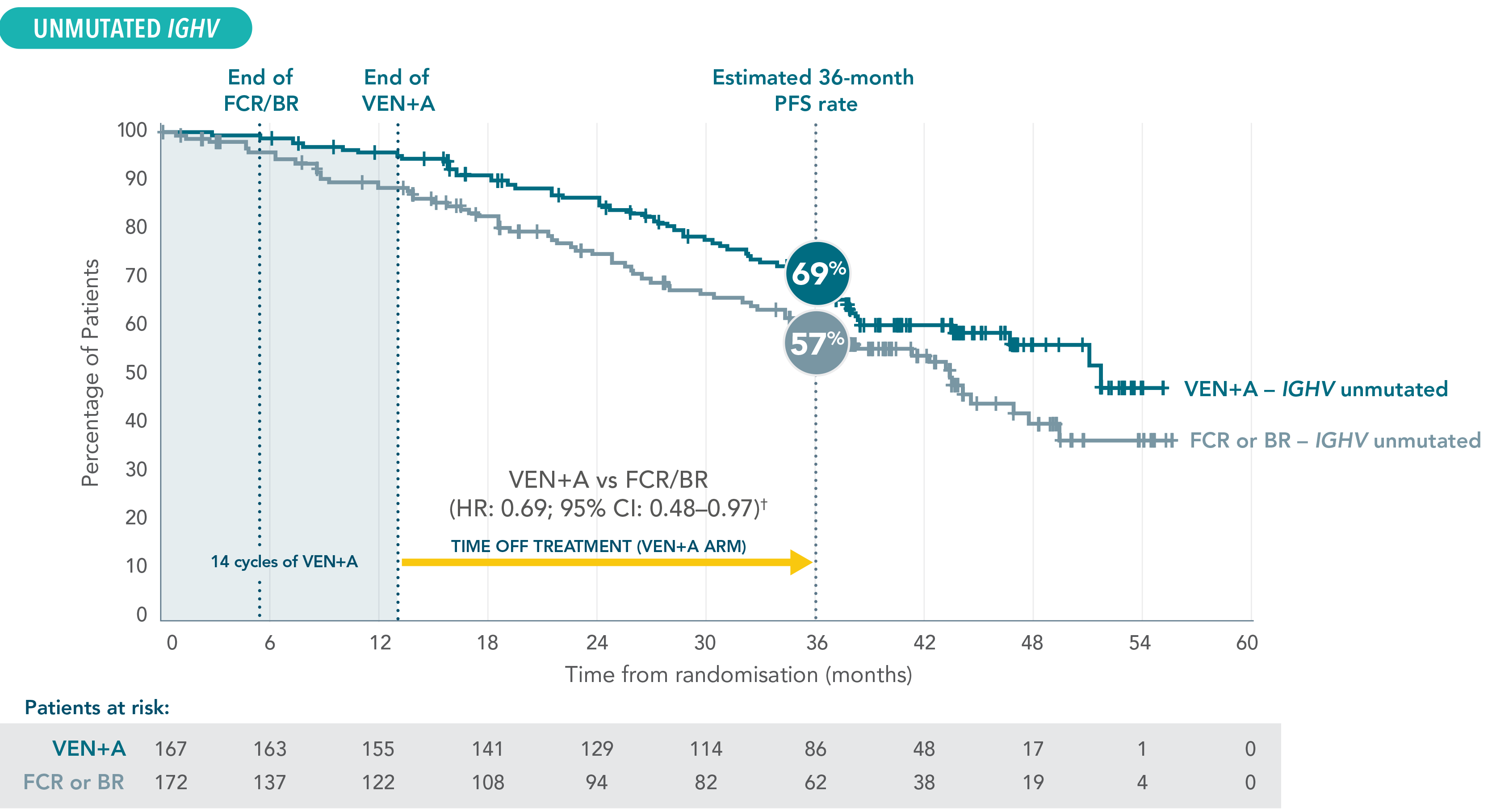
Adapted from Brown JR et al. 2025.1
*Median follow-up of 40.8 months.
†Hazard ratio (95% CI) calculated using an unstratified Cox proportional-hazards model. Not tested for statistical significance.
>90% overall survival in VEN+A arm, 3 years after initiating treatment1
OS for VEN+A vs CIT at 36 months (secondary endpoint)1*
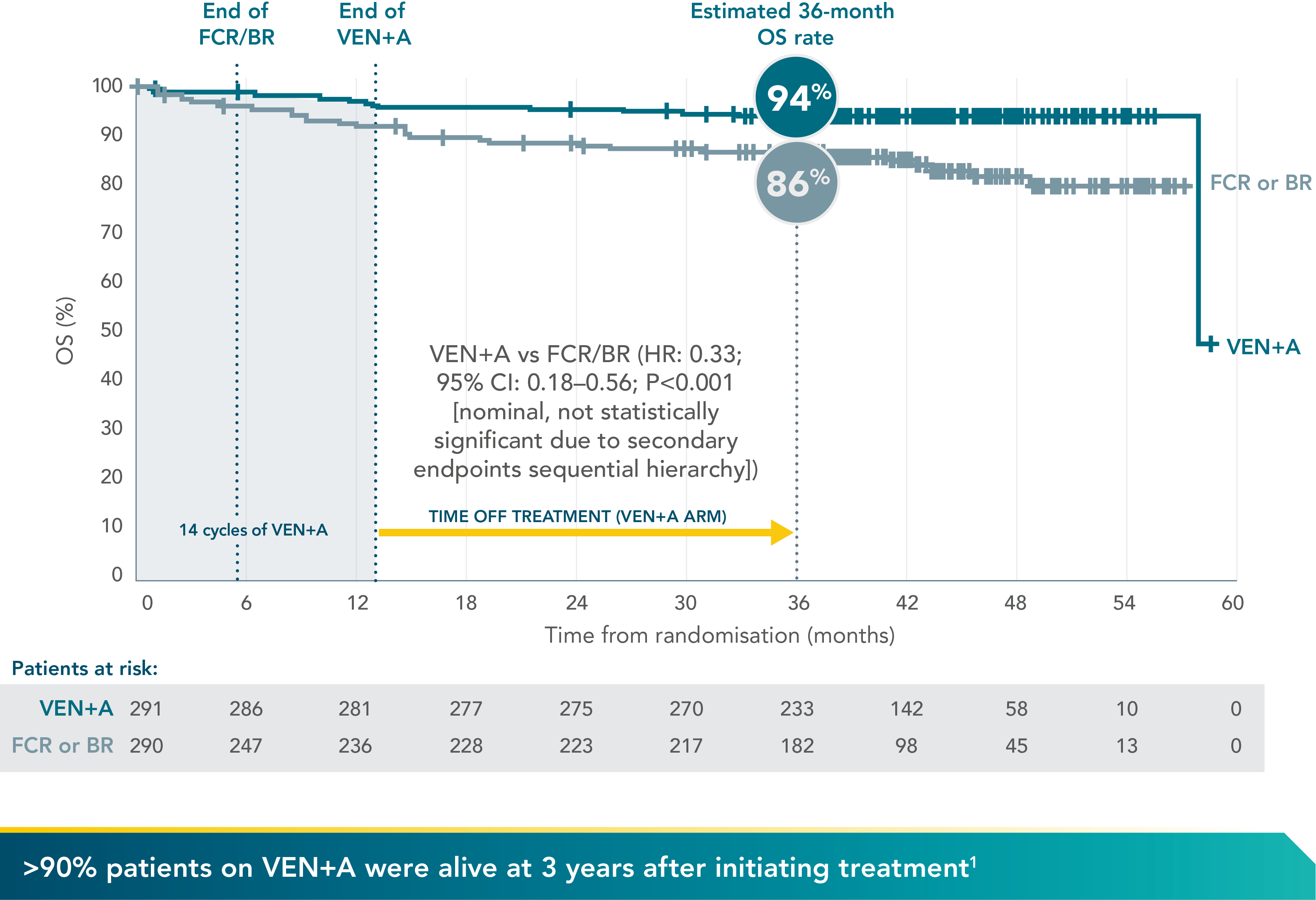
Adapted from Brown JR et al. 2025.1
*Median follow-up of 40.8 months.
The majority of VEN+A patients did not require next line of treatment at 3 years1
Time to next treatment† for VEN+A vs CIT at 36 months (secondary endpoint)3*
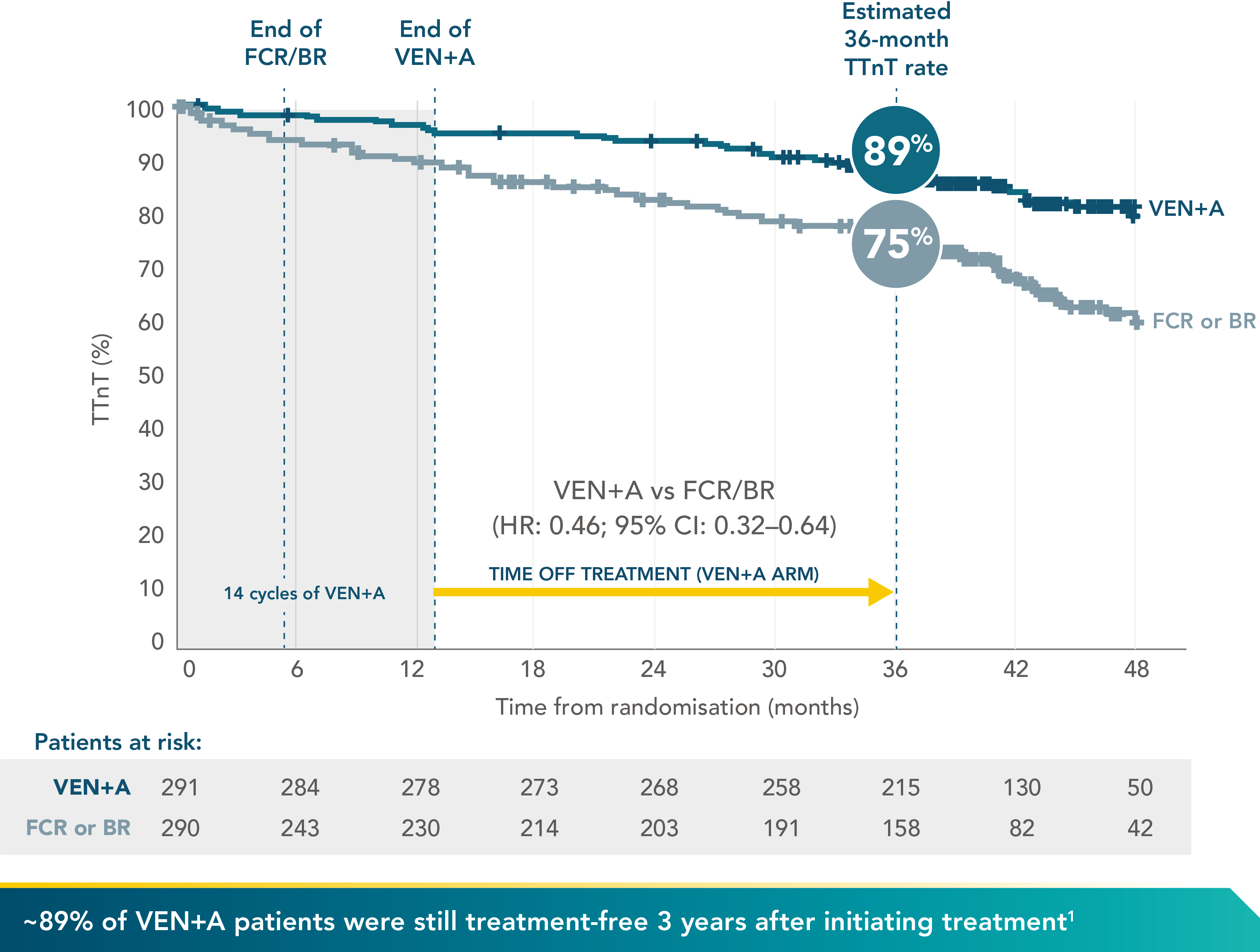
Adapted from Ghia P et al. 2025.
*Median follow-up of 40.8 months.
†TTNT defined as time from randomisation to institution of non- protocol specified treatment for CLL.
Any Grade AEs in .10% or Grade .3 AEs in .5% of patients in any arm* (Safety Population)1
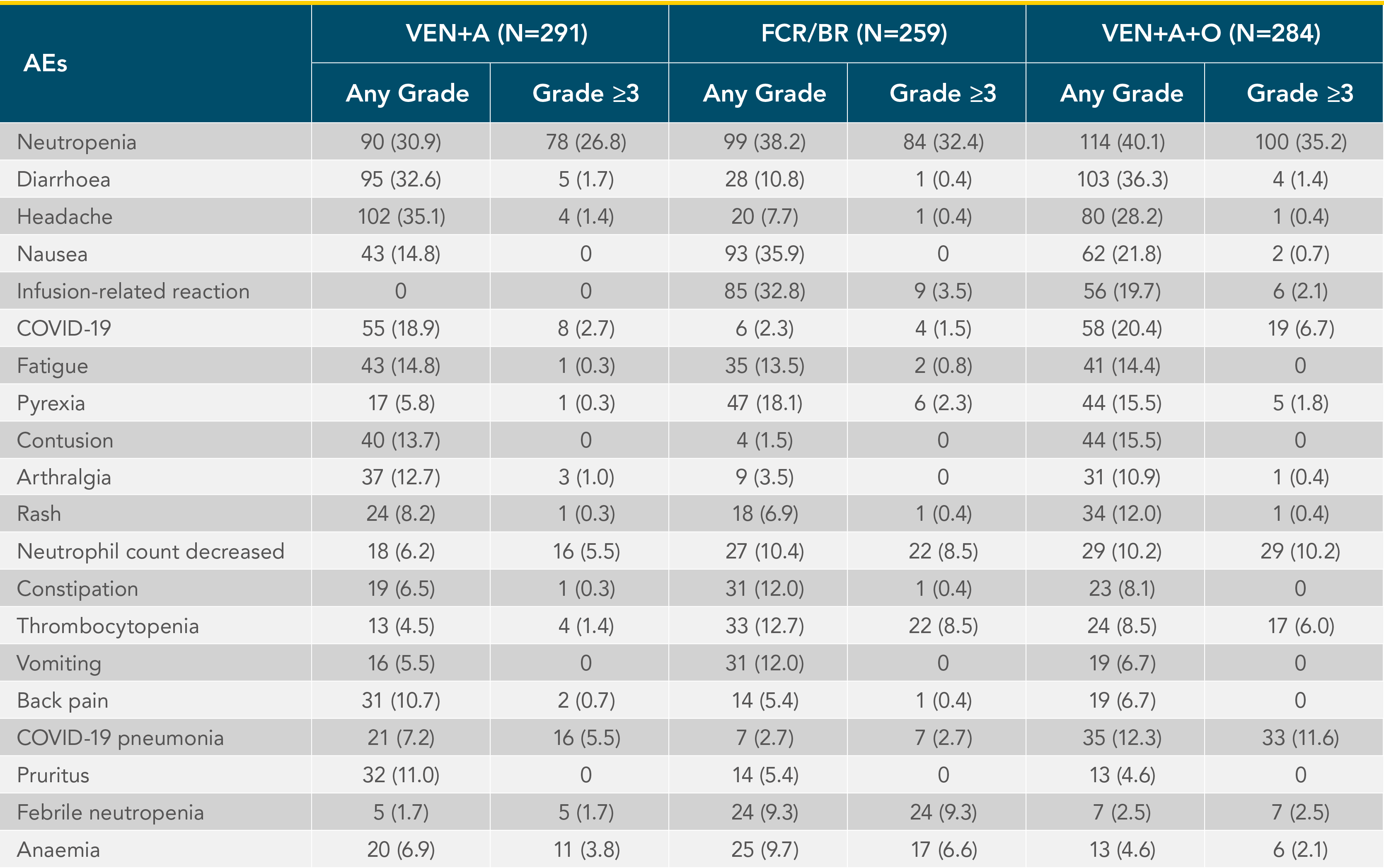
Any Grade AEs in .10% or Grade .3 AEs in .5% of patients in any arm* (Safety Population)1
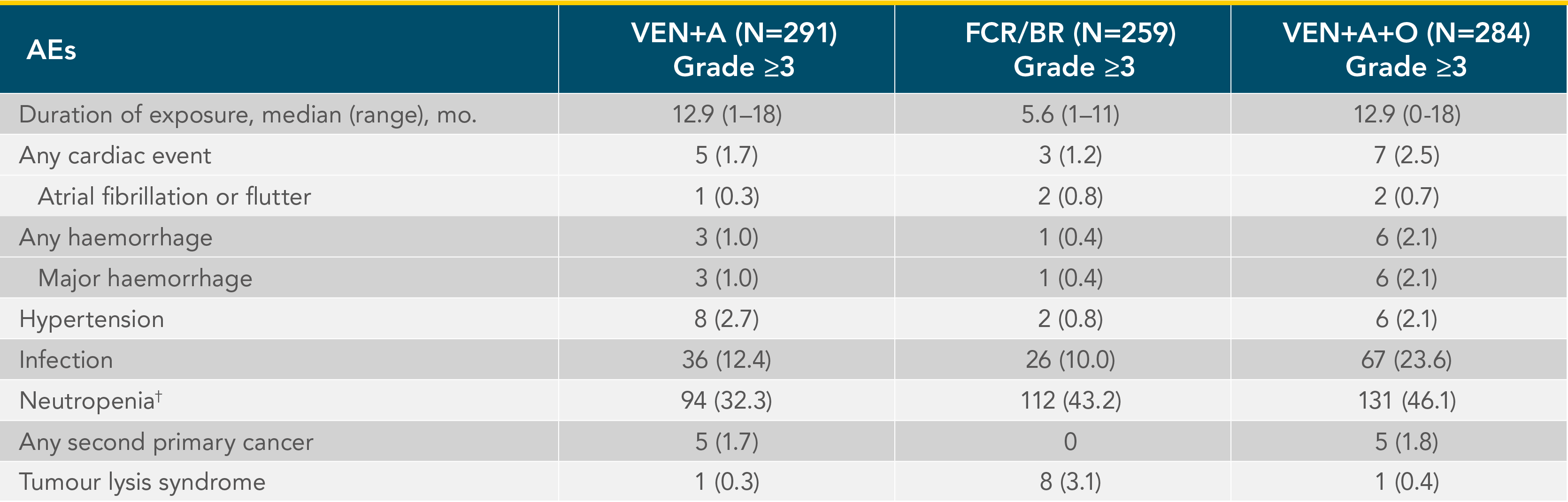
Please refer to both acalabrunitib and venetoclax SmPCs for full safety information on each respective medicine.
Adapted from Brown JR, et al. 2025.1
Median follow-up of 40.8 months (range: 0–59).
*Data are n (%). AEs with an onset date or that worsened on or after the date of first dose and up to and including 30 days following the date of the last dose of treatment or up to the day prior to start of subsequent anti- CLL therapy, whichever came first.
†This category includes neutropenia, a decreased neutrophil count, and febrile neutropenia.
For full safety information, please refer to the SmPC
1L, First line; AE, Adverse event; BR, Bendamustine-rituximab; C, Cycle; CI, Confidence interval; CIT, Chemoimmunotherapy; CLL, Chronic lymphocytic leukaemia; D, Day; del(17p), Deletion of the short arm (p arm) of chromosome 17; ECOG PS, Eastern Cooperative Oncology Group Performance Status; FCR, Fludarabine-cyclophosphamide-rituximab; HR, Hazard ratio; IGHV, Immunoglobulin heavy chain variable; BICR, Blinded independent central review; ITT, Intent-to-treat; IV, Intravenous; OS, Overall survival; PFS, Progression-free survival; SmPC, Summary of Product Characteristics; TP53, Tumour protein 53; TTnT, Time to next treatment; VEN, VENCLYXTO; VEN+A, VENCLYXTO + acalabrutinib; VEN+A+O, VENCLYXTO + acalabrutinib + obinutuzumab.
References
- Brown JR et al. N Engl J Med. 2025; 392: 748–62 (and suppl.).
- VENCLYXTO Summary of Product Characteristics.
- Ghia P et al. Presented at the American Society of Hematology (ASH) Annual Meeting, December 6–9, 2025. P3898.
UK-VNCCLL-260052. Date of Preparation: July 2026
You are advised to read the Prescribing Information and Summary of Product Characteristics to evaluate patient suitability for VENCLYXTO.
VENCLYXTO PRESCRIBING INFORMATION
By clicking the link above you will leave the AbbVie Pro website and be taken to the eMC PI portal website.
