




UK-ELAH-260246. Date of Preparation: August 2026

Ovarian cancer remains one of the most challenging gynaecological malignancies worldwide.1,2 Despite advances in first-line treatment, most patients with advanced disease will experience recurrence, and many will ultimately develop platinum-resistant ovarian cancer (PROC).3–6
An educational webinar organised and funded by AbbVie brought together leading oncology and pathology experts to discuss the evolving role of folate receptor alpha (FRα) in PROC. The session explored the clinical significance of FRα as a predictive biomarker,7 the emerging role of ELAHERE (mirvetuximab soravtansine),8 and practical considerations for implementing FRα testing into routine UK clinical practice.
With NICE recommending mirvetuximab soravtansine for eligible patients with FRα-positive PROC, in line with its licensed indication and in accordance with the commercial arrangement,9 this is an important time to revisit the key discussions and practical insights shared during the webinar.
Below, you can access a summary of the webinar alongside the on-demand video content to refresh your knowledge or catch up on the sessions you may have missed.






Abbreviations
ADC, antibody-drug conjugate; BRCA, breast cancer susceptibility gene 1; CPD, continuing professional development; FFPE, formalin-fixed paraffin-embedded; FRα, folate receptor-alpha; HRD, homologous recombination deficiency; NICE, National Institute of Health and Care Excellence; PROC, platinum-resistant ovarian cancer; SmPC, summary of product characteristics.
References
- Hanker LC, et al. Ann Oncol. 2012;23(10):2605-2612.
- González-Martín A, et al. Ann Oncol. 2023;34(10):833-848.
- Ke Xu, et al. Expert Rev Clin Pharmacol. 2023;16(11):1141-1152.
- Giornelli GH. Springerplus. 2016;5(1):1197.
- Salani R, et al. Am J Obstet Gynecol. 2011;204(6):466-478.
- St Laurent J and Liu JF. J Clin Oncol. 2024;42(2):127-133.
- Zannoni GF, et al. Int J Mol Sci. 2025;26(11):5222.
- ELAHERE SmPC.
- NICE. Mirvetuximab soravtansine for treating folate receptor alpha-positive platinum-resistant advanced epithelial ovarian, fallopian tube or primary peritoneal cancer. TA1169. Available from: https://www.nice.org.uk/guidance/ta1169 [Accessed November 2026].
- Colombo N et al. Ann Oncol. 2019;30(5):672-705.
- Richardson DL, et al. JAMA Oncol. 2023;9(6):851-859.
- Gaillard S, et al. Gynecol Oncol. 2021;163(2):237-245.
- Pujade-Lauraine E, et al. J Clin Oncol. 2014;32(13):1302-1308.
- Poveda AM, et al. J Clin Oncol. 2015;33(32):3836-3838.
- Birrer MJ, et al. Oncologist. 2019;24(4):425-429.
- Scaranti M, et al. Nat Rev Clin Oncol. 2020;17(6):349-359.
- Köbel M, et al. Br J Cancer. 2014;111(12):2297-2307.
- Despierre E, et al. Gynecol Oncol. 2013;130(1):192-199.
- Rubinsak LA, et al. Appl Immunohistochem Mol Morphol. 2018;26(8):567-572.
- Ab O et al. Mol Cancer Ther. 2015;14(7):1605-1613.
- Moore K et al. Cancer. 2017;35(10):1112-1118.
- Fu Z et al. Sig Transduct Target Ther. 2022;7:93.
- Moore KN, et al. Ann Oncol. 2021;32:757-765.
- Moore KN, et al. N Engl J Med. 2023;389(23):2162-2174.
- NCCN Clinical Practice Guidelines in Oncology (NCCN Guidelines®) for Ovarian Cancer/Fallopian Tube Cancer/Primary Peritoneal Cancer V.4.2026. April 10, 2026 [Accessed November 2026].
- Zannoni GF, et al. Int J Mol Sci. 2025;26(11):5222.
- Martin LP, et al. Gynecol Oncol. 2017;147(2):402-407.
- VENTANA® FOLR1 (FOLR1-2.1) RxDx Assay. Interpretation guide for epithelial ovarian, fallopian tube, or primary peritoneal cancer. VENTANA Medical Systems Inc/Roche Diagnostics International Inc; 2025.
- Based on speaker’s own experience and practice.
- Krivak T, et al. American Society of Clinical Oncology (ASCO) Annual Meeting. 2025. Poster 466.
- Cecere SC, et al. ESGO 2026. Oral presentation.
UK-ELAH-260249. Date of Preparation: November 2026
Adverse events should be reported. Reporting forms and information can be found at yellowcard.mhra.gov.uk.
Adverse events should also be reported to AbbVie on GBPV@abbvie.com
By clicking the link above, you will leave the AbbVie Pro website and be taken to the eMC PI portal website.
NICE Guidance (TA1169)1
Mirvetuximab soravtansine can be used, within its marketing authorisation, as an option to treat folate receptor-alpha (FRα) positive, platinum-resistant, high-grade serous epithelial ovarian, fallopian tube or primary peritoneal cancer in adults after one to three lines of systemic treatment. Mirvetuximab soravtansine can only be used if the company provides it according to the commercial arrangement.1

NICE Guidance (TA1169)1
Mirvetuximab soravtansine can be used, within its marketing authorisation, as an option to treat folate receptor-alpha (FRα) positive, platinum-resistant, high-grade serous epithelial ovarian, fallopian tube or primary peritoneal cancer in adults after one to three lines of systemic treatment. Mirvetuximab soravtansine can only be used if the company provides it according to the commercial arrangement.1

SMC accepted as a treatment option2
ELAHERE (MIRVETUXIMAB SORAVTANSINE) IS ACCEPTED FOR USE WITHIN NHS SCOTLAND.
Advice: following a full submission assessed under the end of life and orphan equivalent medicine process:
Indication under review: as monotherapy for the treatment of adult patients with folate receptor-alpha (FRα) positive, platinum-resistant high grade serous epithelial ovarian, fallopian tube, or primary peritoneal cancer who have received one to three prior systemic treatment regimens.
This advice applies only in the context of an approved NHS Scotland Patient Access Scheme (PAS) arrangement delivering the cost-effectiveness results upon which the decision was based, or a PAS/list price that is equivalent or lower.
This advice takes account of the views from a Patient and Clinician Engagement (PACE) meeting.2

SMC accepted as a treatment option2
ELAHERE (MIRVETUXIMAB SORAVTANSINE) IS ACCEPTED FOR USE WITHIN NHS SCOTLAND.
Advice: following a full submission assessed under the end of life and orphan equivalent medicine process:
Indication under review: as monotherapy for the treatment of adult patients with folate receptor-alpha (FRα) positive, platinum-resistant high grade serous epithelial ovarian, fallopian tube, or primary peritoneal cancer who have received one to three prior systemic treatment regimens.
This advice applies only in the context of an approved NHS Scotland Patient Access Scheme (PAS) arrangement delivering the cost-effectiveness results upon which the decision was based, or a PAS/list price that is equivalent or lower.
This advice takes account of the views from a Patient and Clinician Engagement (PACE) meeting.2

*By clicking the link you will leave the AbbVie Pro website to an external website which is not under the control of AbbVie. AbbVie is not responsible for content of any such site or any further links from such site.
NICE, National Institute for Health and Care Excellence; SMC, Scottish Medicines Consortium.
Faculty
Webinar date: Wednesday, 25th March 2026


The unmet need in platinum-resistant ovarian cancer
Up to 70% of women with advanced high-grade ovarian cancer relapse within three years of diagnosis.2

The unmet need in platinum-resistant ovarian cancer
~85% of patients with epithelial ovarian cancer eventually become platinum resistant, a stage associated with poorer outcomes, reduced progression-free survival, and limited treatment options.6,10,11
Historically, standard single-agent chemotherapy has offered modest response rates,6,12–14 highlighting the need for more effective targeted therapies.

Previous
Next
The unmet need in platinum-resistant ovarian cancer
Up to 70% of women with advanced high-grade ovarian cancer relapse within three years of diagnosis.2

The unmet need in platinum-resistant ovarian cancer
~85% of patients with epithelial ovarian cancer eventually become platinum resistant, a stage associated with poorer outcomes, reduced progression-free survival, and limited treatment options.6,10
Historically, standard single-agent chemotherapy has offered modest response rates,6,12–14 highlighting the need for more effective targeted therapies.

Previous
Next
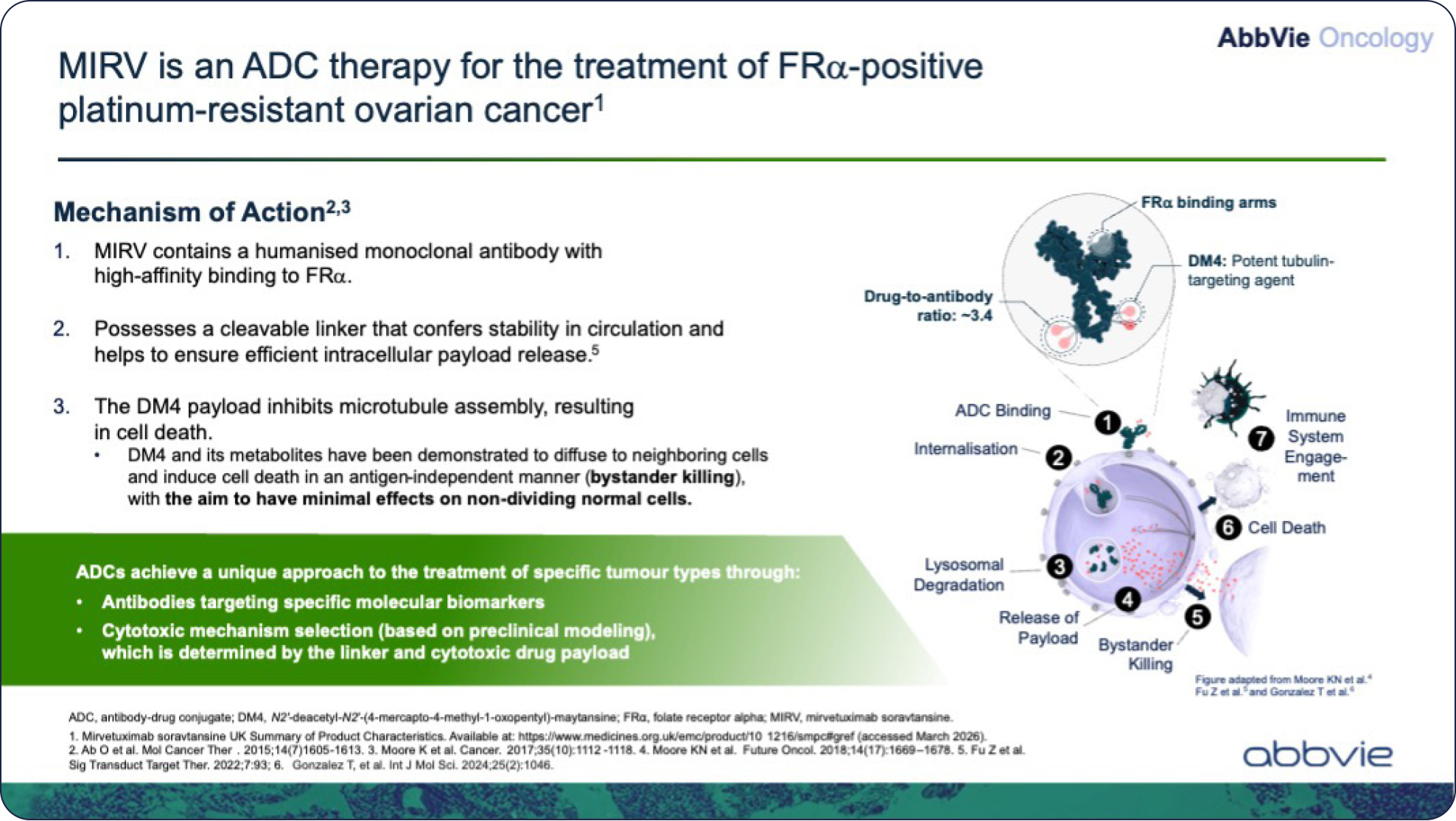
ELAHERE: a targeted ADC for FRα-positive PROC
ELAHERE is an ADC specifically designed to target FRα-positive tumour cells.8
ELAHERE contains:20–22
- A humanised monoclonal antibody that binds FRα with high affinity
- A cleavable linker that remains stable in circulation but releases payload within tumour cells
- DM4, a potent tubulin-targeting cytotoxic agent.
ELAHERE: a targeted ADC for FRα-positive PROC
Following binding to FRα, ELAHERE is internalised into cancer cells, where DM4 is released to disrupt microtubule function and induce cell death. The payload also exerts a bystander effect, with DM4 diffusing to neighbouring tumour cells where it induces cell death.20–22
ELAHERE, as monotherapy, is indicated for adult patients with FRα-positive platinum-resistant high-grade serous epithelial ovarian, fallopian tube, or primary peritoneal cancer who have received one to three prior systemic treatment regimens.8
Patient eligibility for ELAHERE requires FRα positivity defined as:
≥75% viable tumour cells demonstrating moderate (2+) and/or strong (3+) membrane staining by immunohistochemistry.8
Previous
Next
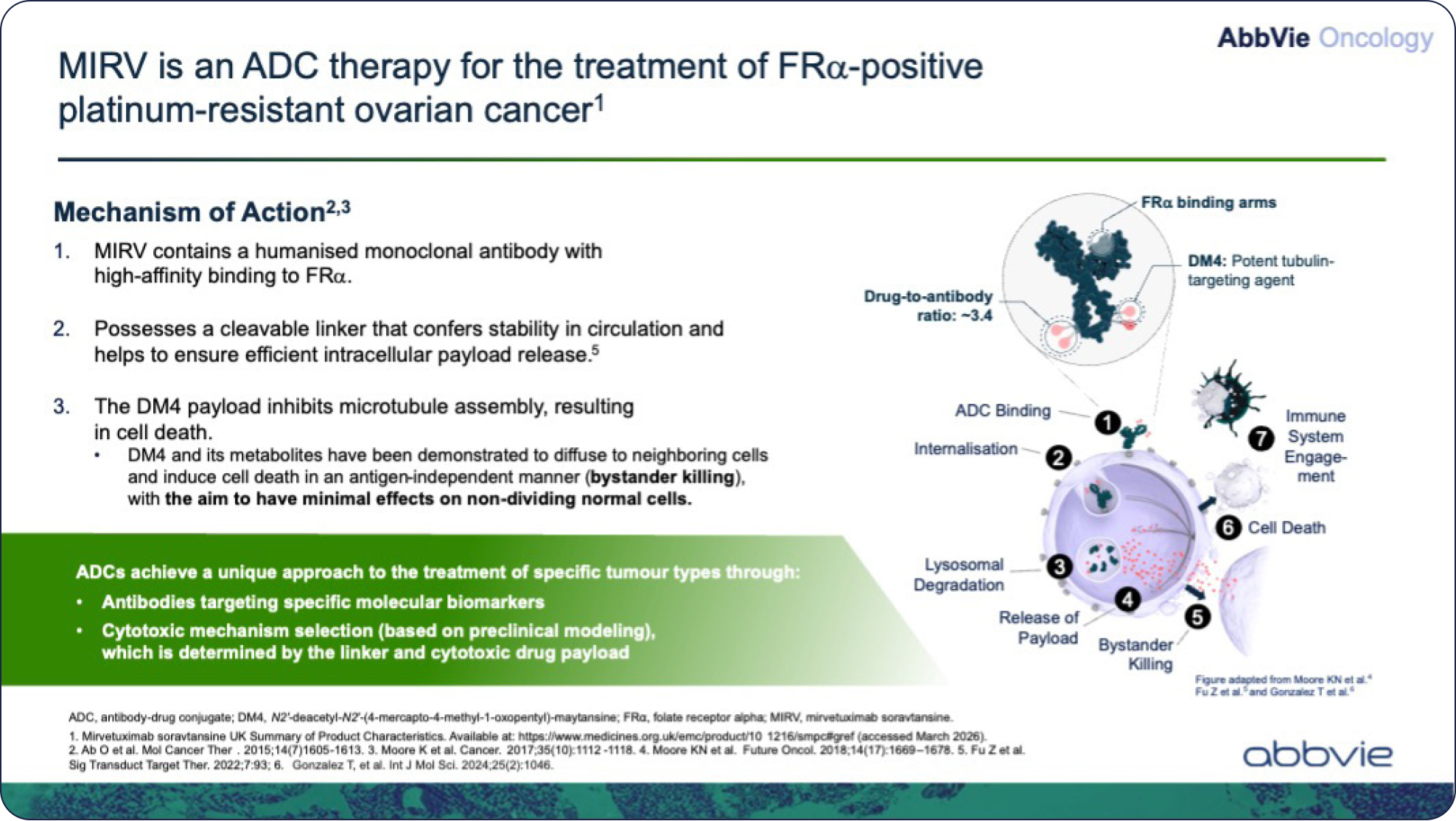
ELAHERE: a targeted ADC for FRα-positive PROC
ELAHERE is an ADC specifically designed to target FRα-positive tumour cells.8
ELAHERE contains:20–22
- A humanised monoclonal antibody that binds FRα with high affinity
- A cleavable linker that remains stable in circulation but releases payload within tumour cells
- DM4, a potent tubulin-targeting cytotoxic agent.
ELAHERE: a targeted ADC for FRα-positive PROC
Following binding to FRα, ELAHERE is internalised into cancer cells, where DM4 is released to disrupt microtubule function and induce cell death. The payload also exerts a bystander effect, with DM4 diffusing to neighbouring tumour cells where it induces cell death.20–22
ELAHERE, as monotherapy, is indicated for adult patients with FRα-positive platinum-resistant high-grade serous epithelial ovarian, fallopian tube, or primary peritoneal cancer who have received one to three prior systemic treatment regimens.8
Patient eligibility for ELAHERE requires FRα positivity defined as:
≥75% viable tumour cells demonstrating moderate (2+) and/or strong (3+) membrane staining by immunohistochemistry.8
Previous
Next
Case study: the importance of timely FRα testing
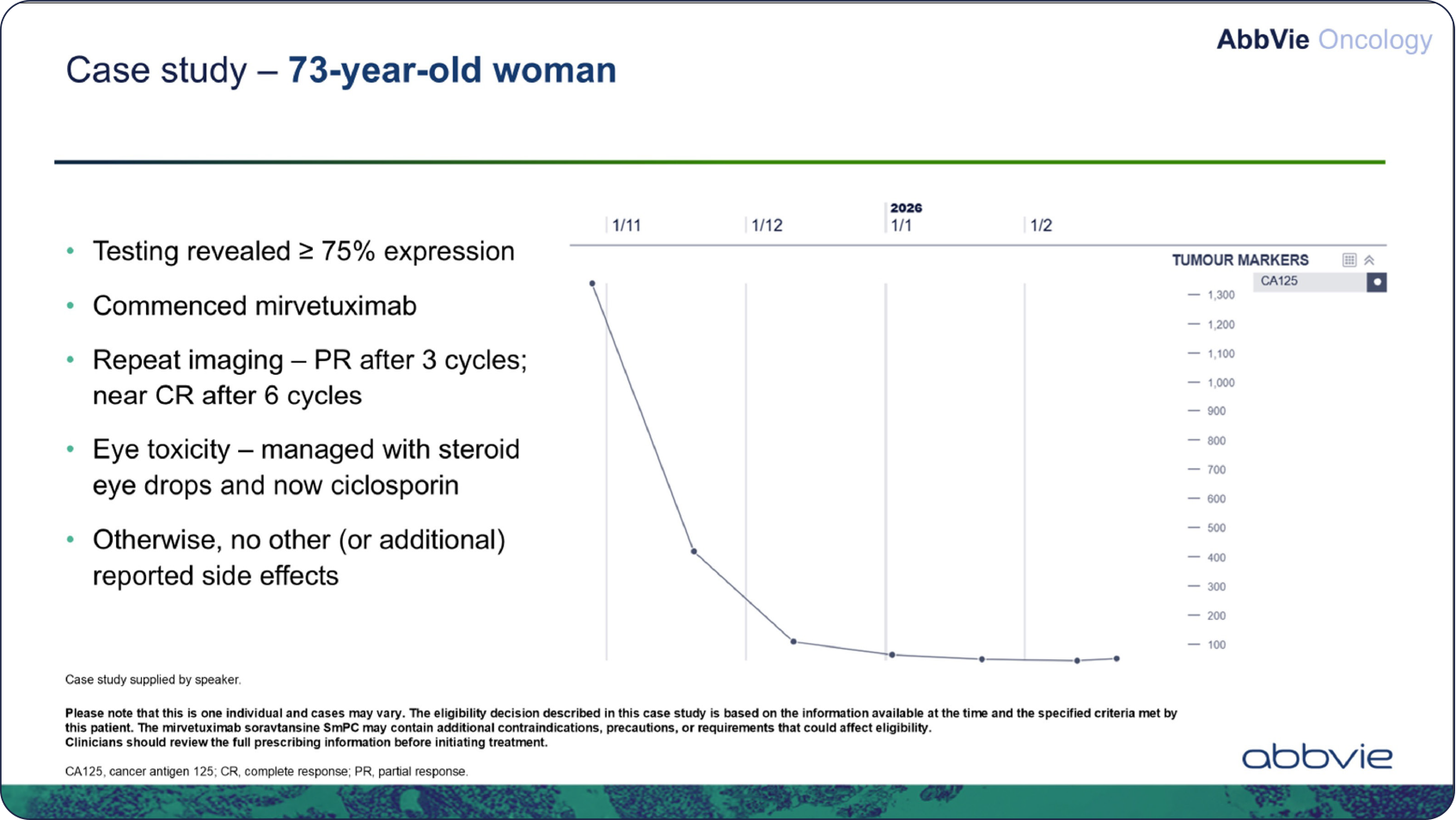
Dr Angela George highlighted the journey of a 73-year-old woman with Stage IIIC high-grade serous ovarian cancer.
Following multiple lines of treatment and eventual platinum-resistant progression, archived tumour tissue was tested for FRα expression.
Results demonstrated:
≥75% of tumour cells showing moderate to strong membranous staining, meeting criteria for FRα positivity
The patient subsequently received ELAHERE and achieved:*
- Partial response after three cycles
- Near-complete response after six cycles
- Manageable ocular toxicity controlled with steroid eye drops and ciclosporin.
*Clinician decision. Case study supplied by speaker. Prescribers should consult the ELAHERE Summary of Product Characteristics for further information on patient eligibility, including contraindications, special warnings and precautions.
Please note this is an individual patient and cases may vary. The eligibility decision described in the case is based on the information available at the time and the specified criteria met by the patient. Individual SmPCs may contain additional contraindications, precautions, or requirements that could affect eligibility. Clinicians should review the full prescribing information before initiating treatment.
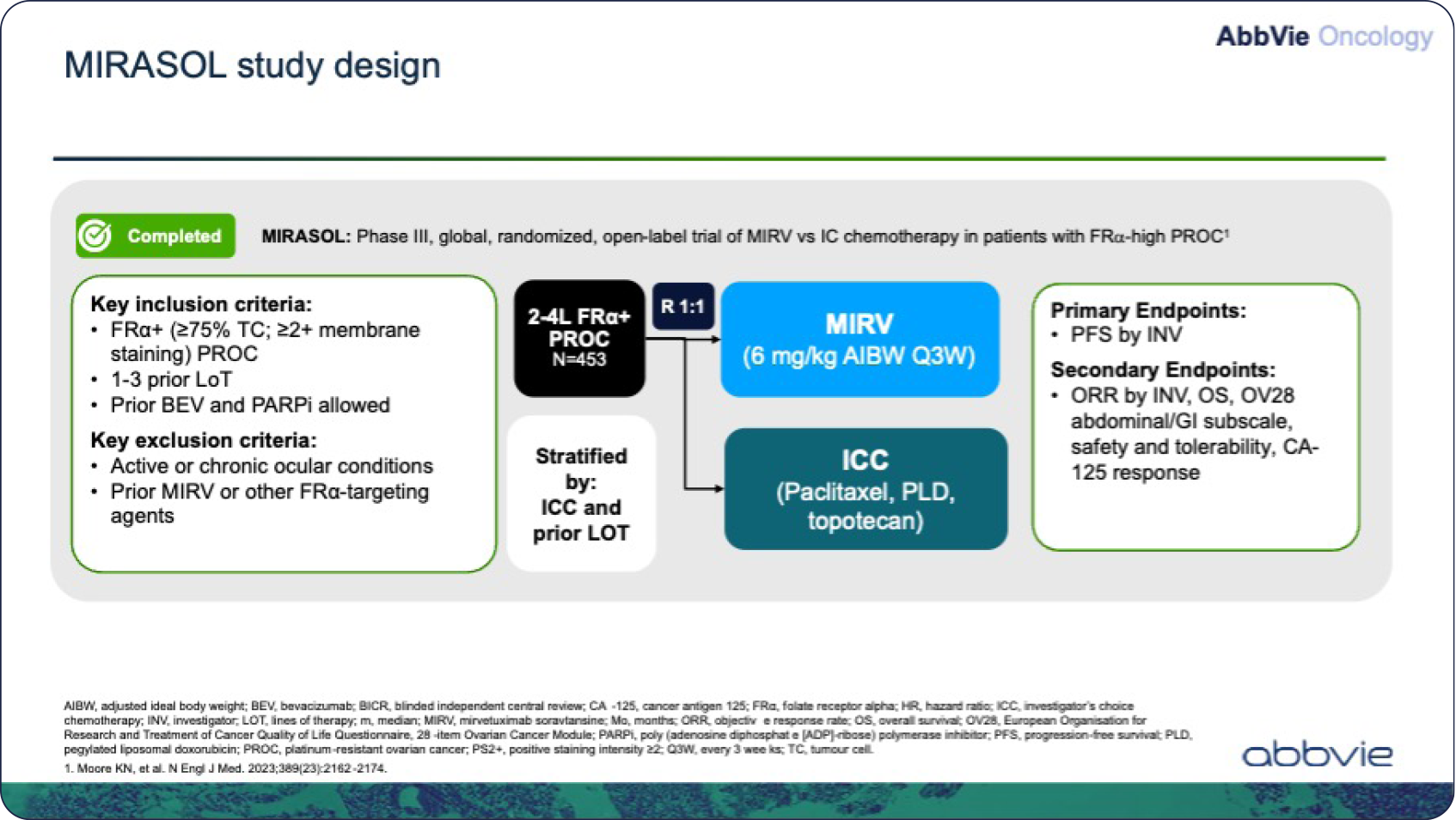
MIRASOL: a landmark study
The Phase III MIRASOL study evaluated the safety and efficacy of ELAHERE versus ICC in patients with FRα-positive PROC.24
Importantly, MIRASOL demonstrated improvements in both PFS and overall survival (OS) with ELAHERE compared with standard chemotherapy.24
In addition, the incidence of serious adverse events (AEs) (52 participants [23.9%] in the ELAHERE group and in 68 (32.9%) in the chemotherapy group), grade ≥ 3 AEs (91 participants [41.7%] in the ELAHERE group and in 112 [54.1%] in the chemotherapy group), and treatment discontinuations due to AEs (n=20 [9.2%] vs. n=33 [15.9%]) was lower in the ELAHERE arm compared to ICC.24
MIRASOL primary endpoint – PFS24
mPFS was 5.62 months for patients treated with ELAHERE vs 3.98 months for patients treated with ICC (HR=0.65 [95% CI: 0.52–0.81]; P<0.0001]).
MIRASOL secondary endpoint – OS24
mOS was 16.46 months for patients treated with ELAHERE vs 12.75 months for patients treated with ICC (HR=0.67 [95% CI: 0.50–0.89]; P=0.0046).
Interpreting FRα staining

For cases close to the threshold, second pathologist review is recommended to improve consistency and reduce variability.29
